
Southeast Asia's Energy Consolidation: Why a New Italian-Malaysian Gas Player Matters Now
Italy's Eni and Malaysia's Petronas have just launched Searah, a 50/50 energy venture that will immediately control over 300,000 barrels of oil equivalent daily across Indonesia and Malaysia—with plans to expand that within three years. For anyone tracking energy supply stability in Asia and Europe's energy strategy, this represents a critical repositioning of how fossil fuels will be developed in one of the world's fastest-growing demand centers.
Why This Matters
• Scale and Speed: Searah moves from signed agreement to full operation in just seven months, securing $6 billion in external financing—a signal that capital markets still back Southeast Asian gas development despite climate transition pressures.
• Production Ambitions: The venture targets significant expansion in production from 19 existing and development-stage assets, making it the region's largest independent integrated player.
• Investment Flow: $20 billion commitment over five years reflects confidence in developing substantial discovered resources across Indonesia and Malaysia, with implications for regional supply chains and energy politics.
The Rapid Path to Launch: What Actually Happened
The timeline for establishing Searah moved exceptionally quickly for an endeavor requiring simultaneous regulatory clearance from two governments. An initial understanding surfaced in February 2025. Months later, both parties signed the formal investment accord in November 2025. By mid-2026, approximately seven months after the November agreement, Searah was legally constituted and operationally established.
The compressed schedule reflected genuine political will from both Jakarta and Kuala Lumpur to accelerate energy resource development. Indonesia, once a significant OPEC member, has become a net energy importer. Malaysia's reserves, though more stable, require strategic deployment of capital and technical capacity to maintain exports. Both nations' energy ministries approved Searah's formation as essential infrastructure for their energy futures.
Searah's Asset Base: Combining Indonesian and Malaysian Production
The joint venture operates across two jurisdictions with distinct asset profiles. Indonesia comprises a significant portion of the portfolio, concentrated in areas where Eni has operated experience. The portfolio includes both mature producing fields that generate immediate cash flow and development-stage assets targeting production expansion within the coming years.
Malaysia's assets complement the Indonesian base by providing near-term revenue while longer-cycle Indonesian projects develop. This geographic split creates a business model less dependent on any single project's success and allows for coordinated capacity growth.
Why $6 Billion in External Credit Signals Institutional Confidence
In an era when climate scrutiny has tightened lending standards for fossil fuel infrastructure, Searah's ability to secure a $6 billion revolving credit facility represents market validation. This was commercial financing underwritten by international banks through standard due diligence.
Financial institutions conducted stress-testing on reserve sustainability, cash flow durability under different price scenarios, execution track records of both sponsors, and political stability of the host countries. Their willingness to commit capital signals institutional assessment that Searah's economics are sound enough to service debt even if commodity prices weaken.
The broader $20 billion investment commitment over five years encompasses field development, infrastructure, and exploration activities. Both Eni and Petronas will deploy capital from multiple sources, including operations and project-level financing arrangements. This layered capital structure is standard in upstream ventures.
What This Means for Residents of Italy
For Italy broadly, Eni's deepening presence in Southeast Asian energy markets carries several implications.
Strategic Energy Positioning: Eni's expansion into high-growth Asian energy markets positions Italy's energy champion in markets where global energy demand is concentrating. This strategic presence supports Europe's long-term energy security interests by ensuring diversified supply sources and maintaining relationships with key energy producers.
Corporate Performance and Employment: Searah's success directly impacts Eni's financial performance, dividend sustainability, and employment prospects across Eni's Italian operations. The venture's capital requirements and return profile influence corporate investment and hiring decisions domestically.
Energy Transition Positioning: The venture reflects how European energy companies navigate the transition period—maintaining fossil fuel operations in markets where demand remains strong while investing in transition infrastructure. This strategy influences broader European energy policy discussions and competitive dynamics with non-European energy companies.
Geopolitical Energy Dynamics: As Europe reduces energy import dependence and rebalances supply relationships, Italian and European companies' roles in major Asian energy markets affect diplomatic relationships and energy security frameworks with key producing nations.
Competitive Landscape: Consolidation in Southeast Asia
Southeast Asia's upstream energy sector is characterized by concentrated geography and genuine barriers to entry. Basin geology, subsea infrastructure, export terminal capacity, and technical workforce resources are finite. Existing operators guard their positions competitively.
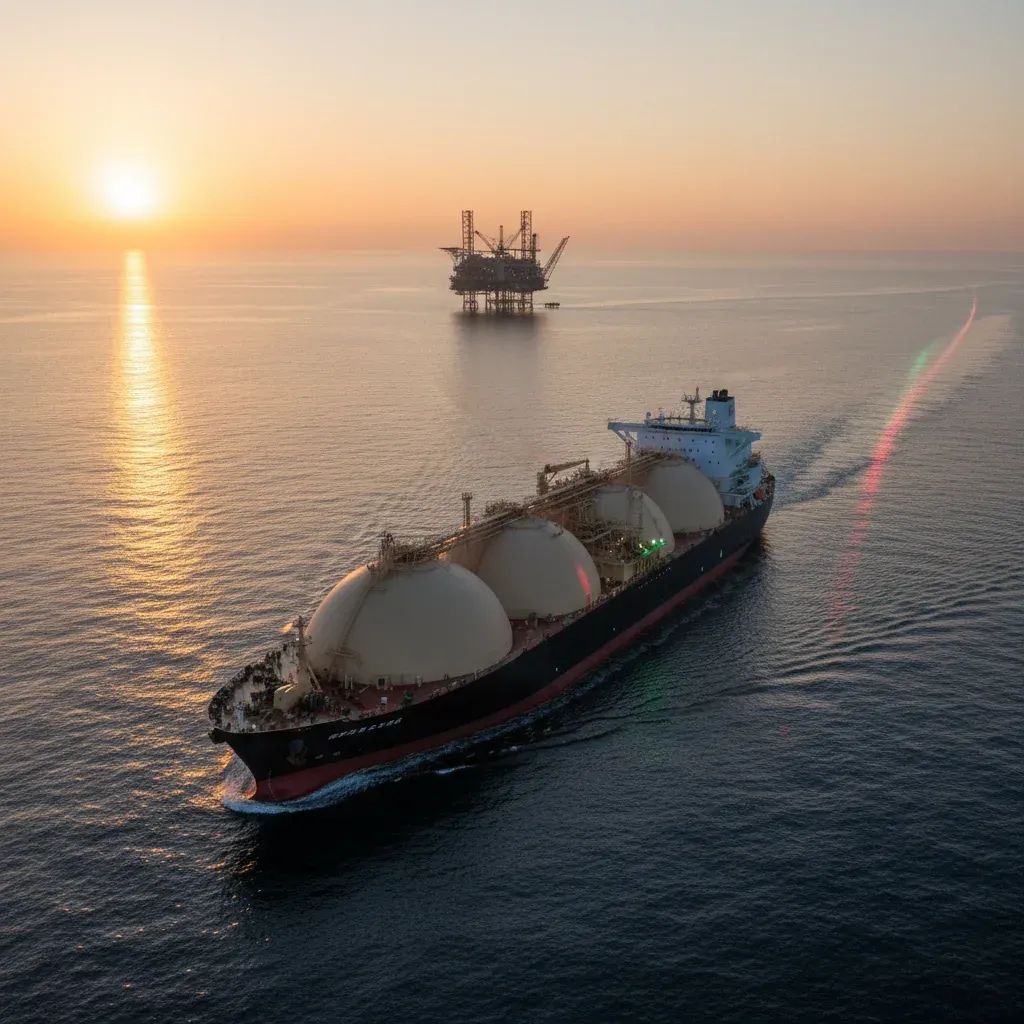
Searah's emergence as a major integrated player reshapes competitive dynamics. The venture's financial scale permits multiple exploration teams, absorption of unforeseen costs, and improved efficiency in liquefied natural gas logistics. Smaller independent producers face shifted incentives toward asset sales or consolidation.
Natural Gas as "Transition Fuel": The Strategic Narrative
Both Eni and Petronas position Searah within the "transition fuel" framework—natural gas produces roughly half the carbon dioxide of coal-fired generation. With Indonesia and Malaysia setting renewable energy targets, natural gas serves as an acknowledged bridge during energy rebalancing.
This framing reflects technical reality: gas combustion genuinely produces fewer emissions than coal, and methane management is achievable through modern engineering. However, the $20 billion commitment to fossil fuel development will draw criticism from climate advocates. The strategic positioning remains realistic—region-wide electrification and renewable deployment will require decades. During transition, demand for baseload power generation will persist.
This carries risk. If renewable capacity and battery storage mature faster than projected, Searah's infrastructure could face premature economic obsolescence.
Execution Considerations: Integration and Timeline
Successfully establishing unified operations across Indonesia and Malaysian asset bases requires integrating disparate operational platforms, aligning personnel on unified protocols, and consolidating contracts. The integration work, though invisible to external observers, is critical to achieving projected timelines.
Searah's leadership team inherits this responsibility while maintaining focus on field development schedules. The timeline to expand production over the coming years permits limited slack for complications. Market observers will scrutinize whether Searah successfully recruits senior technical talent, executes development projects on schedule, and maintains financial performance.
The Broader Significance for Italy and Europe
For Italy's investors and energy analysts, Searah serves as a test case for Eni's strategic positioning in dynamic Asian energy markets. Success would validate the company's expansion approach and likely prompt pursuit of similar ventures in other regions. The venture underscores that European energy champions cannot retreat to mature markets alone.
As Europe navigates energy transition while maintaining supply security, Eni's deepening presence in Southeast Asia—via partnership with a major regional operator—reflects necessary competitive positioning in growth markets where global energy demand is concentrating.


