
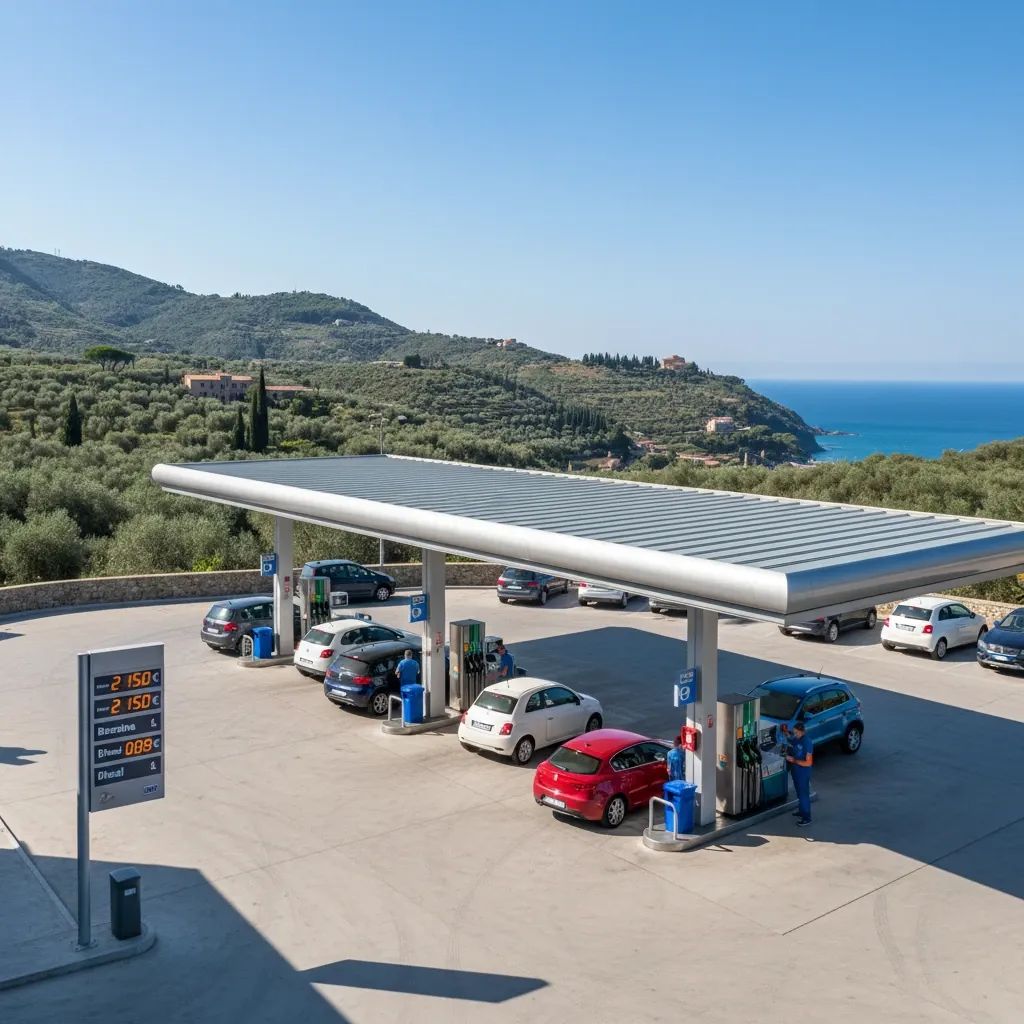
The Italy Ministry of Enterprise and Made in Italy has confirmed that diesel fuel has crossed the €2.00-per-liter threshold across the national road network, a milestone reached after the government halved tax relief on diesel excise duties from 10 to 5 cents per liter. As of today, the average self-service price for diesel stands at €2.004 per liter, while gasoline remains below the psychological barrier at €1.917 per liter.
Why This Matters
• Diesel drivers face higher costs immediately: The reduced excise discount translates to roughly 5 cents more per liter at the pump, plus 22% VAT.
• Small transport businesses hit hardest: Vehicles under 7.5 tons receive no reimbursement, meaning the increase is permanent for last-mile delivery operators and urban logistics firms.
• Italy ranks among the most expensive in the EU: National diesel prices are now significantly above the EU average, with neighboring countries offering cheaper fuel.
The Policy Behind the Price Spike
The price increase stems from efforts to equalize excise duties between gasoline and diesel. The government has framed this realignment as part of a broader effort to phase out environmentally harmful subsidies in line with European directives. By making diesel more expensive, policymakers aim to discourage consumption of fossil fuels responsible for urban air pollution and accelerate the shift toward hybrid, electric, and alternative-fuel vehicles.
The government extended temporary excise cuts on all fuels through early July, though the diesel discount was slashed in half during this window, pushing the fuel above €2 per liter after a brief dip in late May. Gasoline, by contrast, continues to benefit from fuller relief and has declined steadily, settling comfortably under the €2 mark.
Regional Variations and Motorway Premiums
Fuel costs vary considerably across Italy's regions. On June 8, diesel prices showed regional variation, with some areas dropping below €2 per liter while others remained above. Motorway stations, as expected, command a premium. Self-service diesel on the autostrada network averages €2.090 per liter, while gasoline costs €2.014. Full-service diesel reaches higher levels, making advance planning and off-highway refueling a money-saving strategy for frequent travelers.
Alternative fuels remain cheaper options for compatible vehicles, offering cost relief for those equipped to use them.
What This Means for Transport Operators and Small Businesses
The diesel price surge is exerting significant financial pressure on Italy's transport and logistics sector, particularly small and medium-sized enterprises that lack the scale to absorb cost increases.
Heavy freight operators with qualifying vehicles may be eligible for some relief measures through government support. However, light commercial vehicles (under 7.5 tons), including delivery vans and service trucks, face immediate, unrecovered cost increases. For these operators already working on thin margins, the price increase poses a genuine operational challenge.
The cumulative impact on Italy's small enterprises and independent operators is substantial, with knock-on effects rippling through sectors such as construction, e-commerce, and food distribution. Fuel now accounts for a significantly higher proportion of operating costs compared to historical levels, leaving many operators struggling to maintain profitability.
Geopolitical Pressures and Market Dynamics
Italy's diesel challenges are compounded by international factors. Global tensions and market volatility have driven crude oil prices higher, inflating wholesale fuel prices globally. Italy's relatively high excise burden—combined with VAT at 22%—amplifies these fluctuations at the pump.
Even as crude prices remain volatile, the government has signaled a shift away from blanket fuel subsidies toward more targeted approaches and investment in decarbonization infrastructure.
Government Response and Industry Demands
Recognizing the strain on transport firms, the government has introduced relief measures to offset fuel cost increases for road hauliers and other affected businesses. Trade associations are calling for these measures to be extended and broadened, as well as for more dynamic approaches to transport pricing that can respond to fuel cost changes.
Italy in the European Context
Italy's diesel prices are now among the highest in the European Union. The national average of €2.004 per liter significantly exceeds neighboring countries' prices and the broader EU average, creating cost pressures for both individual motorists and commercial operators.
For Italian businesses operating cross-border, the disparity with neighboring countries creates consideration for refueling strategies.
Outlook and Adaptation Strategies
With temporary relief measures and policies under review, diesel prices remain subject to change based on government decisions and market conditions. The situation reflects a deliberate policy pivot toward environmental sustainability, one that will reshape Italy's fuel market and mobility patterns in the months ahead.
In the near term, Italian drivers and fleet managers are advised to:
• Monitor regional price variations and refuel in lower-cost areas when feasible
• Consider alternative fuels if vehicle compatibility allows
• Optimize routes to minimize fuel consumption and avoid premium motorway stations
• Stay informed about government support programs and relief measures
The diesel price situation underscores broader questions about environmental policy, business sustainability, and how Italy balances energy transition goals with immediate economic pressures on transport and logistics sectors.


