
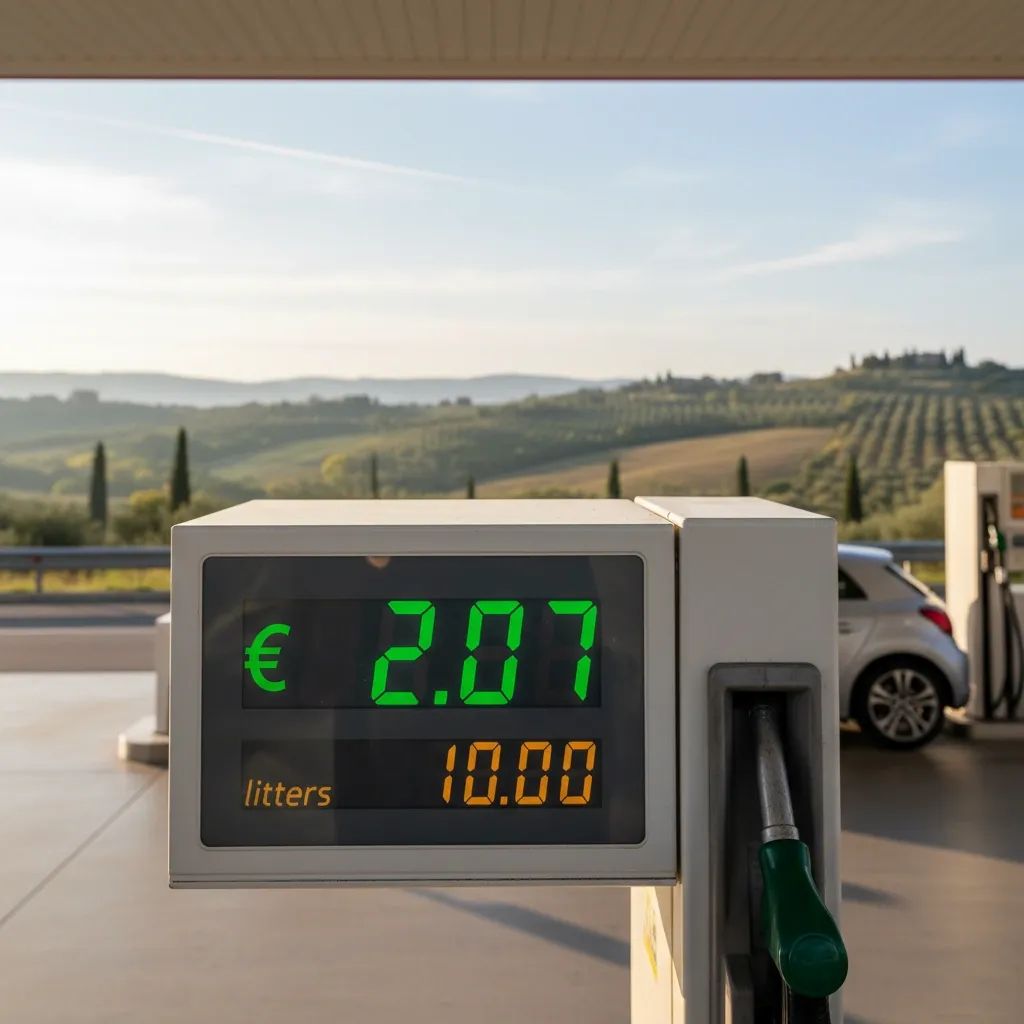
The Italian Ministry of Business and Made in Italy has reported a marginal decline in pump prices for the second consecutive day, with self-service gasoline dropping to €1.965 per liter nationally and diesel holding near €2.05, a shift that offers minimal relief to motorists amid Europe's eighth-highest fuel costs and ongoing energy inflation pressures affecting household budgets.
Why This Matters
• Diesel now costs more than gasoline for the first time in a decade, following a recent €0.04/liter excise tax hike on diesel that aligned it with gasoline at €672.90 per 1,000 liters.
• Highway fuel remains significantly pricier: Gasoline averages €2.062/liter and diesel €2.137/liter on Italy's autostrada network.
• Italy ranks 8th in the EU for gasoline prices and 6th for diesel, with taxation accounting for 59% of diesel's pump price—the highest diesel tax burden in Europe.
• Temporary excise cuts remain in effect: The government's current €0.10/liter diesel discount and €0.05/liter gasoline reduction help offset costs, though duration remains subject to parliamentary review.
What Drivers Are Paying Across the Network
According to data from the Fuel Price Observatory operated by Italy's Ministry of Business (MIMIT), national self-service averages stand at €1.965/liter for gasoline and €2.052/liter for diesel. This represents a 0.3-cent drop for gasoline and a 0.5-cent decline for diesel compared to the prior day's readings.
Full-service pumps, which remain common at smaller stations and in rural areas, charge approximately €2.11/liter for gasoline and €2.18/liter for diesel—a premium of roughly 15 cents that reflects labor costs.
The autostrada markup remains substantial: drivers filling up on Italy's toll highways pay an additional 10 cents per liter for gasoline and 8.5 cents per liter for diesel compared to ordinary road networks. This gap persists despite European Commission guidelines encouraging competitive pricing at highway service areas.
The Diesel Premium and Tax Realignment
For decades, diesel enjoyed a price advantage in Italy, making it the fuel of choice for high-mileage drivers, commercial fleets, and families with larger vehicles. That calculus has reversed following recent budget legislation that equalized excise duties at €672.90 per 1,000 liters—effectively raising diesel taxes by €40.50 per 1,000 liters while cutting gasoline levies by the same amount.
The policy shift was framed by Rome as an environmental measure to discourage diesel consumption and align with EU air quality directives. However, critics—including transport associations and agricultural lobbies—have argued the move disproportionately harms logistics operators and rural residents who depend on diesel vehicles.
Italy now levies the highest diesel taxation rate in the European Union, with government take representing 59% of the final pump price. By comparison, excise and VAT account for roughly 50-52% of gasoline's retail cost.
Recent price volatility has underscored the sensitivity of fuel markets to policy shifts. When temporary excise relief adjustments were made, diesel prices responded sharply, demonstrating how dependent Italian motorists have become on government subsidies to maintain affordable pump prices.
How Italy Compares to Europe
Italy's fuel prices sit firmly in the upper-middle tier of the European Union. According to recent European Commission data, Italy ranks among the higher-cost EU member states for both gasoline and diesel.
Countries with steeper pump prices include Denmark, the Netherlands, Greece, Finland, and France. Meanwhile, motorists in Spain, Bulgaria, Poland, Malta, and Turkey benefit from considerably lower costs, often due to lighter taxation or domestic refining capacity.
Germany and Austria—two of Italy's key northern neighbors—report competitive gasoline prices, making cross-border fills attractive for residents near the Brenner Pass or Swiss frontier.
What's Driving Prices Beyond the Pump
Italy's fuel costs are shaped by international crude markets, refining capacity, and fiscal policy.
International Energy Markets: Global crude oil prices remain influenced by geopolitical tensions and supply disruptions affecting major producing regions. Brent crude and West Texas Intermediate have traded in volatile ranges, with investment banks monitoring Middle East developments and their potential impact on global oil flows.
Refining Margins and European Capacity: European refineries face technical challenges and constrained throughput, tightening the supply of finished gasoline and diesel. This has inflated refining margins. U.S. refineries, benefiting from regional crude supplies, export diesel and jet fuel to Europe, adding transport costs to the final price.
Demand Dynamics: The International Energy Agency (IEA) tracks global oil demand trends and supply-demand balances. Market dynamics remain subject to economic conditions, conflict-related disruptions, and accelerating electrification in transport.
Excise Policy and Temporary Relief: The Italian government currently maintains fuel excise cuts offering a €0.10/liter discount on diesel and €0.05/liter on gasoline. However, the government has signaled a potential shift toward sector-specific subsidies—targeting trucking, agriculture, and fishing—rather than blanket consumer relief, making the trajectory of consumer-facing fuel support uncertain.
Impact on Residents and the Inflation Outlook
For Italian households, fuel costs remain a significant line item. The Codacons consumer group has documented substantial diesel price increases over the past decade, with effects rippling through household budgets and transportation costs.
Energy inflation extends beyond the pump. Electricity prices for vulnerable households under regulated tariffs have been pressured higher by natural gas costs influenced by international supply dynamics. Market-rate contracts have similarly reflected these pressures.
Economists warn that persistent energy inflation could erode consumer confidence and tighten credit conditions, dampening Italy's economic growth trajectory. Energy costs remain flagged as a key concern for household finances and business competitiveness.
What Comes Next
Near-term fuel price movements will depend on developments in international energy markets and potential shifts in geopolitical tensions affecting crude supply. Any normalization in global supply conditions could eventually bring relief to Italian pumps.
In the meantime, Italian drivers should remain attentive to government announcements regarding excise relief measures. Changes to current discount programs could significantly impact pump prices—a reminder that while international crude dynamics influence headlines, Italy's domestic tax structure ensures that government policy remains a critical lever in fuel affordability.
With 59% of diesel's price and roughly 50% of gasoline's cost flowing to state coffers through taxation, any future relief—or additional fiscal pressure—will ultimately be a political decision made in Rome.


