
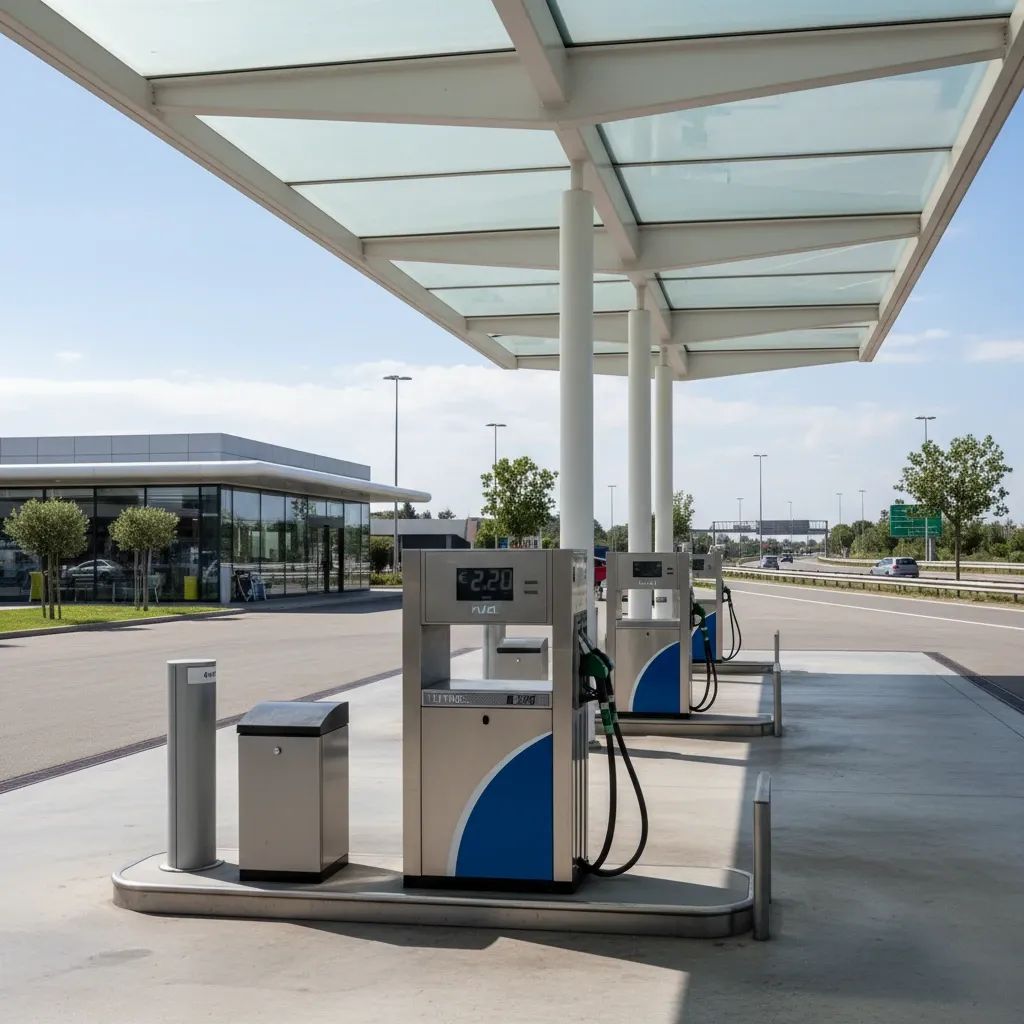
Diesel Breaks the €2.20 Barrier Across Italian Highways, Reshaping Driver Budgets
The Italy Ministry of Business and Made in Italy (Mimit) has documented a persistent climb in fuel costs that shows no signs of retreating, with diesel fuel now consistently trading above €2.20 per liter on motorways—a threshold that translates into tangible financial strain for Italy's 35 million vehicle owners. On regular national roads, petrol and diesel have continued rising, with daily increments that appear modest until multiplied across months of driving.
Key Takeaways:
• Diesel on highways now hits €2.203/liter, among the highest recorded recently
• National network pricing: €1.792/liter for petrol, €2.184/liter for diesel
• Annual impact: Average Italian driver faces €200–€415 in additional fuel expenditure
• LPG and methane remain affordable alternatives, costing roughly one-third the price of conventional fuels
The Numbers Behind Recent Price Movements
The Mimit Fuel Price Observatory has recorded cumulative increases in recent days. Self-service petrol on Italy's national road network has climbed to €1.792 per liter, with diesel reaching €2.184 per liter. While individual daily increases appear negligible, they compound steadily. Across Italy's motorway network, where traffic is heaviest, prices climb further: petrol to €1.829/liter and diesel to €2.203/liter.
The contrast with alternative fuels remains stark. Liquefied petroleum gas (LPG) trades at approximately €0.789 per liter nationally and €0.888 on highways. Methane, favored by commercial operators, sits around €1.606 per kilogram nationwide. These alternatives, while requiring vehicle conversion or initial purchase of compatible models, offer drivers a genuine way to reduce fuel expenses. LPG conversion typically costs €2,500–€3,500 depending on vehicle type, while methane-compatible vehicles command a modest premium at purchase. LPG and methane stations are widely available across Italy, particularly in northern regions, making these options increasingly accessible for residents seeking to escape rising conventional fuel costs.
Why Diesel Now Costs More Than Petrol: A Fiscal Reversal
For decades, Italian drivers benefited from diesel's price advantage over petrol—a relationship rooted in tax policy rather than market fundamentals. Starting in 2026, the Italian government shifted the tax burden between fuels, adjusting excise duties to reflect environmental priorities and fiscal needs. Specifically, petrol excise was reduced while diesel excise was increased.
This adjustment reflects European Union environmental commitments that increasingly disfavor diesel—a fuel whose combustion produces higher nitrogen oxide emissions than petrol. The fiscal realignment has created economic pressure, particularly for the substantial portion of Italian drivers who operate diesel vehicles, especially those in rural and semi-rural areas where public transport alternatives are limited.
Commercial trucking and agricultural sectors absorbed the first impact. These industries—already facing labor shortages and margin compression—cannot easily pass escalating fuel costs onto consumers without triggering broader inflation. Small haulage firms running tight margins have begun factoring in surcharges, while farmers purchasing diesel for seasonal needs face compounded pressure.
Understanding Italy's Fuel Taxation System
Italian fuel prices are shaped significantly by taxation. Between the standard 22% VAT and cumulative excise duties, a substantial portion of what drivers pay at the pump represents taxes—not the cost of refined product, storage, distribution, or retail margin. This tax structure, while established through historical fiscal policy, represents a meaningful component of fuel costs that residents should understand when evaluating their transportation expenses.
The European Context: Why Italy Remains Relatively Positioned
Even with recent climbs, Italian drivers retain an advantage over counterparts in neighboring wealthy nations. The Netherlands and Germany currently report higher pump prices, with diesel in both countries trading notably above Italian levels. Yet this comparison masks structural vulnerabilities. Italy's total tax burden on fuel remains substantial, constraining affordability for households with modest discretionary spending.
The Mimit has noted that Italy's recent price increases have been more restrained than those in France or Germany, attributing this partly to competitive retail dynamics and diversified supply arrangements.
Geopolitical Factors: Why Crude Oil Volatility Persists
Global crude oil prices remain shaped by geopolitical uncertainties. Middle Eastern tensions create ongoing concerns about supply stability, particularly regarding critical chokepoints in global oil transport. These risk factors keep premiums embedded in crude prices, with cascading effects on European pump prices.
On the supply side, OPEC+ production decisions continue to influence global availability. Additionally, the refining sector contributes upward pressure on costs. With changes in Italy's refining capacity, the country increasingly depends on imported refined products, a structural factor that affects pricing when global refining margins shift or supply bottlenecks emerge.
European regulatory requirements, including biofuel mandates, have also contributed approximately €0.02 per liter to fuel costs across the bloc, affecting both petrol and diesel markets.
Market Forecasts: What Analysts Expect
Market forecasters offer varying outlooks for 2026. Some analysts project potential moderation if geopolitical tensions ease and global inventories rise. Others maintain more cautious assessments, pointing to persistent uncertainties. The consensus among market specialists emphasizes that de-escalation of geopolitical tensions would be necessary for sustained price declines. Without demonstrable progress toward stability or credible signals that risk premiums will dissipate, relief remains uncertain.
The Italian government is reportedly considering policy tools to cushion consumers during price volatility, though implementation requires navigating both fiscal constraints and European fiscal rules.
Practical Strategies for Residents and Operators
For individual motorists, several approaches can help manage fuel expenses. Switching to LPG or methane vehicles offers the most substantial long-term savings, though conversion or purchase requires upfront capital investment. Fuel-efficient driving habits—reducing idling, maintaining proper tire pressure, and consolidating trips into fewer journeys—trim consumption at the margins. Some drivers are reorganizing work patterns to reduce commute frequency.
Commercial operators face sharper constraints. Transport companies and small businesses relying on diesel cannot easily absorb cost increases without adjusting pricing. Many are exploring efficiency improvements and engaging with policymakers about potential fiscal relief mechanisms.
Consumer advocacy organizations have calculated that the current trajectory will impose €200–€415 annually per vehicle in additional expense, depending on driving patterns and fuel consumption. For households already managing tight budgets, this figure carries real consequences for transportation and discretionary spending decisions.


