
Why This Moment Matters
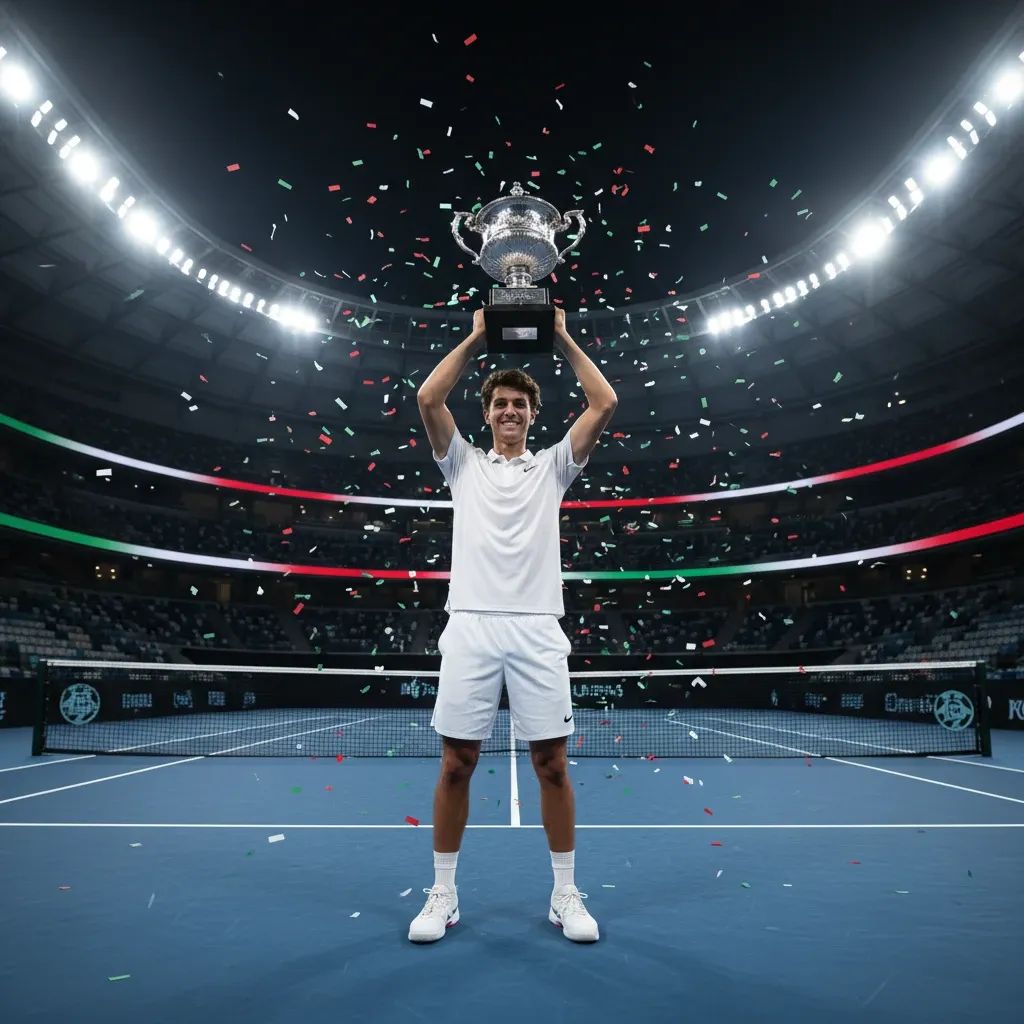
The Federazione Italiana Tennis e Padel (FITP), Italy's national tennis federation, is putting its reputation on the line in September. After consecutive championships in Malaga (2024) and Shenzhen (2025), the squad will attempt an exceedingly rare feat: a third straight Billie Jean King Cup title. Only four nations have ever achieved this—the United States, Spain, Czechoslovakia, and Australia—making what happens in Shenzhen from September 22–27 potentially historic for Italian sport.
Why This Matters
• Defending dominance: Italy seeks a three-peat in a competition where back-to-back victories have been uncommon since the 1990s.
• Paolini's fitness question: The team's star player withdrew from Washington and Toronto citing a foot injury; her condition at tournament time will determine Italy's realistic odds.
• The doubles trump card: Paolini and Errani hold the Paris 2024 Olympic gold medal in women's doubles—a psychological and tactical advantage in a competition where that format often decides ties.
• Opening test: The team faces host nation China on September 24 at 11:00 a.m. Italian time, with later rounds (if they advance) scheduled at the same time—convenient morning viewing times for residents across Italy.
Building the Right Squad
Tathiana Garbin, herself a two-time champion from her playing days, named five players to represent Italy: Jasmine Paolini, Sara Errani, Lucia Bronzetti, Elisabetta Cocciaretto, and Tyra Caterina Grant. The selection reflects strategic continuity—four of these five were part of the 2025 victory—while introducing calculated flexibility in Grant, the squad's youngest member at 22.
Paolini remains non-negotiable. The world number 4 (as of late July 2026) is ranked higher than any Italian woman has been in over a decade. Her singles performance consistently decides close ties. Beyond ranking, she brings psychological weight; opponents feel the burden of her presence before a serve is hit. Yet her recent withdrawals from the North American hard-court circuit complicate the picture. That foot problem is real, persistent, and unresolved with fewer than seven weeks to tournament time.
Errani's inclusion sends a clear message. At 39, the veteran from Reggio Emilia in Emilia-Romagna defies typical career timelines for professional tennis, occupying the roster primarily as a doubles specialist with unassailable credentials. With Paolini, she won gold in Paris 2024—a partnership that has maintained a near-perfect record since early 2024. In the context of Billie Jean King Cup ties, where doubles can determine winners and losers, Errani's presence is almost a guarantee of one point. Garbin knows this. She has built the team around it.
Bronzetti and Cocciaretto provide depth. Bronzetti has posted consistent results on the WTA Tour this season, offering reliable singles performance without flash. Cocciaretto brings something different: a high-risk, aggressive baseline game that can destabilize opponents unfamiliar with her rhythm. On hard courts—Shenzhen's surface—her forehand becomes a potential weapon against teams less equipped for that style.
Grant, the youngest, is insurance. If one of the starters suffers an unexpected issue or if Italy faces an unfavorable draw requiring a fourth or fifth singles player, Grant provides insurance without the fanfare of a late replacement.
The Qualifying Route and What It Revealed
Italy's path to Shenzhen was unconventional for defending champions. Despite holding two consecutive titles, the competition's structure required the azzurre to compete in qualification rounds. On April 10–11, on the red clay of Velletri in the Lazio region, south of Rome, Garbin's squad faced Japan—a reversal of a 2024 quarterfinale encounter.
That qualifying event, though technically preliminary, functioned as a dress rehearsal. The Italian team won 3–0, with Paolini winning both her singles matches and Errani dominating in doubles. The victory was unambiguous. More important: it provided tournament rhythm and confidence building precisely when both commodities matter most. For Italian residents watching from home, the Velletri qualifier also demonstrated that the federation prioritizes competition preparation over friendly exhibitions—a signal that Garbin views the September Finals with appropriate seriousness.
The venue itself, on Italian soil and in front of home supporters, delivered secondary benefits: television ratings exceeded expectations, ticket demand confirmed national appetite for women's tennis, and media coverage anchored the team's narrative months before Shenzhen. When Garbin later emphasized representing something "larger than ourselves," she was partially referring to this groundwork.
The Competition Landscape
The Shenzhen Bay Sports Centre Arena in southern China, near Hong Kong, with a 12,000-seat capacity, will host eight nations vying for the trophy. Beyond Italy, the field includes China (host nation), Ukraine, Belgium, Kazakhstan, Spain, Czech Republic, and Great Britain.
China occupies the most obvious challenge: home advantage is potent in team competitions. The squad will lean heavily on Zheng Qinwen, the 21-year-old Olympic singles gold medalist from Paris 2024 who also reached the Australian Open final this year. A partisan crowd and familiar court conditions could disrupt Italy's first-round rhythm, though Garbin's experience in such environments should temper any advantage the host garners.
If Italy prevails, the semifinal on September 26 likely pits them against either Kazakhstan (featuring world number 2 Elena Rybakina) or Ukraine (anchored by Elina Svitolina and Marta Kostyuk). Both represent significant tests, though neither has the recent team success that Italy possesses.
Czech Republic looms as perhaps the most dangerous opponent. The squad includes Linda Noskova (Wimbledon 2026 champion), Karolina Muchova (Australian Open finalist), and Kateřína Siniaková (Paris 2024 mixed doubles gold medalist). Czech tennis, historically strong in team formats, has infrastructure and rhythm that rivals Italy.
Spain, a three-time historical champion, has lost some star power to injury and retirement but retains tactical sophistication. Belgium, Great Britain, and Ukraine complete a field more balanced than top-heavy.
The Fitness Wildcard
Between now and September 22, Jasmine Paolini's physical status is the single most consequential variable. Her decision to skip Washington (July 27–August 2) and Toronto (August 2–13) signals genuine concern. Italian team physicians and coaching staff have elected to prioritize her condition over international points and ranking maintenance. That choice reflects both prudence and confidence in the squad's depth without her at full fitness.
She remains entered in Cincinnati (August 13–23), potentially her final tune-up before Shenzhen. If she competes there and wins multiple matches, Italy's odds improve markedly. If she withdraws from Cincinnati as well—an increasing possibility depending on the severity of the foot issue—she arrives in China with minimal match practice since Wimbledon in June. That scenario would not eliminate Italy's chances but would substantially narrow her margin for error.
Garbin's recent comments, published through the Italian Tennis Federation, expressed philosophical acceptance of pressure without defensiveness: "We return to Shenzhen as defending champions. The pressure will be there, as is natural. But we don't experience it as a burden. This group has built something beyond victories: a mutual confidence that allowed us to express our best tennis and honor the azzurra jersey." That tone—acknowledging reality rather than minimizing it—suggests a captain comfortable with either outcome and focused on process rather than paranoia.
What a Third Crown Represents
For Italian tennis infrastructure, a third consecutive Billie Jean King Cup title carries cascading implications. Success amplifies the federation's ability to attract sponsorship investment, justify women's program funding, and market the sport to younger generations—particularly in southern Italy where tennis participation has historically lagged behind the north.
The Paolini-Errani Olympics pairing in Paris 2024 already catalyzed a wave of youth interest, evidenced by junior participation rates climbing in central and southern regions. A third national championship would sustain that momentum. For potential investors and broadcasters, it signals that Italian women's tennis is not a momentary peak but a structural advantage.
Internationally, joining the three-peat club would position Italy among an elite historical company and potentially strengthen any future bid to host the Finals themselves—the federation has signaled interest in bringing the tournament to Turin or Rome in 2028 or 2029.
For Italian residents and expatriates abroad, the September 24 match against China airs at 11:00 a.m. local time—a European-friendly slot. Should Italy advance to the September 27 final, that match also starts at 11:00 a.m. Italian time, allowing consistent accessibility across time zones. Specific broadcast partners and streaming options will be announced by the Italian Tennis Federation closer to the event.
The Doubles Advantage
In Billie Jean King Cup architecture, doubles often functions as the pivotal rubber. A team needing one point to clinch can guarantee victory through the doubles pairing. Italy possesses perhaps the clearest doubles advantage of any nation in the field: Paolini and Errani have lost only one match as a pair since early 2024 and hold Olympic gold credentials. Most opposing teams lack comparable firepower or chemistry in that format.
If Italy can split the two singles matches in any tie (a realistic scenario given the squad's depth), the doubles becomes nearly automatic. That structural advantage should not be overstated—excellent teams can produce excellent doubles players—but it provides psychological relief and strategic flexibility that other nations may lack.
The Path Forward
Seven weeks separate the current moment from September 22. For Italian tennis followers, the narrative arc will turn almost entirely on Paolini's recovery trajectory. Every official statement, tournament entry, or withdrawal will be parsed for clues about her fitness level.
Garbin has orchestrated a squad with genuine depth and proven chemistry. The captain's tactical acumen and emotional intelligence have been tested across two championships and emerge refined. The team understands the magnitude of what a third title means—not just for pride or history, but for the trajectory of Italian women's tennis in the next decade.
Whether Italy joins the four-nation club of three-consecutive champions or falls short will depend partly on Paolini's foot, partly on Czech performance, and significantly on how the team handles the psychological pressure of defending a crown in an environment where defending champions often falter. Garbin's insistence on viewing the challenge as opportunity rather than obligation may prove decisive. That mindset—grounded, purposeful, free of pretense—is often what separates champions from near-misses.


