
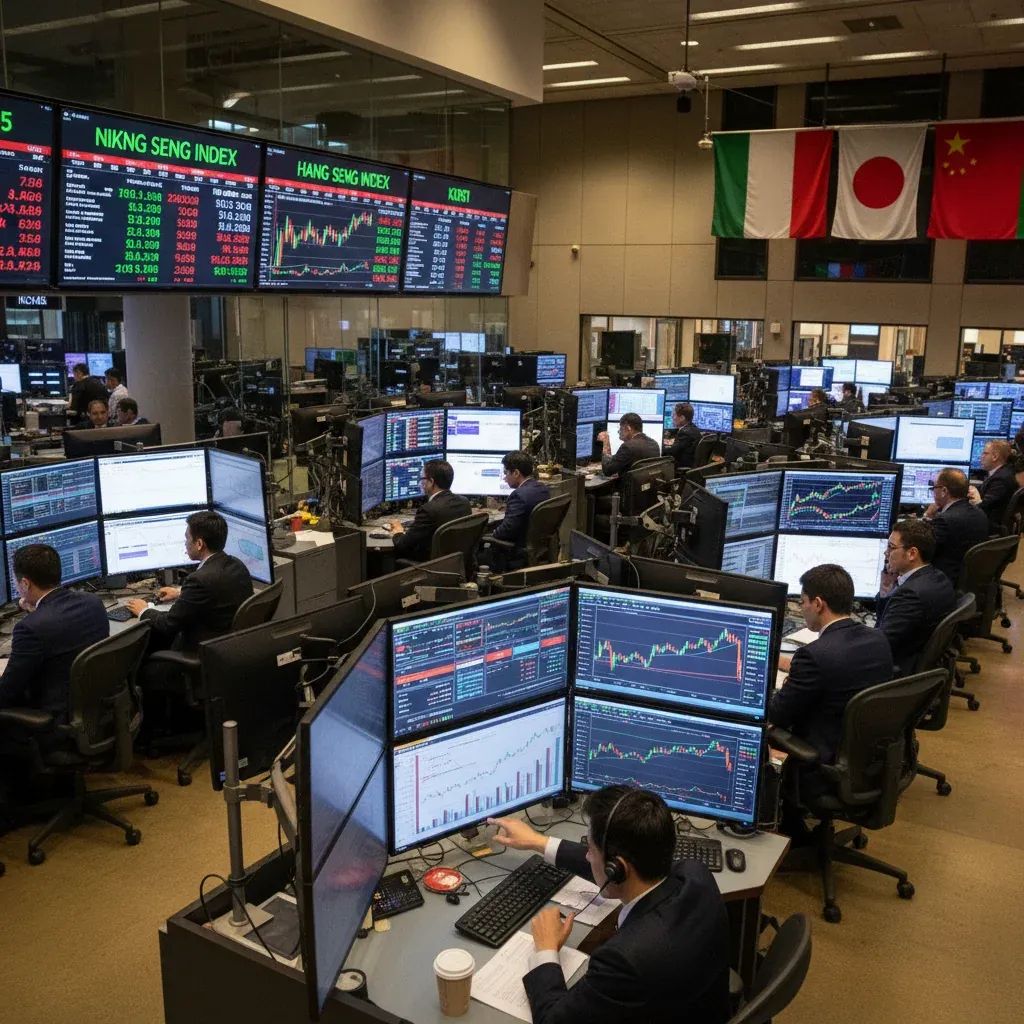
Asian equity markets surged in late-Wednesday trading, delivering a robust signal for Italy-based investors with exposure to tech stocks and energy-dependent portfolios. The rally—led by a 4.6% climb in Tokyo and a 5.4% jump in Seoul—reflects renewed optimism around semiconductor earnings and the easing of tensions surrounding the Strait of Hormuz, which has benefited energy markets.
Why This Matters
• Energy relief: Oil and natural gas prices have declined amid reports of reopening at the Strait of Hormuz and ongoing U.S.-Iran negotiations. This reduces input costs for Italian manufacturers and logistics operators heavily reliant on imported fuel.
• Tech momentum: Micron Technology's strong earnings are driving a broad rally in semiconductor and AI-related equities, benefiting Italian pension funds and asset managers with Asia-Pacific tech allocations.
• Currency stability: The yen held steady at 161.85 to the dollar and 183.70 to the euro, limiting exchange-rate volatility for Italian exporters targeting Japanese markets.
• Mixed signals: Hong Kong's 1.7% decline underscores persistent caution around China's regulatory environment and domestic economic conditions.
Energy Markets and Geopolitical Developments
The Strait of Hormuz remains a critical chokepoint for global energy supplies. Recent developments suggest a potential easing of tensions between the United States and Iran, with reports indicating movement toward negotiations. These diplomatic discussions have contributed to improved sentiment in energy markets, where crude prices have retreated from earlier peaks.
For Italy-based businesses, energy security remains a key concern given the country's heavy dependence on energy imports. Any easing of supply constraints in key shipping lanes offers relief, though energy market volatility could return if diplomatic negotiations encounter obstacles. Italy's exposure to energy price fluctuations means that sustained progress in regional talks is important for economic stability.
Tech Surge: Micron Lifts Semiconductor Sector
Wednesday's rally was catalyzed by Micron Technology, the U.S. memory-chip manufacturer, which reported quarterly results that exceeded analyst expectations. The announcement sent ripples across Asia's tech-heavy bourses, with Tokyo's Nikkei 225 posting a strong 4.6% session and Seoul's Kospi recording a 5.4% gain.
For Italian investors, the relevance lies in portfolio composition. Many Italy-domiciled mutual funds and pension schemes maintain allocations to global technology ETFs and Asia-Pacific equity indices. Strong earnings from major semiconductor firms reinforce the narrative that artificial intelligence infrastructure remains a growth area, even as macroeconomic conditions remain uncertain.
Other Asian markets showed varied performance: Shanghai closed up 0.2%, Shenzhen up 0.6%, Mumbai up 0.9%, while Hong Kong declined 1.7%, reflecting divergent regional dynamics.
What This Means for Residents and Investors in Italy
Italy's economic outlook is influenced by both energy security and global market sentiment. Recent developments in energy markets and tech sector performance have implications for Italian investors and businesses:
Energy costs: Industrial users and transport operators should benefit from lower energy prices in the near term, though the timeline for full normalization remains uncertain. Households may experience gradual relief in utility costs, though this will depend on sustained stability in global energy markets and regional developments.
Investment portfolios: Italian savers with exposure to Asian equities or tech-focused funds are likely to see positive mark-to-market gains. However, regional divergence—particularly weakness in Hong Kong and mainland China—suggests that diversification across geographies remains prudent.
Export sector: The yen's current positioning offers relative stability for Italian exporters of luxury goods, machinery, and food products targeting Japan, though market dynamics continue to evolve.
Geopolitical risk: Ongoing negotiations regarding energy security and regional stability will merit close attention from Italian businesses and investors. Any significant changes in diplomatic progress could influence energy markets and broader investment sentiment.
Regional Divergence and Market Outlook
The session's divergence between strong gains in Tokyo and Seoul and weakness in Hong Kong reflects broader uncertainty about China's economic trajectory. For Italian investors, this underscores the importance of monitoring China-related risks separately from the tech-driven optimism in Japan and South Korea.
Looking Ahead
For Italy-based investors and businesses, prudence suggests treating current market improvements as conditional on continued stability. Energy markets remain sensitive to geopolitical developments, and Italian exposure to energy costs means that sustained progress in regional diplomacy is important for economic outlook.
Currency markets and broader monetary policy will continue to shape the competitive landscape for Italian exporters. Investors should maintain diversified portfolios and monitor developments in energy markets, regional diplomacy, and Asian economic conditions closely.


