
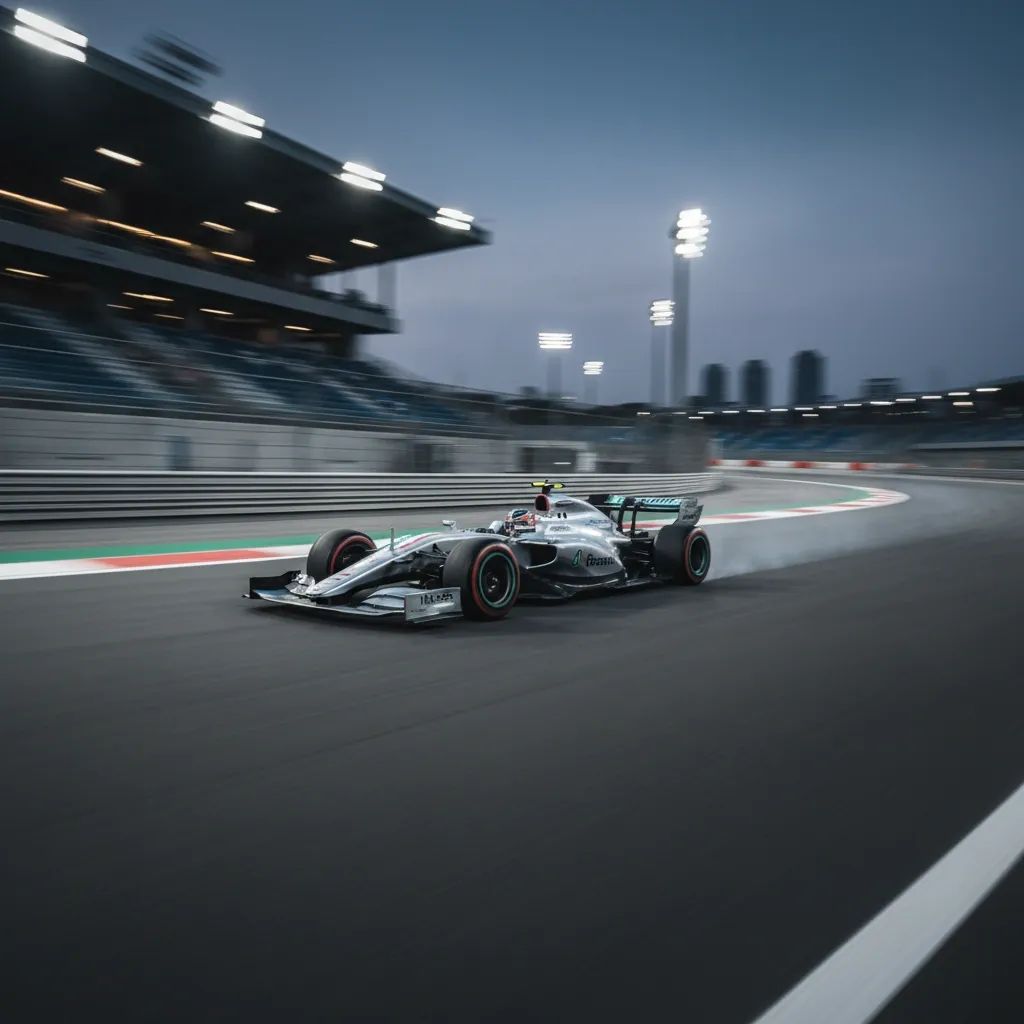
The Mercedes-AMG Petronas Formula 1 Team pilot Kimi Antonelli has extended his 2026 season dominance to five consecutive Grand Prix victories, now leading the World Championship by a commanding 66 points after a tense Monaco triumph that exposed both his composure under pressure and Ferrari's mounting technical challenges. For Italian residents, Antonelli's dominance represents the nation's first realistic shot at a World Championship since Alberto Ascari in 1953, creating unprecedented excitement across the country.
Why This Matters
• Record-breaking youth: Antonelli, at 19, becomes the youngest Monaco GP winner in Formula 1 history, cementing Italy's motorsport resurgence on the global stage.
• Ferrari's brake crisis: Charles Leclerc's late-race retirement due to brake failure raises questions about Ferrari's technical reliability as they chase Mercedes' performance edge.
• Championship trajectory: With 156 points versus Lewis Hamilton's 90, Antonelli's lead suggests a generational shift in F1 power dynamics.
• Italian pride: First Italian victory in Monaco since Jarno Trulli in 2004, fueling national celebration ahead of September's Italian GP.
A Turbulent Monaco Sunday
The 78-lap race through Monte Carlo's iconic streets delivered drama worthy of the principality's storied history. Antonelli's path to victory was anything but straightforward—a red flag stoppage with eight laps remaining forced a nerve-wracking restart after Charles Leclerc's Ferrari crashed into the barriers at Turn 19 due to catastrophic brake failure.
"After the red flag, I had some concerns—I didn't want to restart," Antonelli admitted post-race, his voice still carrying adrenaline. "But I recovered my concentration and knew I had to reach the first corner in P1." The Bologna-born teenager—from Emilia-Romagna, the heartland of Italian motorsport that has produced legendary teams like Ferrari, Lamborghini, Maserati, and Dallara—managed exactly that, controlling the restart and holding off Lewis Hamilton's Ferrari by 6.271 seconds at the checkered flag.
The victory margin tells only part of the story. Mercedes' superior race pace—what Antonelli described as "incredible" multiple times in his podium interview—proved decisive throughout the weekend. Starting from pole position, the young Italian demonstrated tactical maturity beyond his years, navigating multiple safety car periods and the pressure-cooker atmosphere of Monaco without a single misstep.
Ferrari's Twin Narratives: Progress and Problems
For Scuderia Ferrari, the Monaco GP produced contradictory evidence. Hamilton's second-place finish marked his second podium of the 2026 campaign, suggesting the seven-time World Champion is finally finding rhythm with the SF-26 after a difficult inaugural season with the Maranello squad in 2025.
"I must start by congratulating Kimi and the Mercedes team—they've done an incredible job," Hamilton said with characteristic grace. "We're progressing, but we still can't match Mercedes' pace." The British driver pointed to specific deficits: insufficient aerodynamic performance and temperature management issues that hampered race performance.
Yet Hamilton's assessment carried a note of optimism. Ferrari's strong cornering performance—a trait consistently noted in 2026 race analysis—allowed competitive lap times despite the power unit disadvantage that costs time on straights. Monaco's tight, twisty layout played to these strengths, masking weaknesses that will resurface on faster circuits.
Leclerc's race ended in heartbreak and frustration. Running third with 12 laps remaining, the Monegasque driver—Monaco's adopted son who has never won his home race—lost braking capacity entering the final sector. "It was like having no brakes at all. I couldn't do anything about it—it's all very frustrating," Leclerc explained, visibly dejected. His immediate reference to needing "to change the brake type, take the same route as Hamilton" suggests Ferrari is testing different specifications between its drivers—a risky strategy that backfired spectacularly.
Technical Divide: Mercedes' 2026 Edge
Hamilton's candid post-race comments revealed the technical gap Ferrari faces. "The car is beautiful, but it needs more aerodynamic load," he stated, acknowledging that aesthetic appeal doesn't translate to lap time. The temperature management problems he referenced likely stem from the new 2026 power unit regulations, which mandate greater electrical energy deployment and sustainable fuel use.
Mercedes appears to have mastered the integration of these complex hybrid systems more effectively than Ferrari. The German manufacturer's motorsport expertise in hybrid technology—dating to their previous dominance—has evidently carried forward into this regulatory cycle.
Research indicates Ferrari made strategic decisions in 2025 to redirect development resources toward the 2026 car early, partially at Hamilton's urging. While this approach aimed to avoid falling behind in the new technical era, Mercedes' head start in interpreting the regulations has created a performance gap that won't close quickly.
What This Means for Italian Motorsport
Antonelli's winning streak represents more than individual achievement—it signals a renaissance for Italian motorsport on Formula 1's grandest stage. Geronimo La Russa, president of the Automobile Club d'Italia (ACI), captured the national mood: "Not even in the best of dreams could we have imagined such an exhilarating Sunday. Italy is a superstar."
The symbolism extends beyond patriotic pride. Antonelli's success is already inspiring Italian racing programs and grassroots motorsport initiatives, from karting programs to junior single-seater championships. His trajectory—Mercedes Junior Programme member since 2019, F2 champion as the youngest multiple winner in that series' history, F1 rookie in 2025, now championship leader at 19—offers a roadmap for aspiring Italian talent. Italian cities are already organizing viewing parties to celebrate his victories, while merchandise sales have surged across the country as residents embrace their new motorsport hero.
The upcoming Italian Grand Prix at Monza in September looms as a potential national coronation. For Italian residents, Monza isn't merely a race venue—it's sacred ground where motorsport becomes a national celebration. The legendary Autodromo Nazionale transforms for the race, with tickets becoming extraordinarily difficult to find and the entire Lombardy region bustling with passionate fans from across Italy and Europe. If Antonelli maintains his current form, September could witness scenes of celebration unprecedented since Michael Schumacher's Ferrari glory days, with the Monza circuit filled to capacity with supporters celebrating a homegrown champion. La Russa's reference to an "exceptional and exhilarating" home race reflects expectations building across Italy's motorsport community and beyond.
Championship Mathematics
With 156 points through five races, Antonelli averages 31.2 points per event—a pace that, if sustained across a typical 22-race calendar, would yield 686 championship points. For context, Max Verstappen's record-breaking 2023 season produced 575 points.
The 66-point cushion over Hamilton creates strategic flexibility. Antonelli can afford mechanical failures or racing incidents without surrendering championship leadership—a psychological advantage that compounds Mercedes' technical superiority. Hamilton, despite his second-place finish, sits only 18 points ahead of teammate George Russell, who finished 13th in Monaco after an uncharacteristically poor performance.
Ferrari's Charles Leclerc, despite his Monaco DNF, holds fourth in the standings with 72 points—84 behind Antonelli. The brake failure cost him approximately 15 points (third-place finish would have yielded that margin), a deficit that could prove decisive if Ferrari closes the performance gap mid-season.
Historical Echoes
Antonelli's Monaco victory places him in select company. Only three Italians have conquered the principality: Riccardo Patrese (Brabham, 1982), Jarno Trulli (Renault, 2004), and now Antonelli. The 22-year intervals between these victories—1982 to 2004, then 2004 to 2026—create a poetic symmetry that Italian media has embraced.
Hamilton's playful post-race comment to Antonelli before the podium ceremony carried deeper meaning: "You're winning too much, my friend—you're catching up to me!" The seven-time champion's 103 career victories remain distant, but the remark acknowledged a generational transition unfolding in real time. Hamilton, who vacated his Mercedes seat for Antonelli ahead of the 2025 season, now watches his protégé dominate with the machinery he once piloted.
The Road Ahead
Monaco's unique characteristics—low speeds, maximum downforce requirements, minimal straight-line performance impact—provided Ferrari their best opportunity to challenge Mercedes on merit. That they finished second and DNF, while Mercedes cruised to victory, suggests the technical deficit will persist on faster circuits where power and efficiency determine outcomes.
Ferrari must urgently resolve brake specification issues before the next race weekend. Leclerc's public statement about adopting Hamilton's brake package indicates internal acknowledgment that their experimental approach failed. For a team with championship ambitions, losing 25-plus points through preventable mechanical failures is unsustainable.
Antonelli, meanwhile, faces the challenge every dominant leader confronts: maintaining psychological edge when expectations shift from underdog to favorite. His admission of pre-restart anxiety—"I didn't want to restart"—reveals human vulnerability beneath the superhuman performance. Managing these pressures across a grueling season will test whether his precociousness extends to mental resilience.
The 2026 season has 17 races remaining. If Mercedes maintains technical superiority and Antonelli avoids self-inflicted errors, Italy may celebrate its first Formula 1 World Champion since Alberto Ascari in 1953—a 73-year drought that would end with a teenager behind the wheel.


