
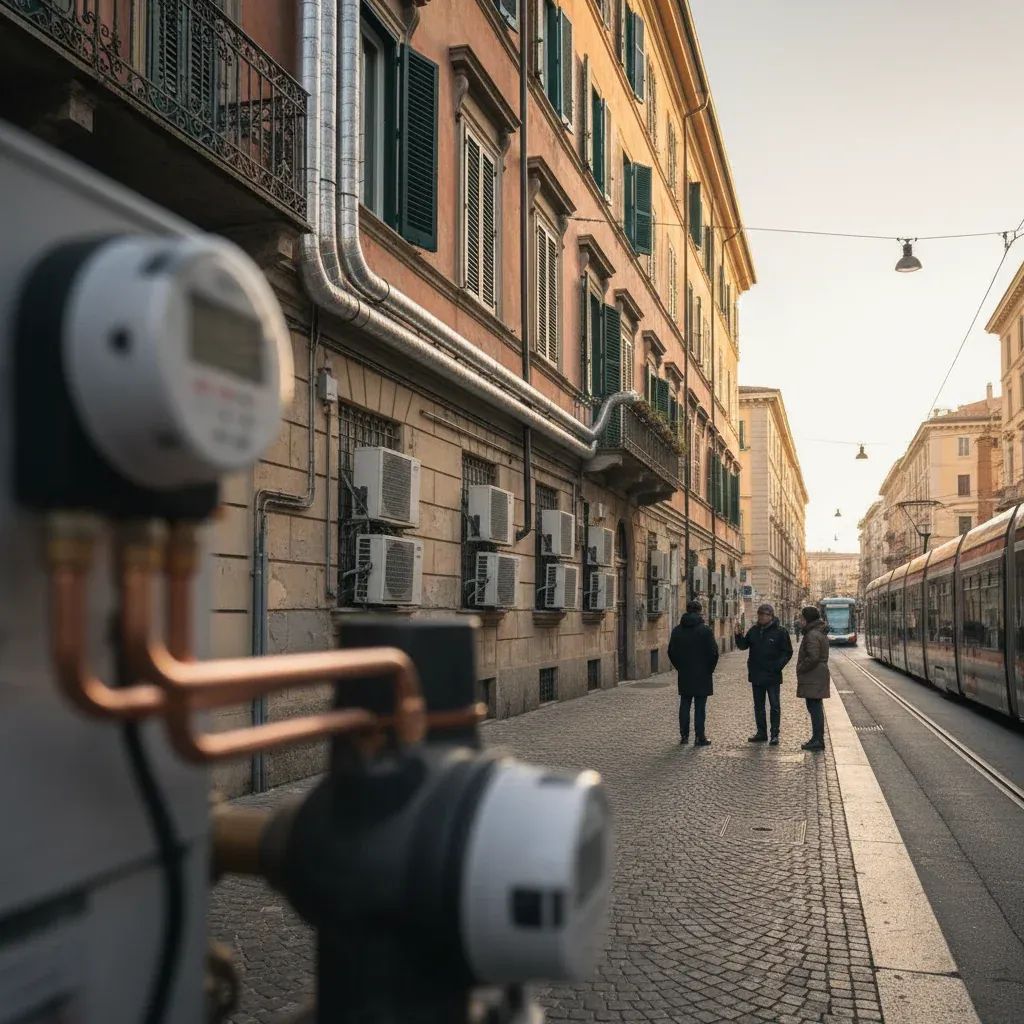
The Amsterdam TTF natural gas benchmark opened at €45.65 per megawatt-hour this morning, marking a 1.76% uptick driven by renewed anxiety over Middle East tensions and reports of disruptions affecting the Strait of Hormuz—a critical maritime passage that controls a significant portion of global liquefied natural gas (LNG) trade. For households and businesses across Italy, this translates into continued pressure on energy bills and industrial input costs, even as storage levels fluctuate.
Why This Matters for Italian Residents
• Energy Bills Remain Elevated: Natural gas prices have remained significantly higher than pre-crisis levels, keeping electricity and heating costs elevated throughout the region.
• Industrial Competitiveness at Risk: Energy-intensive manufacturers face persistent cost pressures that threaten margins and production planning.
• Supply Security Concerns: Analysts warn that disruptions to key shipping routes could strain supply chains and fuel markets through the coming year.
Middle East Developments Keep Markets on Edge
The latest price movement reflects growing concern over the Strait of Hormuz, the narrow maritime passage connecting the Persian Gulf to the Arabian Sea. Reports indicate that geopolitical tensions involving multiple parties have created uncertainty about the stable flow of LNG from the Gulf region, which supplies a significant share of Europe's imports.
Recent developments in regional tensions have heightened market anxiety, leading analysts to warn that any prolonged disruption could create supply pressure on European markets already adjusting to structural changes in global energy trade.
April's Price Trajectory: A Month of Market Swings
Natural gas prices in Europe have traced a volatile path through April, with the TTF benchmark fluctuating significantly. The contract has experienced considerable swings as traders balance concerns about geopolitical risk against fundamentals of supply and storage levels. Over the past month, prices have moved within a range reflecting both near-term anxiety and longer-term market expectations.
Energy analysts note that markets are pricing in geopolitical risk premiums, meaning that concerns about potential disruptions—rather than current physical emergencies—are driving price movements. This situation is described as "costly normalcy": adequate supply in the immediate term, but persistent cost pressures.
What This Means for Italian Consumers and Industry
Italy remains among the most gas-dependent economies in the European Union, with natural gas playing a crucial role in electricity generation and heating. This dependence makes the country particularly sensitive to price movements at the Amsterdam hub and any disruptions to supply routes.
For households, higher wholesale prices typically translate into increased utility bills over the coming months. Energy-intensive industries—steel, ceramics, chemicals—face challenges from elevated input costs and the uncertainty that complicates long-term procurement planning and investment decisions.
Energy support measures remain in place, but policymakers have indicated that fiscal room for additional relief is limited. Businesses are increasingly turning to energy-efficiency investments and forward contracting strategies to manage price volatility.
European Storage and Supply Outlook
European gas storage remains an important buffer against supply shocks. While current levels are adequate for immediate needs, analysts emphasize the importance of maintaining healthy storage reserves heading into winter and managing the refilling season carefully.
The European Commission has set storage targets aimed at balancing supply security with market stability. Energy experts warn that further geopolitical shocks or infrastructure problems could put pressure on storage levels and create tightness in supply.
Global LNG Markets: Structural Shifts Ahead
Europe's LNG imports are projected to increase substantially as countries work to secure supplies and diversify away from traditional sources. The continent is committed to reducing purchases from certain suppliers, intensifying competition for available cargoes from traditional exporters and new projects coming online.
New capacity from multiple regions is expected to eventually ease market tightness, though timelines and geopolitical developments remain uncertain. Analysts note that Asian demand for LNG remains strong, creating competitive pressure that underscores the global interconnectedness of gas markets.
Policy and Regulatory Response
The Italian Ministry of Ecological Transition continues to work on accelerating renewable energy development and exploring options to increase energy independence through various domestic initiatives. The European Commission is pushing for diversified supply sources, improved interconnections, and expanded renewable capacity to reduce long-term reliance on imported fossil fuels.
However, Italy's substantial reliance on gas-fired power generation means that any significant shift away from natural gas requires substantial investment in infrastructure, storage, and alternative generation capacity—projects that require time to develop and implement.
Outlook: Managing Uncertainty
Market participants expect energy costs to remain elevated through the foreseeable future, with price volatility reflecting ongoing geopolitical risks. For residents and businesses in Italy, the practical message is clear: energy costs will continue to represent a significant portion of household budgets and corporate expenses.
Strategic approaches—including energy efficiency improvements, careful procurement planning, and diversification of energy sources—remain important tools for managing costs in an environment characterized by structural uncertainty in global gas markets and geopolitical complexity.


