
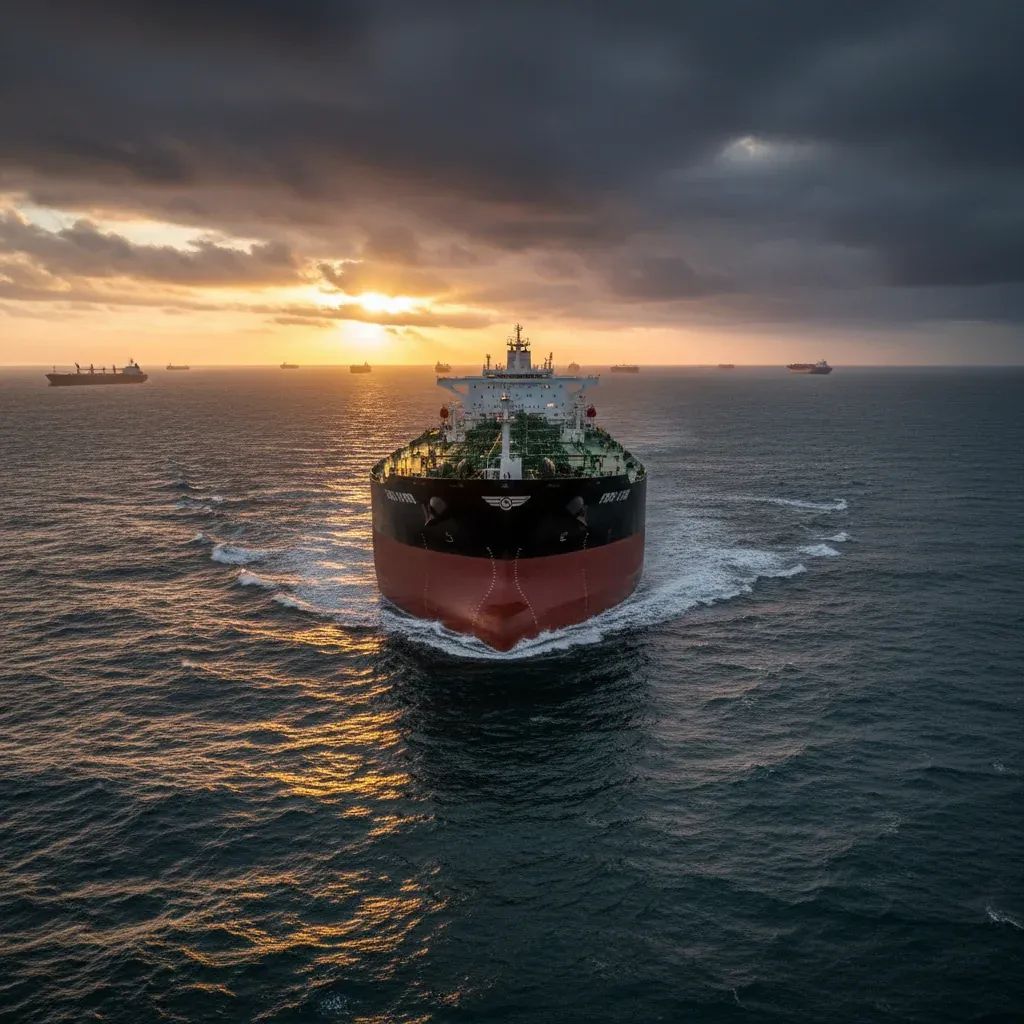
The Italian economy faces a fresh squeeze as global oil benchmarks gyrate wildly in response to the deepening standoff between Washington and Tehran. As of late April 2026, for households and businesses already navigating elevated energy costs, the latest swing in crude prices—driven by the collapse of high-stakes talks in Pakistan—underscores how vulnerable Italy remains to shocks originating thousands of kilometers away in the Persian Gulf.
Why This Matters
• Fuel costs: Pump prices typically track Brent crude with a three-week lag; a sustained rally above €95 per barrel translates to roughly €0.05–0.08 more per liter at Italian service stations.
• Inflation risk: ISTAT (Italy's national statistics institute) flags energy as the fastest-moving component of the consumer price index; April's rally threatens to reverse two months of disinflation.
• Industrial margin pressure: According to Confindustria (Italy's manufacturers' confederation), energy's share of turnover is expected to reach 5.9% in 2026, up from 4.9% in 2025, compressing margins for exporters and small producers alike.
Crude Surges, Then Retreats—But Volatility Persists
On April 21, West Texas Intermediate settled at $92.33 per barrel in New York trading, up 3.10% on the session, while Brent—the global benchmark—climbed 3.04% to $98.38. By the following day, however, both contracts had reversed course: WTI dipped below $89 per barrel intraday before closing near $88.73, and Brent hovered just under $98, touching $97.63 at one point before steadying.
The whipsaw reflects a market caught between two narratives. On the one hand, 21 hours of dialogue in Islamabad between US and Iranian negotiators ended without progress on April 21, reviving fears that the Strait of Hormuz—which carries one-fifth of seaborne oil and liquefied natural gas—could remain effectively blockaded or subject to sporadic closures. On the other, President Trump's unilateral extension of a ceasefire, announced April 22 after Tehran's delegation failed to show up for follow-on talks, briefly calmed nerves.
Yet the reprieve may prove fleeting. Iran's Foreign Ministry has publicly dismissed the blockade of its tanker fleet by US warships as a breach of any truce, while Trump warned he is prepared to implement comprehensive military strikes should diplomacy fail. Satellite imagery confirms American unmanned surface vessels working to clear Iranian-laid mines from the strait's shipping lanes, and the US Navy has impounded at least one Iranian cargo vessel, the Touska, in the Gulf of Oman.
What This Means for Italian Consumers and Industry
Italy imports virtually all its crude and refined products, making it acutely sensitive to Middle Eastern supply shocks. The country's refiners—concentrated in Sicily, Sardinia, and the northern Adriatic—source roughly 12% of feedstock from the Gulf region, either directly or through Rotterdam spot markets that themselves track Brent.
When Brent trades above €95 per barrel for an extended period, Italy's wholesale diesel and gasoline racks adjust within two to three weeks. A €10 increase in the Brent price typically adds €6–8 to the cost of a barrel of finished motor fuel after refining margins and logistics. Retailers then pass most of that increase to the pump, where excise duties and VAT amplify the final sticker shock.
For industrial users, the squeeze is more immediate. Italian chemical producers, glassmakers, and ceramic tile manufacturers—clustered in Emilia-Romagna and Veneto—rely on naphtha and fuel oil derivatives priced off Brent. A sustained rally in crude trims operating margins at a moment when export orders to Germany and France remain sluggish. Energy now represents 5.9% of turnover for Italian manufacturers, up from 4.9% a year earlier, eroding competitiveness against producers in Spain and Poland who benefit from greater nuclear or renewable capacity.
The Hormuz Choke Point and Europe's Strategic Dilemma
At the heart of the crisis lies the Strait of Hormuz, a 33-kilometer-wide channel separating Iran from Oman. Roughly 20% to 25% of global seaborne crude and a similar proportion of LNG pass through the strait each day, destined for refineries in Asia and Europe. Iran's Revolutionary Guard has demonstrated the ability to mine, harass, or temporarily close the waterway in retaliation for US-Israeli strikes on Iranian nuclear and missile facilities earlier this year.
Iraq's state oil company has already cut output by two-thirds because tankers cannot safely navigate the Gulf to load at Basra. Emirati and Qatari terminals have faced sporadic attacks, further tightening available supply. Analysts at the International Energy Agency have characterized the situation as "the strongest blow ever" to global energy markets, more severe in its immediate supply impact than either the 1973 embargo or the 2022 surge following Russia's invasion of Ukraine.
In response, the IEA authorized a coordinated release of approximately 400 M barrels from strategic reserves in North America, Europe, and Asia. The European Commission has advised member states—including Italy—to prepare contingency plans for "prolonged supply shock," including potential rationing of transport fuels should the crisis extend beyond four weeks.
OPEC+ Holds Fire, but Structural Surplus Looms
Overlaying the geopolitical drama is a medium-term supply picture that many traders describe as bearish. The Organization of the Petroleum Exporting Countries and its allies—collectively known as OPEC+—suspended planned output increases for the first quarter of 2026, citing weak demand in China and inventory builds in the United States. Saudi Arabia and the United Arab Emirates have signaled a strategic pivot away from pure price defense toward market-share protection, hinting at faster production ramps once Gulf shipping lanes reopen.
Forecasters expect structural oversupply to reassert itself by mid-year if the Iran standoff de-escalates. Futures curves for both WTI and Brent remain in contango beyond the third quarter, implying that traders anticipate prices will drift lower as Russian export capacity—disrupted by Ukrainian drone strikes in March—gradually recovers and Venezuelan output inches upward under any post-Maduro political settlement.
Accelerating the Renewable Pivot
For Italy, the episode reinforces the economic case for accelerating its renewable build-out. The government's National Energy and Climate Plan envisages solar capacity rising from 28 GW today to 79 GW by 2030, with onshore and offshore wind adding another 30 GW. Every gigawatt-hour generated domestically from sun or wind displaces imported molecules priced in dollars and subject to the whims of Middle Eastern geopolitics.
Italian utilities and industrial off-takers are already signing long-term power-purchase agreements for solar farms in Puglia and Sicily at prices well below the current wholesale electricity rate, which itself tracks natural gas. Battery-storage projects—particularly lithium-ion systems co-located with solar arrays—are attracting record investment as a hedge against both intraday price spikes and longer-term supply disruptions.
Rome's energy ministry has indicated it may fast-track permitting for additional renewable projects if Brent remains above €95 through the summer, viewing the current crisis as both a fiscal threat and a political opportunity to reduce fossil-fuel dependence.
Practical Steps for Residents and Businesses
For Italian motorists facing higher fuel costs, consider filling your tank before the price adjustment propagates fully through retail networks—typically by mid-May. Explore multi-modal commuting options, including public transport passes or car-sharing programs, which may offer savings during periods of elevated pump prices.
For energy-intensive businesses, review your power-purchase agreement options; long-term contracts for renewable energy are currently competitive with fossil-fuel-indexed rates and offer protection against further volatility. Engage with your industry association to assess shared negotiating power on fuel surcharges with suppliers.
What to Watch
Market participants will focus on three near-term variables. First, whether Iranian negotiators return to the table in Islamabad or an alternate venue, and whether the US Treasury offers any sanctions relief as an inducement. Second, the operational tempo of US and Iranian naval forces in the Gulf; any clash between surface vessels or the sinking of a tanker would likely send Brent toward the $110–120 range within hours. Third, the pace at which Iraq and the Gulf monarchies restore export capacity once—or if—the strait reopens, which will determine how quickly prices normalize.
In the meantime, Italian motorists can expect pump prices to creep higher through early May, and energy-intensive manufacturers will continue to absorb margin compression unless they can pass costs downstream. For policymakers in Rome, the episode is a stark reminder that as long as Italy remains a net hydrocarbon importer, its economic fate is partially written in the deserts and shipping lanes of the Middle East.


