
The European Commission has pulled €2M in funding from Venice's storied cinema programs, escalating a clash over cultural autonomy that pits Brussels' democratic values test against one of Europe's oldest art institutions—and the Biennale di Venezia is preparing a legal fight that could reach the European Court of Justice.
The funding cut, formalized July 21, 2026 by the European Education and Culture Executive Agency (EACEA), strips support from the Biennale College Cinema and Venice Production Bridge initiatives over the 2026–2028 period. The trigger? The Biennale's decision to reopen the Russian pavilion at its 2026 Art Exhibition after a two-year exclusion following Moscow's full-scale invasion of Ukraine in 2022.
Why This Matters
• Cinema operations continue: The €2M slash translates to roughly €700,000–750,000 annually, a gap the Biennale says it can absorb without cutting programming for the 83rd Venice Film Festival (September 2–12, 2026) or future editions.
• Legal precedent at stake: This marks the first time Brussels has revoked major cultural funding on democratic values grounds tied to a sanctioned nation's participation—setting a template for future disputes.
• Constitutional principle invoked: Biennale President Pietrangelo Buttafuoco is quoting the 18th-century Prussian legal maxim "There will be a judge in Berlin"—a reference to judicial independence against state overreach—signaling a constitutional challenge.
The Funding Trap: Cinema Pays for Art's Decisions
The paradox driving the controversy is structural. The revoked MEDIA programme grants were earmarked exclusively for the Cinema Division's talent development and co-production platforms—programs with zero administrative or programmatic link to the Art Biennale's pavilion system. Yet Brussels justified the cut by arguing that EU taxpayer money must not support events failing to uphold democracy, open dialogue, diversity, and freedom of expression—values it deems incompatible with contemporary Russia.
Over 20 European nations and Ukraine had lobbied the Biennale to maintain the Russian pavilion's closure, calling its reopening a betrayal of solidarity. The Commission sent three formal inquiry letters to the Biennale seeking justification; officials received detailed responses each time, yet—according to Buttafuoco—"they repeated the same questions as if our punctual answers never existed."
Film Festival Director Alberto Barbera called the decision "scarcely comprehensible," noting it lacks legal grounding and punishes a department uninvolved in the Art Biennale dispute. "The cinema sector has nothing to do with the polemics artificially constructed around Biennale Arte," he stated at the festival's presentation press conference.
"We Do Not March to Drums"
Buttafuoco framed the dispute as an existential question of institutional independence. "We will not bow to political dictates," he declared. "We are called to international research in the arts. Obeying their desiderata would violate the principles of autonomy, freedom of expression, and imaginative inquiry that have defined this institution for 131 years."
He invoked the historical principle of judicial review—"we will find a judge in Berlin"—and emphasized that the Biennale's mission is to build "the city of poets, certainly not that of the European Commission." The phrase references an anecdote in which Frederick the Great of Prussia was reportedly constrained by an independent judiciary, symbolizing the rule of law over executive power.
Buttafuoco also highlighted a media comparison circulating in Italian press: "The Commission cuts €2M from the Biennale and gives €6 billion in six months to Putin." Critics argue the jab reflects frustration over perceived selective enforcement of values-based conditionality in EU funding decisions, while supporters contend it underscores inconsistency in Brussels' approach to geopolitical funding standards.
Financial Reality: A Manageable Hit, But a Symbolic Wound
Despite the heated rhetoric, the immediate operational impact appears limited. Barbera explicitly confirmed that no programming cuts have been requested for 2026 or 2027, and ticket prices and public access to Biennale programs will remain unchanged. The Biennale's broader budget—bolstered by ticket sales, private sponsorships, and Italian state funding—can absorb the annual €700,000–750,000 shortfall without dismantling talent pipelines. Italian state funding and other revenue sources remain intact despite the EU cut.
The Venice Production Bridge, which connects filmmakers with financiers and distributors, and Biennale College Cinema, which mentors emerging directors, will proceed as planned. The festival's 83rd edition opens in September with its full slate intact.
Yet the symbolic wound runs deeper. The funding revocation represents the first time a flagship European cultural institution has been financially penalized under a democratic values compliance framework tied to geopolitical alignment. Legal experts note the novelty: while Brussels routinely enforces rule-of-law standards on member states through infringement procedures, applying a values test to cultural programming choices is untested ground.
What This Means for Residents
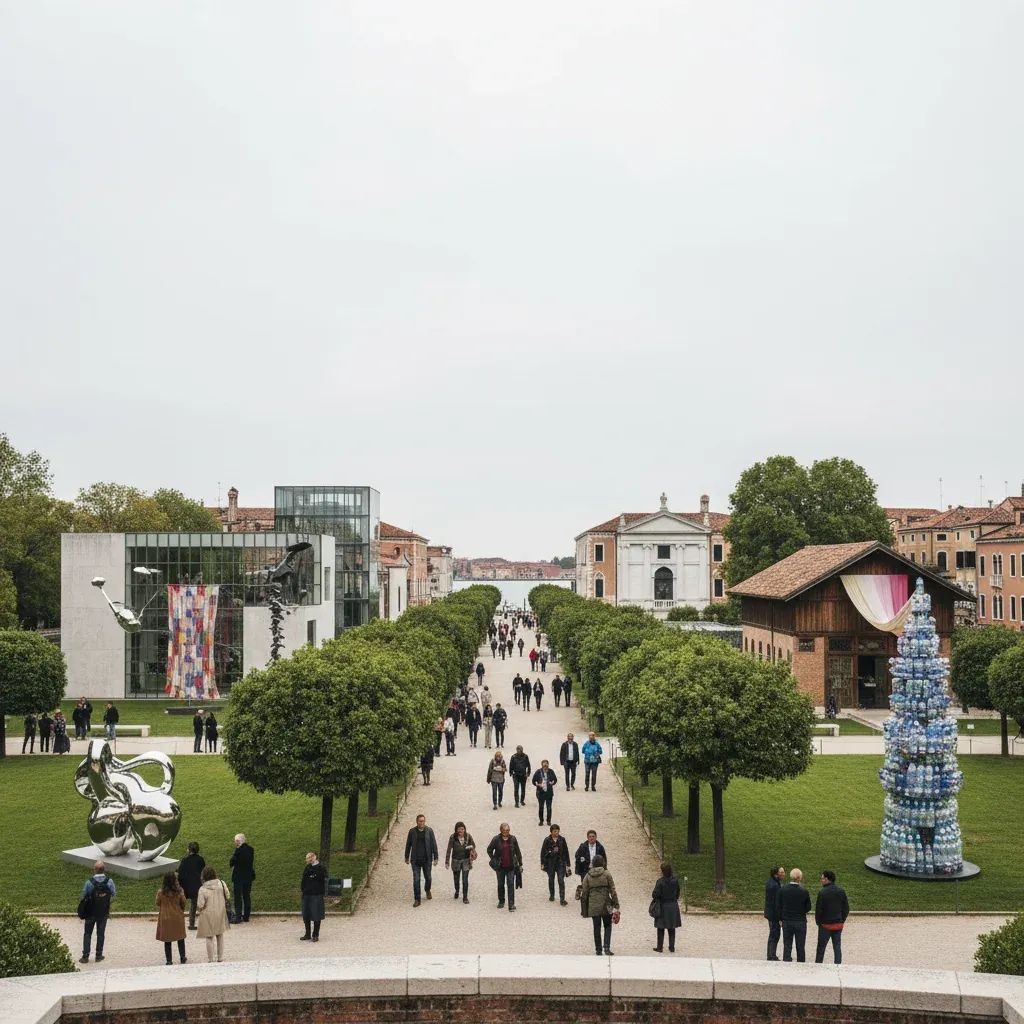
For Italians and Venice residents, the clash underscores a tension between national cultural sovereignty and EU conditionality. The Biennale, founded in 1895, stands as one of Italy's premier cultural exports and operates as an autonomous foundation but relies on mixed public-private funding. The immediate impact on Venice residents and Italian cultural professionals working in the sector is minimal—festival programming and collaborative initiatives continue without disruption. However, the episode raises broader questions about how far Brussels can extend its influence over institutions it co-finances—particularly when the contested decision (hosting a national pavilion) was made by the Russian Federation itself, which owns the physical exhibition space at the Giardini della Biennale.
Italian politicians across the political spectrum have rallied to the Biennale's defense, framing the dispute as an overreach by EU technocrats into artistic matters. The legal challenge, likely to be filed under Article 263 of the Treaty on the Functioning of the European Union (which allows annulment actions against EU institutional acts), could take months or years to resolve in Luxembourg.
In the interim, the Biennale faces no immediate cash crunch but must navigate a reputational tightrope: defending institutional autonomy without appearing indifferent to Ukraine's plight or dismissive of democratic solidarity.
The Broader Context: Culture Under Pressure
The Biennale case arrives as EU cultural funding faces broader scrutiny. In October 2025, Culture Action Europe and 30 partner organizations lobbied against proposed €27.56M cuts to the Creative Europe programme for 2026. While those cuts were partially restored, the sector remains anxious about its 0.2% slice of the EU budget.
Meanwhile, Brussels launched its 2026 Creative Europe call with €60M for cross-border cooperation, and Horizon Europe's Culture, Creativity and Inclusive Society cluster allocated over €200M for research and innovation. The funding landscape is thus contradictory: expansion in some areas, retrenchment in others, with values-based conditionality emerging as a new variable.
For institutions navigating this terrain, the lesson is stark: EU money increasingly comes with ideological strings attached. Whether the courts affirm Brussels' right to impose those conditions—or side with the Biennale's autonomy claim—will shape the future of cultural diplomacy across the continent.
The 83rd Venice Film Festival opens September 2, 2026 with business as usual. The legal drama, however, is just beginning.


