
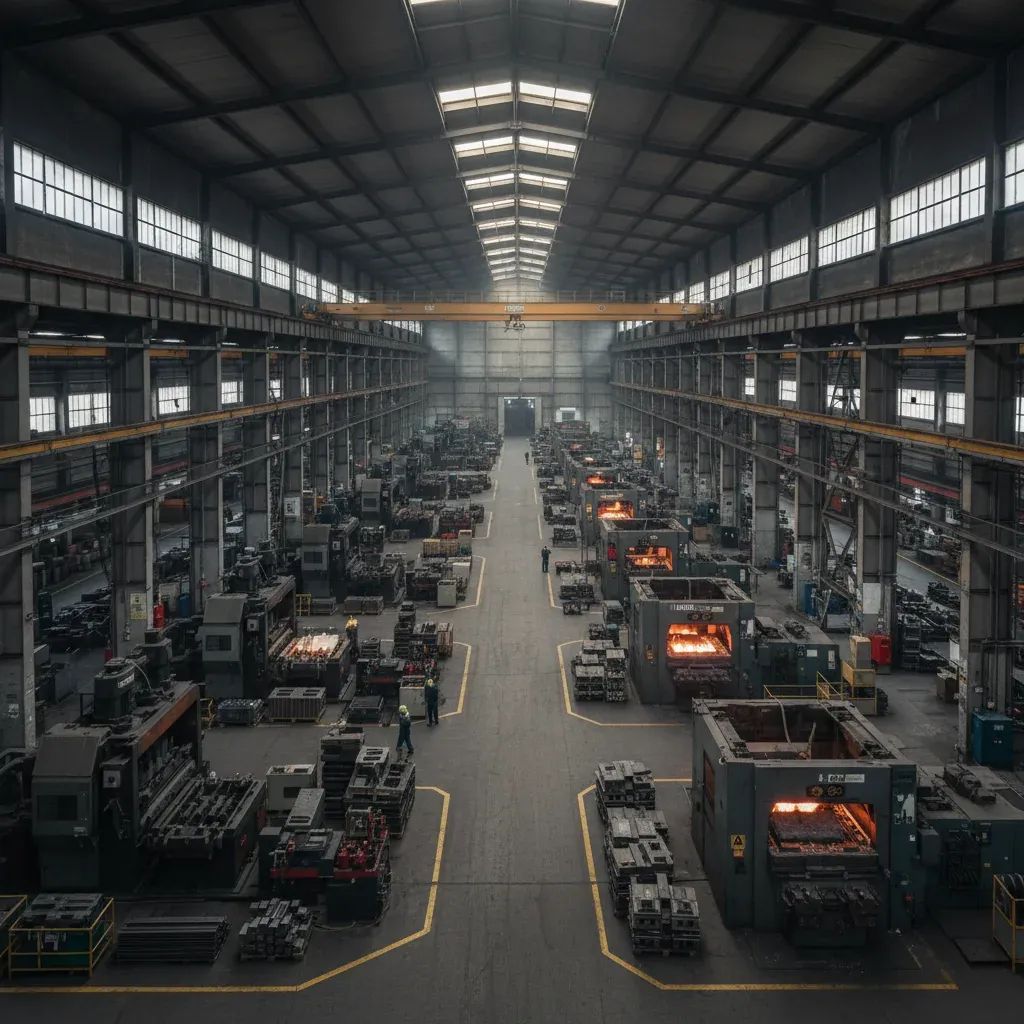
The Italy-based metal die-casting firm Costampress, which employs roughly 120 workers in Scorzè near Venice, is careening toward judicial liquidation after its German owner Accursia Capital failed to wire a €150,000 payment due this week. That sum was earmarked to keep machinery running and to secure court approval of the company's restructuring plan under Italy's Corporate Insolvency Code—a plan now at risk of collapse.
Why This Matters
• Job risk: 120 Veneto manufacturing jobs hang by a thread; judicial liquidation may terminate employment contracts within four months.
• Fund exits: Accursia has already sold two sister die-casters—Aluminium Die Casting and Friulpress—raising union accusations of asset-stripping across the supply chain.
• Strike Monday: Workers and unions call an April 21 walkout and picket at the factory gates, demanding regional intervention.
• Tribunal deadline: The Venice court must decide whether to approve the restructuring plan or declare liquidation in the coming days.
How a €150,000 Shortfall Torpedoed the Rescue
Accursia Capital promised regional officials that it would deposit €150,000 this week to fund plant maintenance and satisfy creditor requirements for a concordato preventivo in continuità—the "preventive agreement with business continuity" mechanism under Italy's insolvency framework. The deadline passed; the wire never came.
"This is an act of irresponsibility that pushes the company toward the abyss," Fim Cisl and Fiom Cgil wrote in a joint statement. "It renders the concordat proposal extremely fragile." Court-appointed commissioners are now assessing whether the restructuring plan can still be approved or whether Costampress should enter judicial liquidation.
Under Italy's insolvency framework, once liquidation is declared, existing labour contracts are suspended. The court-appointed liquidator has four months to decide whether to continue or terminate each employment relationship. If no decision is made within 120 days, contracts terminate automatically. For Costampress's workforce—many with decades of seniority—that clock is a ticking economic bomb.
Why €150,000 Matters
In a concordato in continuità, creditors must be convinced they will recover more than in a fire-sale liquidation. Keeping presses, furnaces, and tooling operational signals that the business can generate cash to pay suppliers, banks, and taxman. A maintenance blackout means halted production, lost orders, and a slide toward scrap value—all of which undermine the "better than liquidation" argument judges require.
Regional Economy Minister Massimo Bitonci issued a terse rebuke: "We find ourselves noting the failure to respect commitments assumed at the regional table by the German fund Accursia Capital." Fiom official Cristian Modesto was blunter: "They are killing every business in the sector."
What Judicial Liquidation Means for Workers and Creditors
If Costampress enters judicial liquidation:
Employee contracts suspend immediately upon declaration.
A liquidator inventories assets, solicits bids, and distributes proceeds according to creditor priority: secured creditors first, then the tax authority, then unsecured trade creditors.
Wages owed before the filing date may be protected under Italian insolvency law if workers continue in roles essential to asset preservation.
The liquidator has 120 days to either rehire staff or let them go; silence equals termination.
Former employees become unsecured creditors and typically recover limited sums after banks and the state take their share.
Italy's insolvency framework prioritizes business continuity where economically rational, expressly to safeguard jobs. But continuity requires a credible business plan and fresh capital—both of which evaporated when Accursia's wire failed to arrive.
A Broader Pattern: Multiple Die-Casters, One Owner
Costampress is not an isolated case. Accursia Capital holds stakes in multiple Italian aluminum die-casters. The fund has already sold two sister companies—Aluminium Die Casting in Saonara, Padua, and Friulpress-Samp in Sesto al Reghena, Pordenone (171 employees)—to undisclosed buyers. Union officials suspect a pattern of asset-stripping: acquire distressed suppliers at a discount, extract working capital and receivables, then flip the asset or allow it to fail.
The Likum facility in Treviso, also linked to Accursia, was closed recently, adding to concerns about the fund's operational strategy across its Italian portfolio.
Combined, these operations touch more than 400 workers across Veneto and Friuli.
What This Means for Residents
If you work in automotive supply chains or adjacent manufacturing in Veneto, Friuli, or the wider northeast, the Costampress situation offers a stark reminder of vulnerability. The current industrial downturn—driven by high energy costs, weak demand, and supply-chain fragmentation—has created multiple crisis situations affecting hundreds of thousands of workers nationwide. Die-casting and stamping firms across the region have faced significant challenges.
For Costampress employees, Monday's strike and picket aim to force the Veneto Region and potential buyers to the table before the tribunal's decision. Regional officials promise continued engagement and are exploring whether new industrial partners might lease the plant on an interim basis, buying time to develop a viable turnaround.
Creditors face a stark choice: accept a restructured payout over time or gamble on liquidation, knowing that secured lenders and the taxman receive priority. Unsecured suppliers—many themselves small machine shops and chemical distributors—stand to lose most of their invoices.
Next Steps
• April 21 strike: Unions converge on the Scorzè plant; simultaneous discussions at regional headquarters.
• Tribunal decision: The Venice court will assess whether the restructuring plan can be approved or whether liquidation is necessary.
• Buyout search: The Region is canvassing potential buyers. Any serious bidder must demonstrate capacity for immediate maintenance plus working capital to restart operations.
• Wage protection: If liquidation proceeds, Italian workers benefit from statutory wage-protection mechanisms, though coverage is typically limited to statutory caps.
The Broader Context: Insolvency Law and Corporate Strategy
Italy's insolvency framework was designed to encourage early intervention and preserve going concerns. Negotiated restructuring lets debtors craft deals with creditors before formal insolvency, theoretically faster and less damaging to workers than liquidation.
In practice, the system depends on good-faith capital commitments. When a financial sponsor promises cash at a regional table—witnessed by union delegates, ministry officials, and judges' representatives—then fails to deliver, the restructuring scaffolding collapses.
Accursia Capital, registered in Munich and Milan, specializes in distressed acquisitions. Its Italian track record has become a test case: can foreign funds operate effectively in Italy's manufacturing heartland while maintaining creditor and worker protections?
For now, 120 workers in Scorzè await the tribunal's decision and Monday's negotiations, hoping for a white knight or a credible restructuring plan—or facing the prospect of joining Italy's lengthening list of manufacturing jobs lost to financial distress.


