
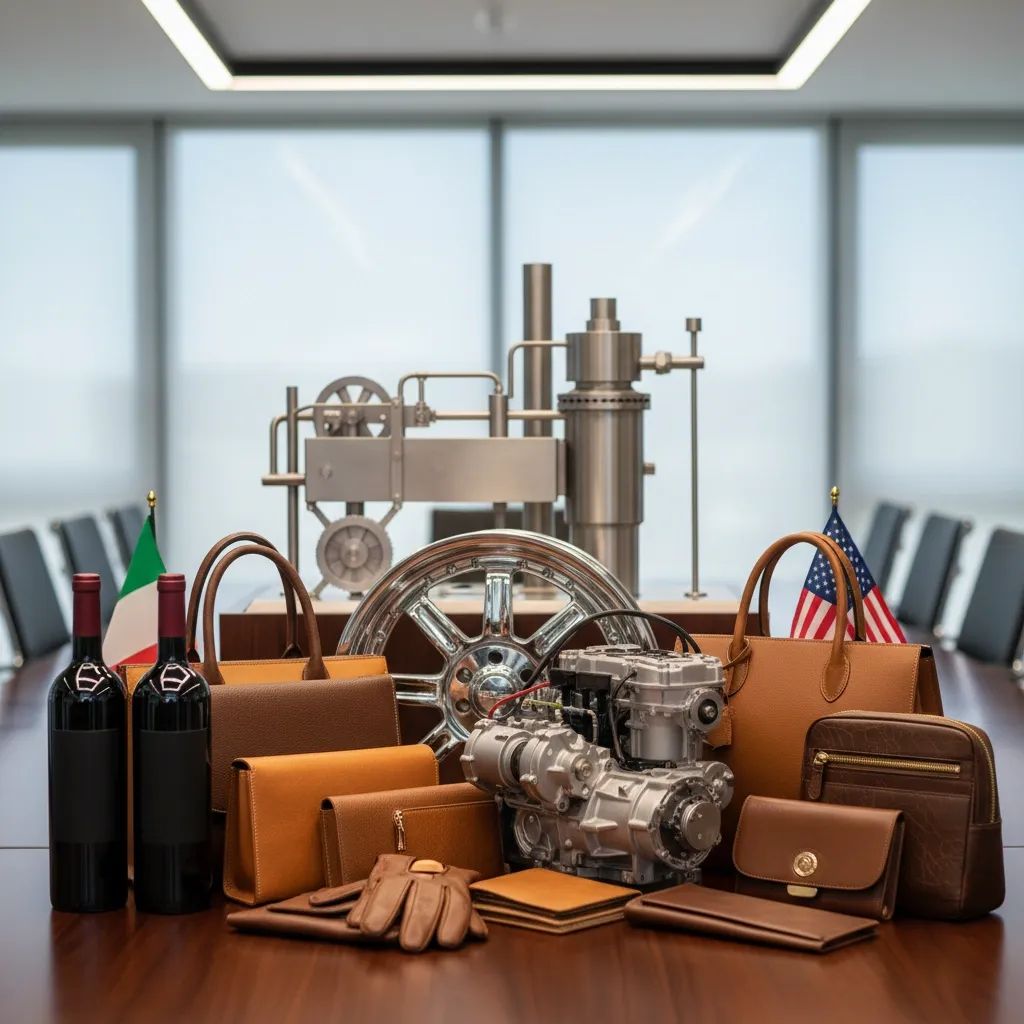
Italian Exporters Face Imminent 15% U.S. Tariff Hit
The Italian Ministry of Economy and Finance must prepare for significant trade disruption. The United States Treasury Secretary, Scott Bessent, confirmed on March 4 that Washington will likely implement a 15% global tariff this week—a move that will affect Italian exporters of wine, machinery, automotive parts, and luxury goods.
Key Details:
• Timing: The tariff is expected to take effect this week (week of March 4, 2026), replacing the current 10% baseline.
• Legal basis: It operates under Section 122 of the Trade Act of 1974, valid for 150 days unless Congress extends it.
• Italian sectors at risk: Agri-food (especially wine and olive oil), automotive components, fashion, and machinery face cost increases that could impact their U.S. market competitiveness.
Legal Background: From Court Ruling to New Tariff Strategy
The announcement follows a February 2026 Supreme Court ruling that invalidated President Donald Trump's earlier country-specific tariffs imposed under the International Emergency Economic Powers Act (IEEPA). The justices ruled the administration lacked authority to levy duties via that statute.
On February 24, Trump rolled out a 10% universal tariff using Section 122, a provision that permits temporary trade measures to address balance-of-payments concerns. Now Bessent has signaled the rate will climb to 15% this week. Speaking to CNBC and reported by Bloomberg, the Treasury chief framed the increase as temporary while his team conducts parallel investigations into national security threats (Section 232) and unfair trade practices (Section 301).
What This Means for Italian Exporters
Italy ships approximately €50 billion in goods annually to the United States, making trade flows with the U.S. significant for Italian businesses. The tariff increase will affect multiple sectors:
High-Impact Sectors
Wine and agri-food: The U.S. is a major export destination for Italian wine. A 15% tariff will increase costs for American importers and potentially shift buyer preferences toward other suppliers. Olive oil, pasta, cheese, and cured meats will similarly be affected.
Automotive and components: Italy's auto-parts suppliers feed supply chains for brands like Stellantis, Ferrari, and global manufacturers. Higher duties on engines and transmissions will ripple through production networks.
Fashion and luxury: High-end leather goods, textiles, and footwear—key Made in Italy exports—will face higher costs in the U.S. market.
Machinery and electronics: Precision equipment manufacturers will see negotiations stall as buyers reassess costs.
Brussels and Rome Respond
The European Commission has suspended broader trade negotiations pending clarity on the new tariffs. EU Trade Commissioner Maroš Šefčovič has invoked legal options available to the bloc, while Italy's Ministry of Foreign Affairs and International Cooperation is coordinating with other EU member states on potential responses.
Next Steps and the 150-Day Window
Bessent described the 15% rate as temporary, with the Office of the United States Trade Representative (USTR) and Department of Commerce fast-tracking further investigations over the next five months. The Treasury Department estimates this period will inform more permanent, sector-specific tariff policies.
For Italian businesses, immediate steps include:
• Review contracts and terms: Clarify whether tariffs are borne by buyer or seller.
• Monitor exemption lists: Certain categories may qualify for waivers.
• Engage trade advisors: Firms with significant U.S. sales should consult specialists on administrative options.
Conclusion
The 15% U.S. tariff announcement creates uncertainty for Italian exporters. How Rome, Brussels, and Italian businesses respond in the coming weeks will shape the sector's ability to maintain competitive positioning in the U.S. market. For now, the focus is on understanding the final tariff details and identifying any available relief mechanisms.


