
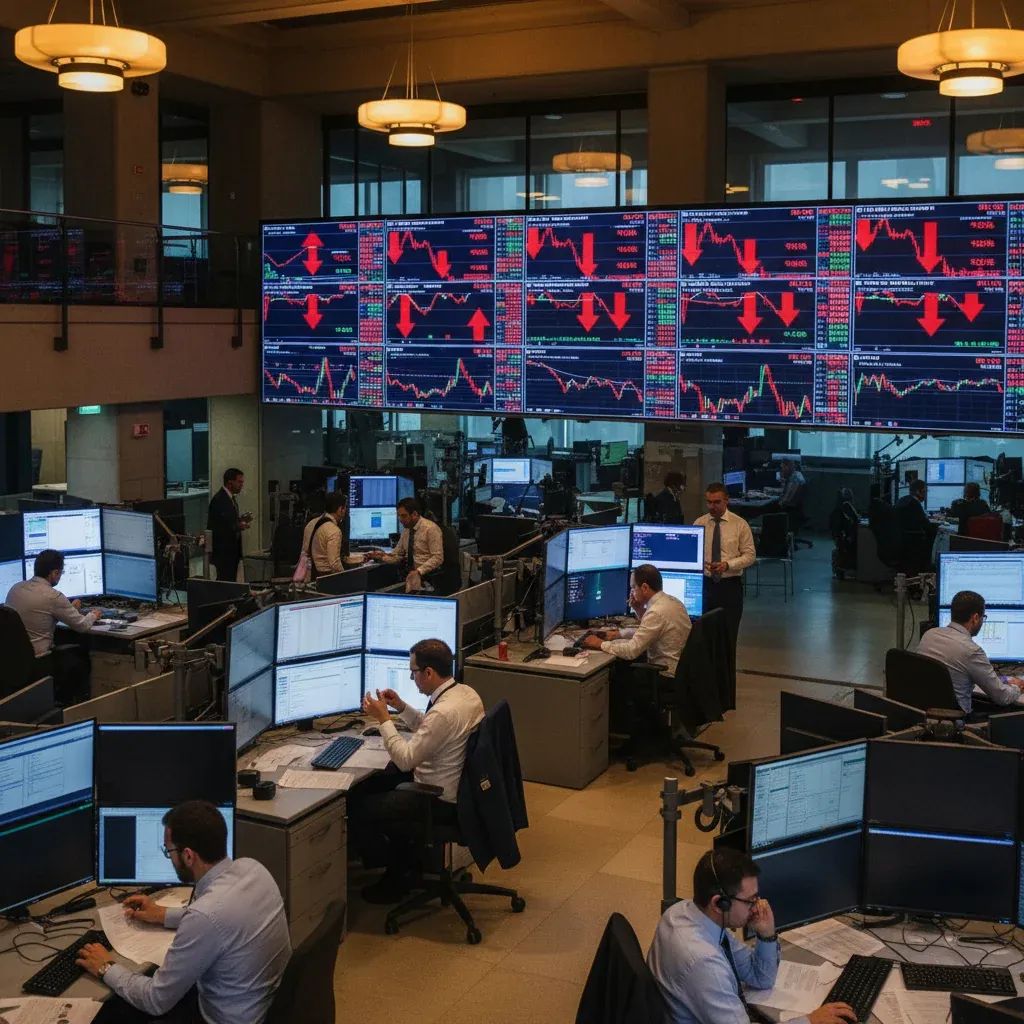
Italy-based investors are waking up to a fundamentally different energy landscape on April 8, 2026, as a temporary ceasefire between the United States and Iran triggers the most dramatic single-day market swing in months. The two-week truce, which went into effect this morning and hinges on the reopening of the Strait of Hormuz, has sent crude prices plummeting below $100 per barrel and handed European equity indexes their strongest rally since the conflict began in late February.
Why This Matters
• Energy costs drop sharply: Natural gas futures in Amsterdam fell 15.3% to €45.25 per megawatt-hour, potentially lowering household bills across Italy in coming weeks.
• Stock portfolios rebound: The pan-European Stoxx 600 surged 3.7%, with Italy-traded equities in luxury, technology, and banking sectors posting gains between 5% and 7%.
• Rate cut hopes revive: With inflation fears receding, the European Central Bank may have more room to ease monetary policy later this year, supporting mortgage holders and businesses.
• Fragile peace: The truce lasts only until April 22, and Iran retains operational control over Hormuz transit—meaning the rally could reverse if negotiations in Islamabad fail.
Markets Erase Weeks of War Losses in Hours
European trading floors opened in euphoric mode. Frankfurt's DAX jumped 4.6% to 24,021 points, while Paris's CAC 40 climbed 4% to 8,200. London's FTSE 100 added 2.4%, and Madrid's IBEX 35 rose 3.1%. The rally was broad-based but concentrated in sectors hardest hit during the seven-week conflict: technology stocks surged 6.3%, luxury brands gained 6.6%, and automakers advanced 5.7%. Italian banks, heavily exposed to sovereign debt volatility, rallied 5.6% as bond yields compressed.
The catalyst was simple: investors had priced in prolonged disruption to Middle East energy flows and a potential inflationary spiral. The ceasefire, brokered primarily by Pakistan with Chinese backing, removed that tail risk overnight. West Texas Intermediate crude collapsed 15.3% to $95.68 per barrel, while Brent fell 13.5% to $94.57—the steepest intraday drop since the pandemic-era oil crash.
What This Means for Residents
For anyone living in Italy, the immediate financial impact spans three areas: energy bills, investment portfolios, and borrowing costs.
First, the sharp drop in natural gas futures should translate into lower wholesale electricity prices within weeks. However, regulated tariffs in Italy adjust quarterly through ARERA (the national energy regulatory authority), meaning most households will see reduced bills reflected in their Q3 2026 statements. Those locked into variable-rate energy contracts will see the benefit fastest. Industrial users—particularly in energy-intensive sectors like ceramics, glass, and steel concentrated in northern Italy—gain immediate breathing room after months of margin compression. For Italy's economy overall, lower energy costs will reduce import bills significantly; the country imports approximately 95% of its oil and natural gas, making this ceasefire particularly consequential for national finances.
Second, Italian equity investors holding diversified European funds or direct stakes in luxury brands like Moncler or Ferrari, or banking stocks like Intesa Sanpaolo and UniCredit, will see portfolio valuations climb. The FTSE MIB, Italy's benchmark index, tracked the broader European surge, erasing roughly half the losses accumulated since the conflict escalated in March.
Third, and perhaps most consequentially for long-term planning, the yield on Italy's 10-year government bond (BTP—Italian government bonds, commonly compared to Bund German government bonds) fell 27 basis points (100th of a percentage point) to 3.68%, narrowing the spread (the difference in yield) over German Bunds to just 76 basis points. This signals renewed confidence in Italy's fiscal position and reduces the cost of servicing public debt—a critical variable for a country carrying a debt-to-GDP ratio (total debt compared to annual economic output) above 140%. For consumers, lower yields typically presage cheaper fixed-rate mortgages and business loans, though banks will adjust pricing cautiously given the truce's temporary nature.
Energy Sector Takes the Hit
While most sectors celebrated, the energy complex absorbed the pain. European utilities dropped 0.2%, and the broader energy sector sank 6.5%, as investors repriced upstream oil producers and integrated energy giants. Companies with significant refining or renewable portfolios fared better than pure-play fossil fuel extractors, but the sector-wide selloff was indiscriminate.
Gold, the classic haven asset, rose 3.1% to $4,795 per ounce, reflecting persistent geopolitical uncertainty despite the truce. Traders are hedging against the possibility that talks in Islamabad collapse before the April 22 deadline, reigniting hostilities.
The Hormuz Question: Open, But Not Free
The Strait of Hormuz, through which roughly 20% of global oil supply transits, is technically reopened—but with crucial caveats. According to the ceasefire terms, commercial vessels must coordinate passage with Iran's Revolutionary Guard Corps, which maintains de facto control over the waterway. Industry sources suggest Iran and Oman may levy transit fees or "reconstruction contributions," adding cost and complexity even in peacetime.
The International Maritime Organization has called for a multilateral framework to guarantee safe passage, but no such mechanism exists yet. IATA, the global airline trade body, warned that even with Hormuz reopened, it will take months for jet fuel supply chains to normalize, meaning airfare for Italy-based travelers could remain elevated through the summer travel season.
Central Bank Calculus Shifts
The European Central Bank had been trapped in a policy bind: inflation driven by energy shocks argued for keeping rates high, but slowing growth in manufacturing-heavy economies like Germany and Italy pointed toward easing. The ceasefire gives policymakers a potential way out.
Before today's news, markets had priced in up to three 25-basis-point rate hikes by year-end, with some analysts expecting moves as soon as June or July. Those bets have now been unwound. Instead, traders are positioning for the ECB to hold rates steady through the second quarter and potentially resume cuts in the autumn if inflation pressures continue to ease.
For Italy, the stakes are particularly high. The economy was projected to contract or stagnate in Q2 2026 if energy prices remained elevated. A sustained drop in oil and gas costs could support employment in export-oriented sectors like machinery, fashion, and food processing.
Currency and Sovereign Debt Dynamics
The euro strengthened to $1.1682 against the dollar, a modest gain reflecting relief that Europe's energy crisis may be easing. The dollar's broader weakness came as safe-haven demand ebbed and traders reassessed Federal Reserve policy in light of lower commodity inflation.
Italian sovereign debt outperformed, with the BTP-Bund spread compressing more sharply than spreads for Spain or Portugal. This reflects Italy's particular sensitivity to energy prices: the country imports virtually all its oil and gas, making it one of Europe's most vulnerable economies to Middle East supply shocks.
German 10-year Bund yields fell 16 basis points to 2.91%, while Italian yields dropped 27 basis points—a sign that risk appetite returned faster to peripheral eurozone debt than to core safe havens.
Fragile Peace, Volatile Outlook
The rally rests on shaky foundations. The ceasefire is a two-week pause lasting until April 22, 2026, not a durable peace. Negotiations in Islamabad must address Iran's nuclear program, frozen assets worth billions, and a ten-point Iranian peace proposal. If talks stall, the conflict could resume within days, sending energy prices spiking again.
Moreover, Iran's insistence on controlling Hormuz transit even under ceasefire terms signals that the country retains significant leverage. Any incident involving a commercial vessel—accidental or deliberate—could reignite tensions and reverse today's market gains.
OPEC+ dynamics add another layer of uncertainty. If Iranian oil exports surge as sanctions ease, Saudi Arabia and other Gulf producers may cut output to defend prices, limiting the downside for crude. Conversely, if global demand weakens due to slowing growth in China or Europe, even a modest increase in Iranian supply could push prices well below $90 per barrel.
What Market Analysts Are Monitoring
According to market observers and energy analysts, the next two weeks are critical for understanding whether the ceasefire holds. Key variables they are tracking include:
• Progress in Islamabad talks: Any indication that negotiations are advancing—or breaking down—will move markets immediately.
• Shipping data from Hormuz: Real-time vessel tracking will reveal whether commercial traffic is truly normalizing or remains constrained.
• ECB communications: Watch for any shift in rhetoric from Frankfurt regarding inflation forecasts or rate policy.
• Italian industrial production data: April figures, due in early May, will show whether lower energy costs are translating into manufacturing recovery.
The market has priced in optimism. Whether that optimism is justified depends entirely on events far beyond Milan, Rome, or Frankfurt—in the negotiating rooms of Islamabad and the contested waters of the Persian Gulf.


