
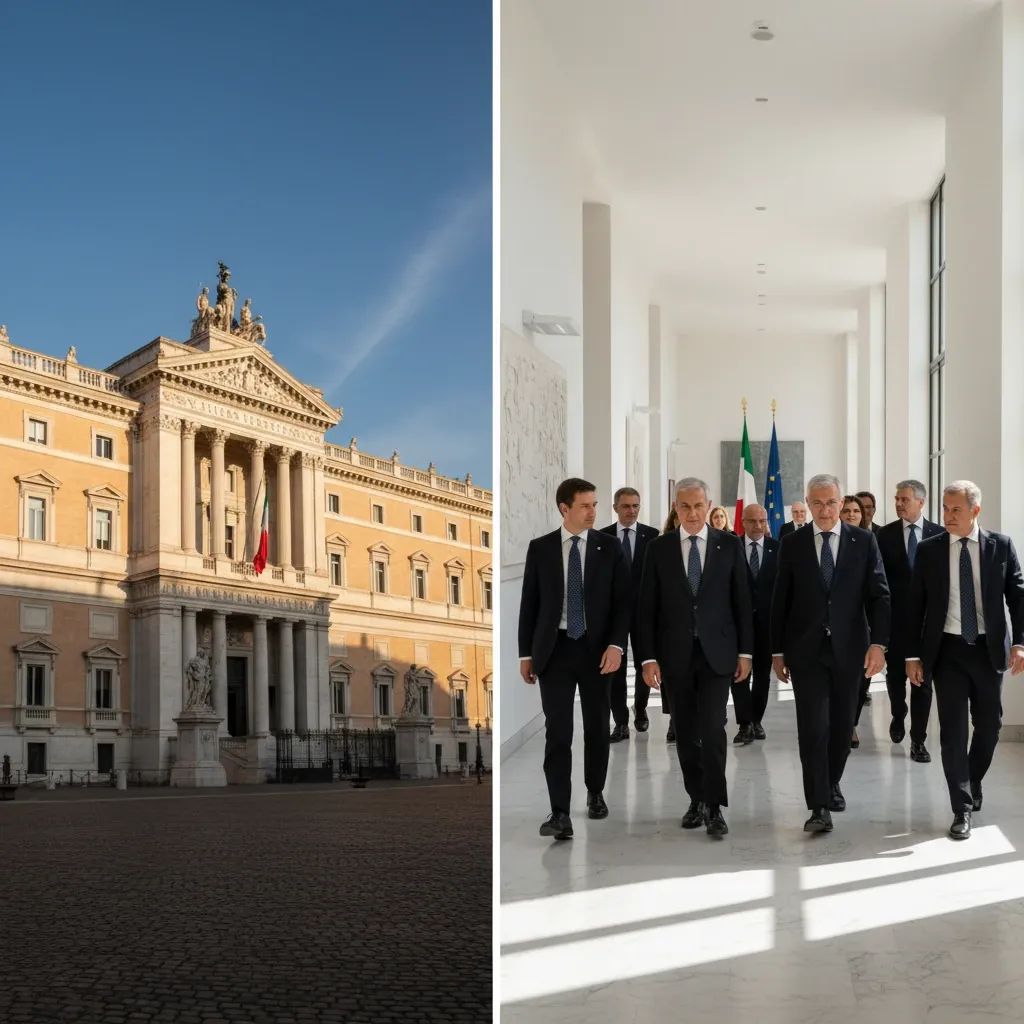
Italy's Ministry of Business and Made in Italy has confirmed that Tourism Minister Daniela Santanchè stepped down following a direct request from Prime Minister Giorgia Meloni, marking the latest cabinet reshuffle amid broader government personnel changes.
Why This Matters
• Cabinet changes announced: Tourism Minister Santanchè, Justice Undersecretary Andrea Delmastro, and Chief of Staff Giusi Bartolozzi have all resigned following the Prime Minister's request.
• Policy continuity at stake: The Tourism and Justice portfolios now face interim management during peak travel season.
• Government emphasizes continuity: The administration has stressed that political changes will not derail its economic agenda or investor confidence.
Coordinated Departures Follow Prime Ministerial Directive
Minister Adolfo Urso, speaking at the Cosmoprof Worldwide 2026 opening ceremony in Bologna, confirmed that Santanchè, Undersecretary Andrea Delmastro, and Chief of Staff Giusi Bartolozzi all complied with the Prime Minister's explicit request to resign. "They responded to the Prime Minister's requests and did well to respond promptly," Urso told journalists on the sidelines of the cosmetics industry trade fair.
The timing of the statement—delivered at a major international business event—appeared designed to reassure foreign investors and trade partners that Italy's government machinery remains functional despite the personnel changes. Urso emphasized that the resignations represent administrative adjustments rather than a crisis of governance.
The simultaneous exit of these three officials suggests a broader cabinet realignment. Delmastro held the undersecretary position at the Ministry of Justice, while Bartolozzi served as chief of staff, signaling reorganization at the administrative level.
Government Emphasizes Economic Continuity
Urso's comments focused on reassuring audiences about economic performance and policy momentum. "The government is not slowing down and is not stopping," Urso declared, emphasizing that the cabinet remains committed to completing its full legislative mandate.
He highlighted the government's focus on three economic priorities: export growth, foreign direct investment flows into Italy, and household purchasing power. The administration has previously released data showing positive trends in these areas, with particular attention to merchandise exports and foreign investment in Italian manufacturing.
His acknowledgment of "uncertainty and war" in the global context references ongoing geopolitical tensions affecting European energy markets and supply chains, though he did not specify particular conflicts. The global economic environment continues to present both challenges and opportunities for Italian businesses.
What This Means for Residents
The immediate practical impact centers on policy execution during the transition period. With Santanchè's departure, the Tourism Ministry—responsible for regulating everything from hotel licensing to cultural heritage site management—will operate under interim leadership until a replacement is confirmed. For businesses in the hospitality sector, this could mean temporary delays in decisions on subsidy programs or regulatory clarifications during the peak spring-summer tourism season.
The Justice Ministry faces similar interim management questions with Delmastro's resignation. Any pending legislative initiatives may experience procedural delays while the government recalibrates its team.
For foreign investors and multinational corporations evaluating Italy as a business destination, the cabinet reshuffle introduces questions about regulatory consistency during the transition period. Urso's remarks at the Bologna trade fair were clearly intended to minimize perceived instability, though personnel changes at ministerial level invariably create some uncertainty about immediate policy priorities.
Politically, the resignations test the Fratelli d'Italia coalition's management. Meloni's decision to request departures suggests she prioritizes decisive action and rapid problem resolution. This approach may help the broader government move forward quickly, though opposition parties are likely to offer their own interpretations of the changes.
Managing Transition and Stability
The Meloni administration faces the practical challenge of appointing credible replacements who can maintain policy momentum in their respective areas. For residents navigating Italy's complex bureaucratic landscape, the broader takeaway is that cabinet instability at this level rarely translates into immediate changes in day-to-day public services. Municipal and regional administrations handle most citizen-facing functions, insulating ordinary Italians from national political adjustments.
However, major policy initiatives requiring ministerial approval—such as infrastructure projects, tax incentives, or regulatory reforms—may face delays during transitional periods while new appointments are confirmed and officials settle into their roles.
The coming weeks will test whether the government swiftly appoints replacements and maintains legislative momentum. If transitions proceed smoothly, these changes may fade as a political issue. The administration's challenge lies in demonstrating that governance remains stable and effective even as personnel changes occur in Italy.


