
Italy's request to pause Europe's budget rules has emerged as the defining economic flashpoint in Brussels this week, driven not by abstract fiscal theory but by a very concrete crisis: energy-dependent industries are hemorrhaging money as shipping routes collapse and costs spiral. Transport Minister Matteo Salvini, speaking at an emergency EU meeting, made the case bluntly—without fiscal breathing room, Italian factories will halt production and households will face significantly higher prices within months.
Why This Matters
• Budget ceiling vs. survival: Italy can spend at most 3% of its GDP on deficit, leaving minimal room to subsidize transport, energy, or distressed businesses when global supply lines implode.
• Your wallet: Container shipping costs from Asia have quadrupled; these charges eventually reach supermarket shelves, petrol pumps, and rental agreements across the peninsula.
• Jobs at risk: Small manufacturers in the north—the industrial heartland—rely on imported components arriving on schedule and at predictable costs; prolonged delays mean layoffs and business closures.
The Economic Trap Italy Faces
The Italian government under Prime Minister Giorgia Meloni finds itself caught between two rigid constraints. The revamped EU Stability Pact, which took effect in 2024 after three years of pandemic suspension, demands that Italy reduce its public debt—already above 140% of GDP—while simultaneously responding to an unfolding economic emergency. These goals conflict when a crisis requires immediate state intervention.
Salvini's demand reflects the strain this creates. He is asking Brussels to temporarily suspend the pact's deficit ceiling, allowing Rome to deploy emergency fiscal support for transport, energy, and manufacturing sectors without triggering EU sanction procedures. Economy Minister Giancarlo Giorgetti has publicly supported the request, framing it as analogous to the pandemic relief measures of 2020–2023, when Europe temporarily relaxed all fiscal rules to keep economies alive.
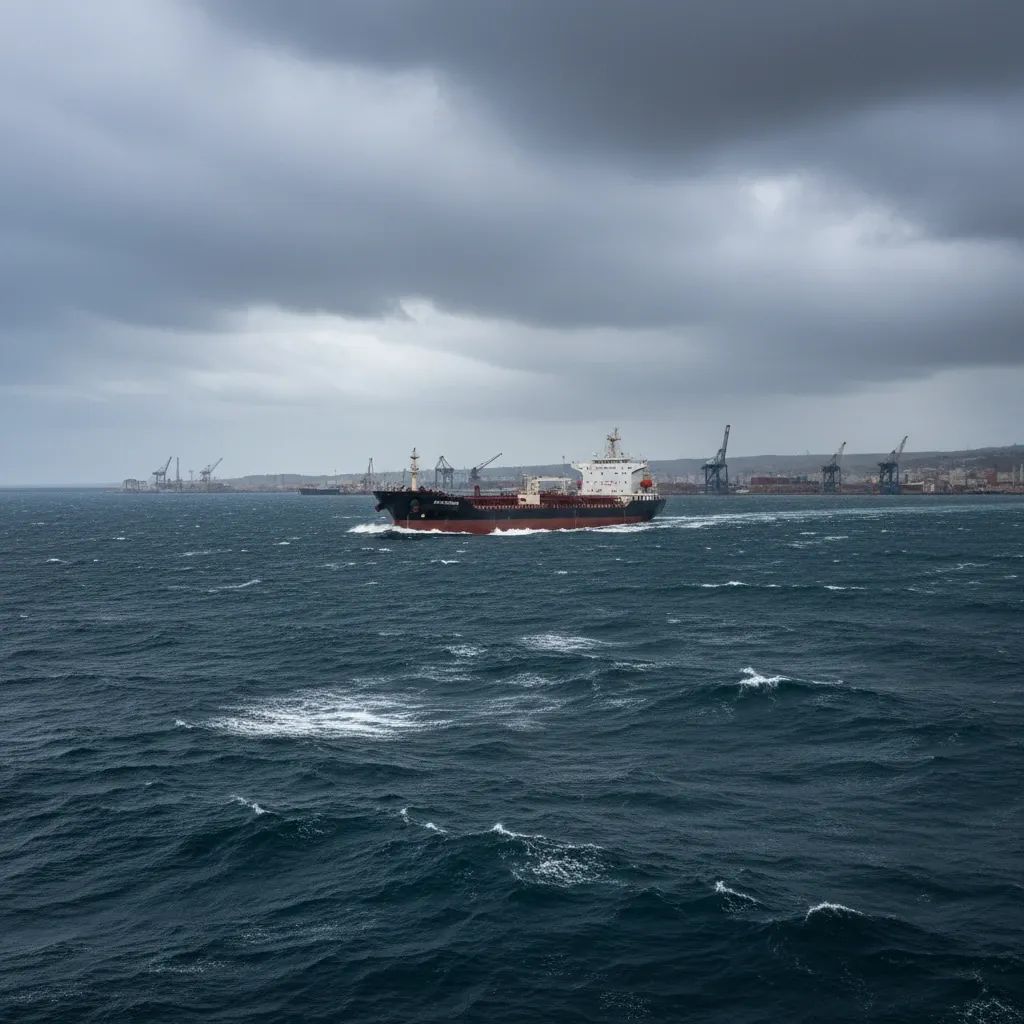
The underlying problem is structural. About 40% of Italy's maritime trade passes through the Suez Canal and the Red Sea, routes now made treacherous by regional instability. Major shipping companies have rerouted cargo around the Cape of Good Hope, a detour that adds 10 to 14 days to transit times and effectively reduces global container capacity by roughly 9%. For Italy-bound cargo from Asia, the cost per 40-foot container has jumped from approximately €1,900 to over €5,000 in recent weeks—an increase of 129%—while fuel surcharges have climbed 15-20%.
Who Is Paying the Price
The damage is already visible in Italian ports. Traffic at ports including Genoa, La Spezia, Trieste, Venice, and Ravenna has declined by over 3% in the first quarter of 2026, with Gioia Tauro, Italy's largest container terminal, particularly hard hit. The cargo that would normally dock in the Mediterranean is now being redirected to northern European ports in Rotterdam and Hamburg, where inland transportation networks are more developed. About two out of every three ships that previously stopped in Italy are now bypassing the Mediterranean altogether.
For companies, the costs are immediate and severe. A survey found that 51% of Italian firms reported problems moving goods internationally, with average shipping cost increases of 19% and revenue drops of 18%. Industries dependent on just-in-time supply chains—automotive manufacturers, fashion houses, pharmaceutical producers, and food importers—are feeling the squeeze most acutely. Sectors importing rice, vegetable oils, tea, and coffee face particular pressure, as these goods typically travel via the Suez route.
Small and medium enterprises (SMEs), which employ roughly two-thirds of Italy's private-sector workforce, are the most vulnerable. Unlike large multinationals with financial reserves and hedging strategies, SMEs often operate on thin margins. When transit costs spike and delivery times lengthen unpredictably, many lack the capital to absorb the shock. Without state support, bankruptcies will likely accelerate, particularly in regions like Veneto, Emilia-Romagna, and Tuscany, where manufacturing clusters depend on rapid, cost-effective logistics.
For households, the impact is inflation through supply chains. Higher shipping costs, fuel surcharges, and insurance premiums cascade through distribution networks, pushing prices upward for groceries, household goods, electronics, and automobiles. The effect is not immediate—retail chains absorb costs initially—but within 3-6 months, consumers notice higher prices and real wages erode further.
The Political Standoff in Brussels
The European Commission has flatly rejected any temporary suspension of the Stability Pact. Valdis Dombrovskis, the EU's economics commissioner, stated that while the Middle East crisis will slow growth, it does not meet the threshold of a "severe economic recession" that would justify activating the bloc's emergency escape clause. Commission President Ursula von der Leyen reinforced this line, arguing that the reformed pact already contains sufficient flexibility for targeted measures and that a blanket suspension would be counterproductive.
The reasoning from Brussels is partly technical and partly strategic. Economists at the International Monetary Fund (IMF) have advised against suspension, arguing that broad fiscal stimulus in an environment of constrained energy supply would simply drive up demand and intensify price pressures. Instead, the IMF recommends "highly targeted and temporary" support measures rather than across-the-board spending increases.
Strategically, Germany and other northern European governments fear that reopening the fiscal rulebook now would weaken fiscal discipline at a moment when structural deficits across the bloc remain uncomfortably high. These countries have invested political capital in enforcing budget discipline after years of pandemic spending; relaxing rules again would undermine that effort and potentially trigger market concerns about long-term government debt sustainability.
However, Italy is not politically isolated. Sixteen EU member states—including Germany itself, Poland, Finland, Greece, Portugal, and the Baltic republics—have collectively requested derogations from the Stability Pact, though for a different purpose: defense spending. These countries argue that military expenditures in response to geopolitical threats should be carved out from deficit calculations. While their request differs from Italy's (they seek a carve-out for a specific category; Italy seeks temporary suspension for emergency relief), it demonstrates that pressure on the fiscal framework is mounting across the bloc.
Salvini's Ultimatum and Rome's Options
Salvini has hinted that if Brussels continues to refuse, Italy might unilaterally defer compliance for a limited period—"two or three months"—to protect domestic interests. This phrasing signals a potential constitutional or legal challenge to EU fiscal governance, though it falls short of an outright exit threat. The Italian government could argue that national welfare takes precedence during an emergency, even if such an action would strain relations with Brussels and potentially trigger financial market reactions against Italian government bonds.
In practical terms, Italy's leverage is limited. The Italian Treasury relies on capital markets to refinance public debt; if investors fear that Rome is sliding toward non-compliance with EU rules, borrowing costs could spike, actually worsening the fiscal situation. A confrontation with Brussels would likely backfire economically, even if it plays well domestically with Salvini's right-wing voter base, which views EU constraints as illegitimate restrictions on national sovereignty.
The more realistic pathway is negotiation. Italy might seek sector-specific exemptions—allowing temporary support for ports, maritime industries, and transport—rather than blanket suspension. Or it might press the Commission to activate the existing flexibility mechanisms more generously, allowing Italy to count crisis-related spending as temporary and thus not subject to the multi-year deficit reduction targets. These approaches would require consensus among member states and explicit endorsement from the Commission, but they are politically feasible.
The Green Deal Thorn
Salvini also used the EU transport ministers' meeting to attack the Emissions Trading System (ETS) as it applies to maritime and aviation sectors, a theme he has emphasized repeatedly. Starting in 2026, shipping companies must offset 100% of CO₂ emissions on routes within the EU and 50% on routes between EU and non-EU ports. Airlines will lose free carbon allowances entirely, forcing them to purchase all emission permits at market rates.
The Italian government's criticism focuses on timing and competitiveness. The ETS increases compliance costs significantly for operators, and when combined with existing price pressures from the shipping crisis, the cumulative burden becomes unsustainable. Airlines serving regional connections—including routes to Sardinia and Sicily—face disproportionate harm, as intra-EU flights incur full ETS costs while long-haul international flights operate under the global CORSIA offsetting scheme, which is less burdensome. This creates a 20-fold cost disparity on a per-ton basis, penalizing European and domestic routes.
Salvini's argument that "absurd European rules" prevent Italy from helping struggling businesses resonates politically but also touches on a genuine economic tension: Europe is trying to decarbonize rapidly while simultaneously absorbing energy-supply shocks and managing competitiveness pressures. Reconciling these goals requires either relaxing timelines or providing transitional support, neither of which Brussels has offered comprehensively.
The Italian government, through both Salvini and Foreign Minister Antonio Tajani, has called for a "change of course" in EU climate policy. They are not rejecting climate goals but arguing that the current implementation pace and structure are economically unsustainable during a multi-crisis period. This positioning appeals to constituencies worried about manufacturing competitiveness—particularly in transport-dependent sectors.
What Happens Next
The immediate outcome depends on whether the regional crisis in the Middle East escalates further or stabilizes. If shipping disruptions ease and energy prices normalize, pressure for fiscal relief will diminish naturally. If disruptions intensify, the political calculus could shift. Sustained economic deterioration—particularly rising unemployment in regions like Veneto and declining consumer spending—might eventually force Brussels to reconsider, though such a reversal would require member states to reach consensus, a notoriously difficult threshold.
For residents of Italy, the practical reality is that relief, if it comes, will arrive slowly. Energy costs and transport prices are likely to remain elevated for at least the remainder of 2026, creating persistent upward pressure on inflation and household purchasing power. Small business confidence is already eroding, and if support does not materialize within weeks, more companies will resort to layoffs or closures. Government subsidies, if approved, would provide some cushion but cannot fully offset global supply disruptions.
The Stability Pact debate is, at its core, a question about where economic sovereignty lies in Europe's architecture. Salvini's challenge reflects a legitimate tension: how does a single member state protect its people and industries when constrained by rules designed for a union-wide average? Brussels's refusal reflects a legitimate concern: if every member can claim emergency exemptions, the fiscal framework collapses entirely. Resolving this requires compromise neither side appears willing to offer—yet.


