
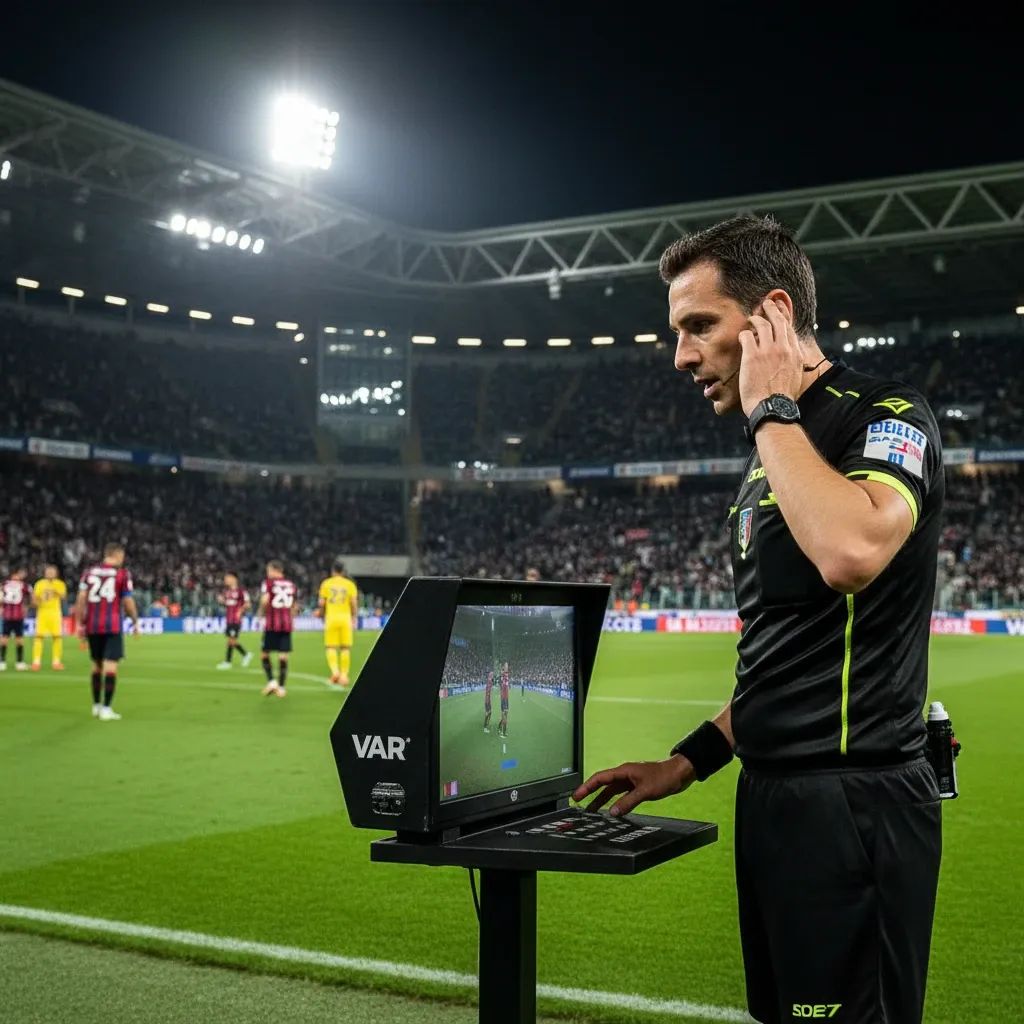
Italy's top football referee designator faces fraud investigation
Gianluca Rocchi, who controls referee assignments for Serie A and Serie B, has been formally notified of an investigation for alleged sports fraud. The Milan Procura is examining claims related to his conduct as VAR supervisor, a development that has exposed tensions between Italy's football governance institutions and drawn scrutiny from the government.
Why This Matters
• Football credibility at stake: The probe targets the official responsible for ensuring fair play across Italy's top two football divisions.
• Institutional tension revealed: Italy's Sports Ministry and CONI are now demanding explanations for how an internal complaint was handled—or buried—by football authorities.
• Governance crisis: This investigation has escalated beyond football into a wider debate about institutional accountability and transparency in Italian sports.
The Investigation: What We Know
Prosecutors in Milan are investigating whether Rocchi breached VAR protocol autonomy. The investigation centers on a complaint filed in May 2025 by former assistant referee Domenico Rocca, who witnessed an incident during the Udinese-Parma match. According to the complaint, this match raised concerns about proper VAR procedure and supervisor conduct.
The accusations focus on protocol: VAR rooms are designed to operate independently, free from external influence. If Rocchi's conduct as VAR supervisor during that match violated established procedures, prosecutors argue, it could constitute misconduct.
How the Complaint Was Buried—Then Resurfaced
The criminal investigation stems from Rocca's complaint filed in May 2025, which was immediately forwarded by then-AIA president Antonio Zappi to the FIGC federal prosecutor's office. The complaint was quietly archived after an internal review—a decision that has now become a political flashpoint.
On the same day Rocchi received his formal notice, Italy's Minister for Sport Andrea Abodi issued a sharp rebuke via social media. "The most serious aspect," Abodi wrote, "is how the complaint was handled within the football system. So far, no public disclosure—we don't even know who received the complaint or which body was tasked with verifying its substance." He demanded CONI provide formal briefings and warned that if responsibilities are confirmed, "there will be consequences."
Hours later, CONI's general sports prosecutor Ugo Taucer requested an immediate report from FIGC prosecutor Giuseppe Chinè, whose office had closed the case. According to FIGC sources, Chinè's team had requested documents from Milan prosecutors before Taucer's formal demand, and maintained that the earlier closure was conducted "with the approval and endorsement of the CONI general sports prosecutor." The FIGC insists the original inquiry examined the Udinese-Parma match and found insufficient grounds for a formal charge under sports law.
What This Means for Football Governance in Italy
For residents and fans invested in Italian football, the Rocchi case reveals deeper institutional weaknesses. The designation system controls which referees officiate which matches, and any perception of bias or irregularity undermines public confidence in the fairness of Serie A outcomes.
The case also exposes a structural problem: football's internal justice system worked quietly to handle the complaint, while Italy's government now questions whether that process was appropriate. This tension between FIGC autonomy and public accountability is the real story at the heart of this investigation.
Precedent and Context: Lessons from Calciopoli
Italy has confronted referee assignment corruption before. The 2006 Calciopoli scandal revealed systematic problems in how referees were assigned to matches, leading to sanctions and institutional reforms. That crisis prompted the creation of the VAR system to enhance transparency and reduce human error. Now, questions have arisen about the conduct of those who oversee that very system.
The stakes extend beyond one man's career. If the investigation reveals structural weaknesses in how VAR oversight is conducted, it could trigger regulatory reforms and embolden other whistleblowers within the AIA, an organization that has historically discouraged internal dissent.
What Happens Next
Rocchi has maintained his position through an ANSA statement, saying: "I am certain I have always acted correctly and I have full confidence in the judiciary."
The Milan prosecutors will now examine the evidence related to the Udinese-Parma match and Rocchi's conduct as VAR supervisor. Parallel to the criminal investigation, the FIGC federal prosecutor must decide whether to reopen its own inquiry. If new evidence emerges from Milan's investigation, Chinè's office could face pressure to revisit its earlier closure.
For now, Italian football awaits the outcome of a case that has exposed institutional divisions and raised fundamental questions about how the sport polices itself. Whether Italy's internal justice system can credibly handle this matter, or whether external prosecutors must take the lead, will determine not only Rocchi's future but the credibility of the entire governance apparatus that underpins the country's most popular sport.


