
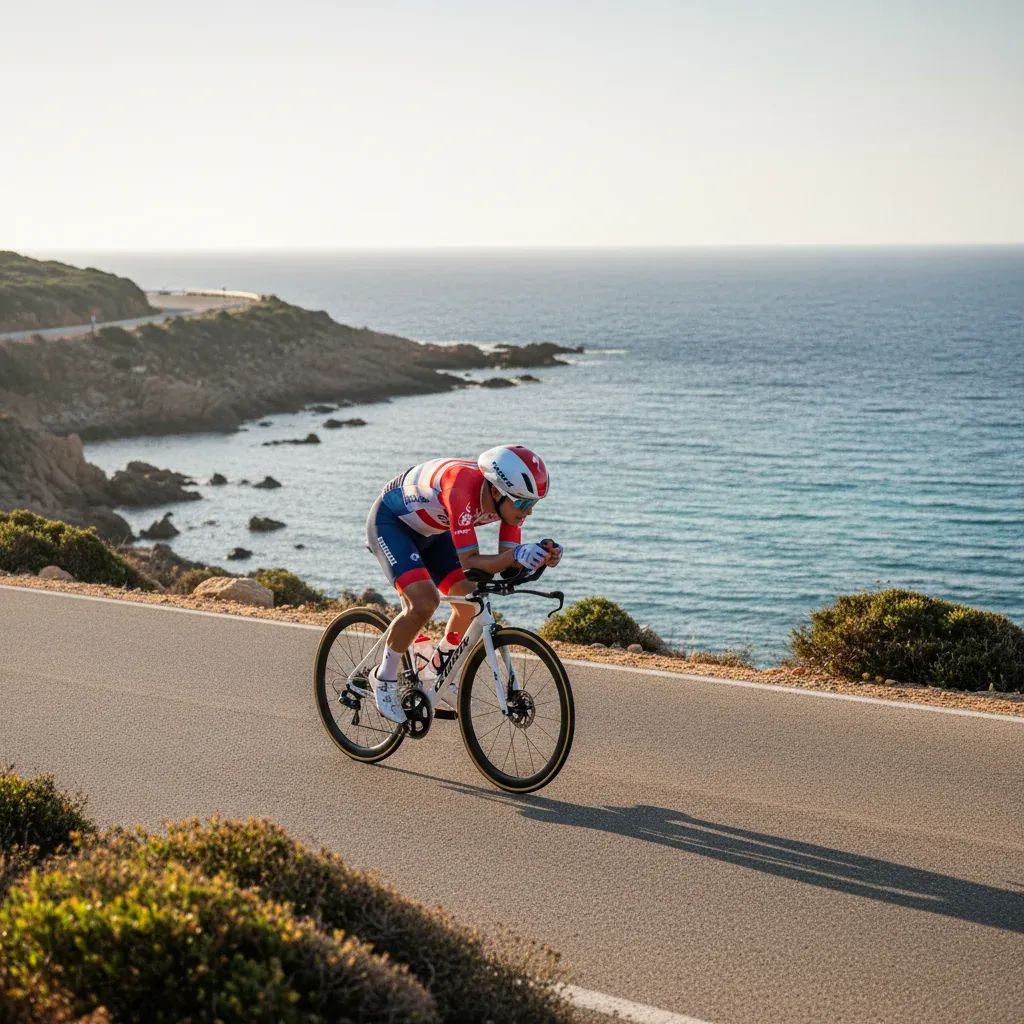
Italy's Mediterranean island of Sardinia has reintroduced itself to the international professional cycling calendar this week, as the revived Giro della Sardegna launched a five-stage, 825-kilometer circuit across the autonomous region—a race absent for 15 years now serving as the opening salvo in the Coppa Italia delle Regioni season and a testing ground for riders eyeing the Giro d'Italia in May.
Why This Matters
• Tourism and economy: The race traverses all major Sardinian territories across the island, spotlighting historic villages, archaeological sites, and coastal landscapes during the critical spring vacation planning window—supported by the Regional Department of Tourism, Crafts, and Commerce.
• Emerging talent on display: 160 riders from 26 nations, including development squads from UAE and Red Bull, are competing; stage 1 saw a surprise victory by Nicolò Garibbo over former Italian national champion Filippo Zana.
• Positioning for Italian cycling: This is the first of 36 races in the 2026 Coppa Italia circuit, spanning 17 regions and designed to strengthen Italy's professional cycling infrastructure while delivering equal prize money across men's and women's competitions.
A Return After a Decade and a Half
The Giro della Sardegna, now in its 30th edition, kicked off on 25 February in the medieval hilltop town of Castelsardo, a fortified borgo overlooking the northwestern coast. The five-stage race will conclude on 1 March in Olbia, the island's logistics and ferry hub, with stages ranging from 136 to nearly 190 kilometers. Classified as a UCI 2.1 event, the race slots into a strategic window on the European calendar—after the UAE Tour and Cadel Evans Great Ocean Road Race in the Southern Hemisphere, but ahead of Italy's marquee early-season events: Strade Bianche (7 March), Tirreno-Adriatico (9–15 March), and the first Monument of the year, Milano-Sanremo (21 March).
Organized by GS Emilia and backed by the Lega Ciclismo Professionistico and the Conference of Regions and Autonomous Provinces, the race is designed to showcase not only athletic prowess but also the geographic and cultural diversity of Italy's autonomous island territory. Each stage threads through distinct microclimates and terrain—Castelsardo to Bosa (189.8 km), Oristano to Carbonia (136.3 km), Cagliari to Tortolì (168.1 km), Arbatax to Nuoro (153.6 km), and the final push from Nuoro to Olbia (177.3 km).
Stage 1: Early Drama and a Name to Watch
On the opening day, an escape group of four riders crested the climb at Villanova Monteleone with 65 kilometers remaining. Among them: Filippo Zana, the 2022 Italian road champion now riding for Soudal Quick-Step. Zana, who struggled through a 2025 season marred by mononucleosis and chickenpox, has shown renewed form in 2026—8th overall at the Santos Tour Down Under, 7th at the Cadel Evans Great Ocean Road Race—and he was widely expected to prevail in the finale at Bosa.
Instead, Nicolò Garibbo of Team UKYO stunned the field in a four-up sprint, claiming the stage win, the leader's jersey, and immediate attention as a dark horse for the general classification. Zana finished second; Urko Berrade took third. Roberto Carlos González earned the King of the Mountains jersey, while Luca Paletti became the first young rider leader. Soudal Quick-Step currently leads the team classification.
What This Means for Residents and Cycling Fans
For those living on or visiting Sardinia, the race offers both road closures and spectacle. Stage routes cut through major coastal and interior arteries, so motorists should consult updated traffic advisories published by the Regione Autonoma della Sardegna and local prefecture offices. Enthusiasts can catch live coverage on RAI Sport and via UCI streaming platforms, while local municipalities are organizing viewing zones and side events, particularly in Olbia, which will host the finish-line festivities on Sunday.
Beyond the island, the Giro della Sardegna represents a broader strategic push by the Lega Ciclismo Professionistico, chaired by Roberto Pella, to "build a great network that systematizes sport, institutions, and the productive economy." The Coppa Italia delle Regioni now encompasses 25 men's races and 11 women's races, totaling 40 days of competition and spanning 17 regions—from the Alps to Sicily. Prize parity between genders is a stated priority, reflecting Italy's evolving sports policy framework under current legislative mandates.
For Italian riders, the circuit serves a dual function: visibility and preparation. Smaller professional and Continental teams—Bardiani CSF Faizanè, Team Polti Kometa, Equipo Kern Pharma—gain exposure alongside World Tour development squads. Young talents like Lorenzo Mark Finn, the 2024 junior and 2025 U23 world champion, are racing on home turf with the Red Bull–BORA–hansgrohe Rookies, offering a glimpse into the next wave of Italian and international cycling.
The Field: Experience and Youth in Equal Measure
Twenty-three teams assembled in Castelsardo, comprising a mix of former Grand Tour stage winners and riders still building their palmarès. Fausto Masnada, who took a stage at the Giro d'Italia and now races for MBH Bank CSB Telecom Fort, brings climbing pedigree to the mountainous interior stages. Jonathan Caicedo, the Ecuadorian climber now with Petrolike, adds international firepower. Gianmarco Garofoli, Zana's Soudal Quick-Step teammate, finished 4th in stage 1 and remains a key domestique—or potential stage hunter.
The presence of the UAE Team Emirates and Red Bull development programs underscores the race's role as a proving ground. Scouts and directeurs sportifs will watch closely; strong performances in Sardinia can translate to contract upgrades or selection for the Giro d'Italia, which begins 9 May in Venaria Reale (Piedmont) and includes two rest days on the island.
Sardinia as a Cycling Destination
The Autonomous Region of Sardinia, endowed with substantial fiscal powers under Italian constitutional law, has increasingly invested in sports tourism as a diversification strategy beyond traditional beach holidays. The February timing is deliberate: European cyclists and tour operators plan spring and autumn trips during this window, and the race aims to brand Sardinia as a year-round destination with varied terrain—coastal flats, volcanic interiors, and the limestone massifs of the Supramonte.
Local chambers of commerce report that cycling tourism in Sardinia grew approximately 18% from 2023 to 2025, driven by gravel events, amateur gran fondos, and improved bike-friendly infrastructure, including dedicated lanes along the Costa Smeralda and in the Gennargentu National Park. The Giro della Sardegna adds professional credibility to this branding effort, with global television reach estimated at over 15 million viewers across UCI's broadcast partnerships.
Looking Ahead to the Next Four Days
Stage 2, a shorter 136.3-kilometer run from Oristano to Carbonia, favors sprinters or opportunistic breakaways, though the wind off the Gulf of Oristano can fracture the peloton. Stage 3, from the regional capital Cagliari to the east-coast port of Tortolì, covers 168.1 km and includes rolling hills ideal for puncheurs. The queen stage is likely stage 4, from Arbatax into the mountainous interior city of Nuoro, where the Supramonte climbs will test the general classification contenders. The final stage loops from Nuoro back north to Olbia, offering one last chance for sprinters—or, if the GC is tight, a tactical finale.
As of now, Garibbo holds a slender advantage over Zana, with only seconds separating the top five. Weather forecasts call for clear skies and temperatures in the mid-teens Celsius, ideal conditions for aggressive racing.
Broader Context: The Coppa Italia delle Regioni
The Coppa Italia delle Regioni was conceived as a domestic counterpart to the World Tour calendar, ensuring that Italian regions—particularly those in the center, south, and islands—receive regular professional racing. The circuit's 2026 edition includes established races like the Giro dell'Appennino and Giro di Sicilia, alongside newer events designed to meet UCI gender-equity standards.
Funding is a mix of regional tourism budgets, sponsorships, and grants from the Conference of Regions, coordinated by the Lega Ciclismo Professionistico. Media coverage is guaranteed via RAI and digital platforms, generating millions of social media impressions—key metrics for sponsors and regional administrations justifying expenditure to voters.
From a policy perspective, the circuit also reinforces road safety campaigns, as local police and prefectures coordinate closures, signage, and public information. Some municipalities have used race routes as a basis for permanent cycling infrastructure improvements, a win for both competitive and recreational riders.
Final Takeaway
The Giro della Sardegna is more than a comeback story. It is a calculated investment in the island's visibility, a laboratory for young talent, and the opening chapter in Italy's most ambitious domestic cycling project. For residents, it means temporary disruptions but also international attention and economic activity. For riders, it is a five-day crucible before the season's bigger battles. And for the sport, it is a reminder that cycling's geography extends far beyond Flanders and the Alps—into the Mediterranean, where the roads are steep, the views dramatic, and the competition fierce.


