
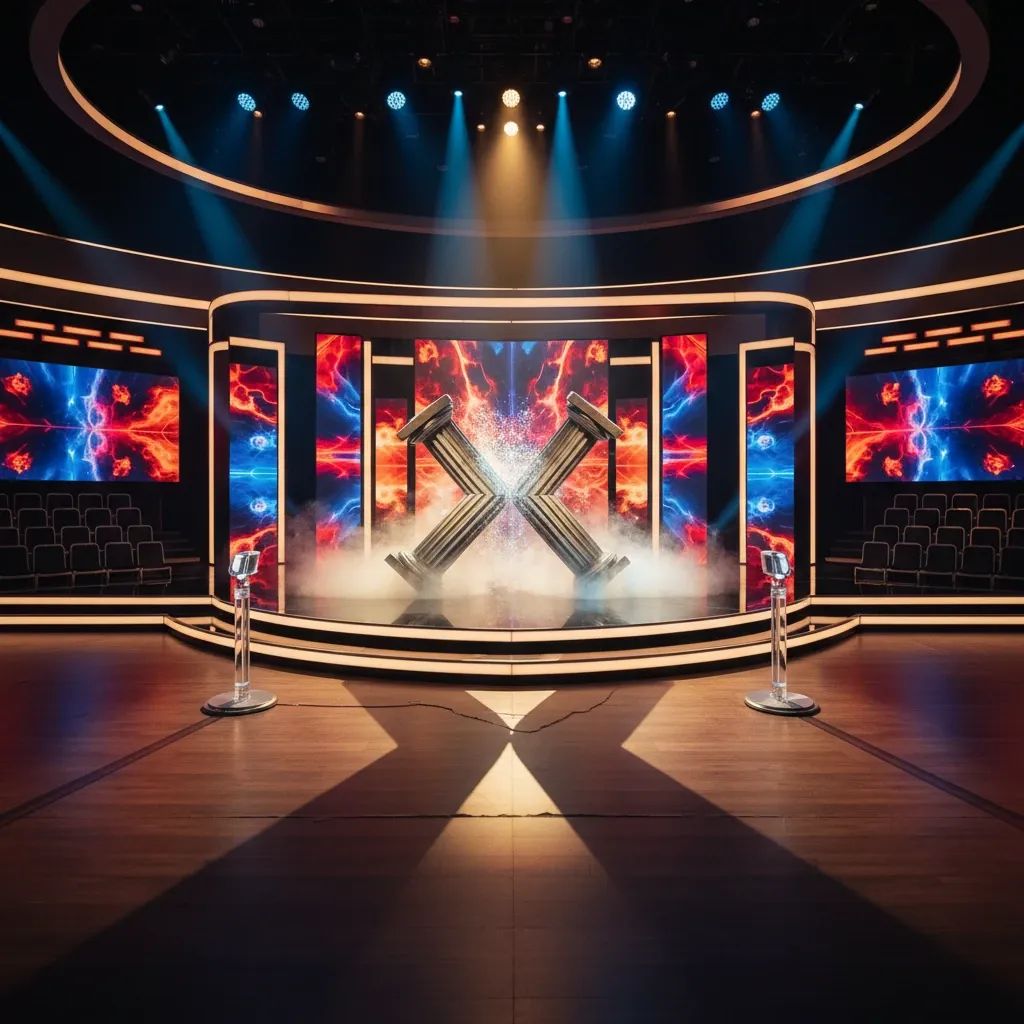
Italy's Senate President Ignazio La Russa has called on Sanremo Festival artistic director Carlo Conti to find a way to include comedian Andrea Pucci in this year's event—describing it as a "reparatory presence"—after the entertainer withdrew from his co-hosting role under a wave of accusations and threats. The move reflects growing political tension over freedom of expression in Italy's most-watched cultural event.
Why This Matters:
• Sanremo 2026 runs Feb 24-28, and the third evening will proceed without Pucci after he cited "intolerable" insults targeting him and his family.
• Political leaders from Italy's ruling coalition have framed the episode as ideological censorship, with Prime Minister Giorgia Meloni calling it a "political lynching."
• The controversy highlights cultural fault lines around comedy, social media criticism, and the role of state broadcaster RAI in navigating partisan divides.
The Senator's Challenge to Sanremo's Director
In a video posted to social media, La Russa—who serves as President of the Italian Senate—acknowledged that Conti had clarified Pucci's invitation was made independently, without external pressure. The director also confirmed during a press conference that the comedian chose to withdraw on his own.
But La Russa argued that response was insufficient. "I understand that Pucci didn't want to risk his professional image in front of those who might ambush him during the Sanremo evening," the senator said. "But from host Conti, I expect something more than saying, 'Oh well, too bad, he decided.'"
La Russa urged Conti to consider a "surprise" that would compensate Pucci for what he described as "unjust suffering and an unjust obligation to renounce." The senator left the specifics vague, saying only that "there are many ways" to make Pucci's presence felt at the festival in some form.
What Happened to Pucci
Andrea Pucci, a 60-year-old Milanese comedian known for his catchphrase "È cambiato... tutto!" and observational humor about daily life, was announced in early February as co-host for the third evening of Sanremo 2026. Almost immediately, a backlash erupted online.
Critics resurfaced past jokes and social media posts, accusing Pucci of relying on ethnic and gender stereotypes. Some Democratic Party lawmakers in RAI's oversight committee demanded explanations, labeling him "openly right-wing, fascist, and homophobic." Specific targets included past quips about Democratic Party leader Elly Schlein and reality TV personality Tommaso Zorzi, as well as his use of the term "zecche" (ticks)—a derogatory slang for leftists.
Pucci announced his withdrawal, stating that the "negative media wave" had destroyed the essential trust between him and his audience. He denied all accusations, insisting he has "never hated anyone" and arguing that "in 2026 the term fascist should no longer exist."
Political Backlash and the "Double Standard" Debate
The withdrawal ignited a partisan firestorm. Prime Minister Giorgia Meloni condemned what she called a "climate of intimidation and hatred," accusing the left of applying a double standard to satire. Her coalition allies, including La Russa and Deputy Prime Minister Matteo Salvini, echoed the sentiment, framing the episode as ideological censorship.
RAI, the state-owned broadcaster that produces Sanremo, expressed "great regret" over Pucci's decision, calling it a "form of censorship." Yet the network has made no indication it will alter the festival lineup beyond adjusting hosting duties for the third evening.
Journalist Selvaggia Lucarelli, a frequent critic of the government, countered that freedom of criticism is as fundamental as freedom of expression, rejecting the "lynching" narrative.
Impact on Residents and the Festival
For Italians, Sanremo is more than a music competition—it's a five-night national ritual that draws tens of millions of viewers and shapes public conversation. The festival has become a cultural touchstone where political divisions often surface, making artistic choices particularly sensitive. For residents in Italy, this episode highlights how even entertainment selections can become flashpoints in broader ideological debates.
The significance of a Senate President publicly intervening in the artistic decisions of a cultural institution also matters: it raises questions about whether state officials should lobby festival directors and program hosts on personnel matters, particularly when media coverage is intense and public passions are high.
Carlo Conti, who returned as artistic director after a previous stint in 2015-2017, has historically maintained a low-key, apolitical approach. His silence on La Russa's latest appeal—beyond his press conference remarks—suggests he may be reluctant to re-inject Pucci into an already charged atmosphere.
For Pucci, the professional consequences remain unclear. The comedian, who built his career on stage and television rather than political satire, has performances scheduled in the coming season. Whether the Sanremo fallout will affect future television opportunities is an open question.
What This Means for Freedom of Expression
The episode underscores a broader tension in Italian public life: how much room exists for controversial or politically aligned entertainers on platforms funded by taxpayers. RAI operates under a governance structure subject to political appointments, and its editorial choices are frequently scrutinized by the oversight commission, which includes members from across the political spectrum.
La Russa's intervention—a sitting Senate President publicly lobbying a festival director—raises questions about the boundaries between political advocacy and institutional neutrality. While his appeal is framed as defending artistic freedom, critics argue it represents pressure from the government on a cultural institution.
For now, Sanremo 2026 will proceed as planned, with the competition lineup intact. Whether Conti responds to La Russa's challenge—and in what form a "reparatory presence" might take—remains to be seen. Italians will be watching to see if Pucci makes a surprise appearance, or if the controversy becomes a cautionary tale about the limits of comedy in a polarized political climate.


