
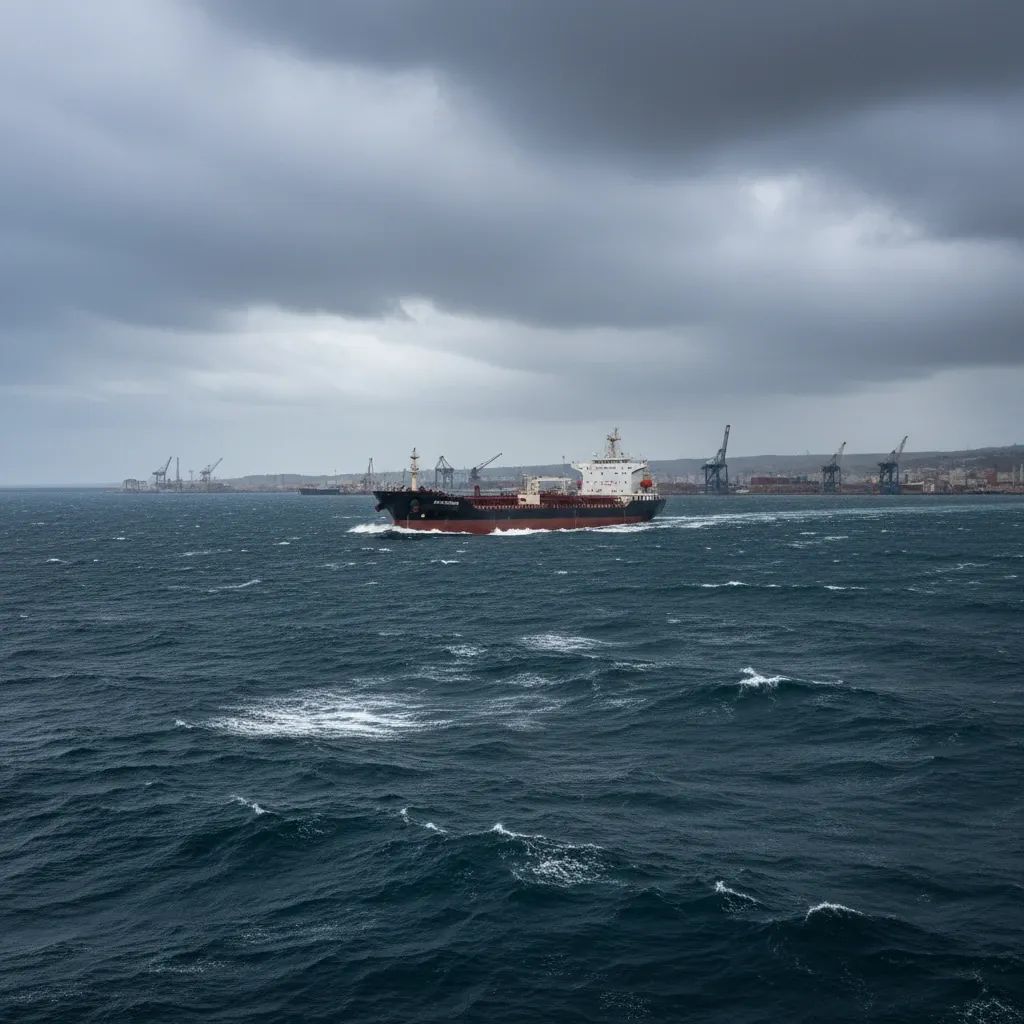
The Yemen-based Houthi militia has claimed responsibility for a deadly strike on the merchant vessel Tihamah in the Bab al-Mandab Strait, killing six people and injuring ten others—a lethal escalation in the group's sustained campaign to disrupt critical shipping lanes between Europe and Asia. The August 11-12 attack targeted the Liberia-flagged freighter carrying what Yemen's internationally recognized government describes as food supplies, though Houthis insist the cargo included military equipment.
The Specific Incident: What We Know
According to the Yemen Coast Guard, which reports to the internationally recognized government, the Tihamah was first hit by projectiles that sparked an onboard fire, causing significant structural damage and killing four crew members—three Pakistani nationals and one Indonesian. As rescue teams from the Yemen Second Naval Brigade attempted evacuation operations, a second salvo struck the vessel, killing two members of the response team.
The United Kingdom Maritime Trade Operations (UKMTO) initially reported the incident as a "projectile of unknown origin," a formulaic description used when attribution is still under investigation. Within hours, Houthi spokespeople publicly claimed the attack, framing it as part of their wider campaign in the Red Sea.
The Yemen Ministry of Transport flatly contradicted the Houthi narrative, stating the vessel carried foodstuffs destined for Yemeni ports—a cargo the ministry described as essential for "millions of Yemenis" already facing acute shortages. The ministry labeled the strike a direct assault on civilian supply lines, not a legitimate military interdiction.
Pakistan formally condemned the attack as a violation of international maritime law, while the Yemeni government accused the Houthis of reckless disregard for both Yemeni citizens and foreign nationals.
The Broader Red Sea Crisis Context
The Tihamah attack is part of an ongoing humanitarian and geopolitical crisis that has transformed the Red Sea region. Understanding the wider context helps explain why this incident matters significantly for Italian businesses and consumers.
Why This Matters
• Supply chain disruption continues: Shipping between the Far East and Mediterranean ports via the Suez Canal has been significantly impacted by the broader Red Sea tensions, forcing Italian exporters and importers to absorb higher costs and longer delivery windows.
• Insurance premiums have surged: War risk insurance for Red Sea transits has risen substantially in recent months—reportedly up to 1,000% in some cases—translating to hundreds of thousands of dollars in extra costs per voyage. These expenses are ultimately passed to consumers.
• Route diversions persist: Many vessels avoiding the strait must circumnavigate Africa via the Cape of Good Hope, adding an estimated 10-14 days to transit times and straining global logistics networks already under pressure.
• Regional tensions escalate: The ongoing conflict in Yemen continues to pose risks to maritime commerce, with international observers warning of potential further escalations.
What This Means for Italy-Based Businesses
Italian companies reliant on maritime trade through the Suez Canal—particularly in machinery, agribusiness, fashion, and non-metallic minerals—are experiencing operational challenges due to broader Red Sea security concerns. The persistent threat in the Bab al-Mandab Strait has prompted shipping companies to reroute Mediterranean-bound cargo around Africa, a detour that increases fuel consumption and extends voyage times significantly.
For Italian exporters, this translates to delayed deliveries, higher freight costs, and strained relationships with clients expecting just-in-time inventory. The agroalimentary sector, which depends on predictable shipping schedules for perishable goods, has reported measurable slowdowns, a trend industry analysts say continues as regional tensions persist.
Importers face similar challenges. Components sourced from Asia arrive weeks later than contracted, disrupting production schedules. The insurance dimension is equally significant. War-risk premiums for Red Sea transits have become substantially more expensive, eroding margins and forcing some shippers to absorb losses rather than pass full costs to customers. For Italy-based logistics firms managing long-term contracts at fixed rates, these spikes represent significant unhedged liabilities.
The Geopolitical Context
The Houthi campaign is not occurring in isolation. The group, widely recognized as receiving support from Iran, has positioned maritime incidents as leverage in broader regional tensions. Saudi Arabia views the Houthi threat as significant and is reportedly organizing regional responses, with multiple countries expressing concern about Red Sea security.
The European Union, through its Operation Aspides mission led by Italy, has elevated the Red Sea security risk to "high." Italian defense officials have emphasized that Italy maintains a naval presence in the region and have called for expanded participation from other member nations to adequately secure commercial traffic.
The UN Special Envoy for Yemen has described recent attacks as concerning developments that underscore the humanitarian and security crisis in Yemen. His office has called on all parties to return to UN-mediated negotiations. The UN Security Council has extended reporting mandates on maritime security incidents, underscoring international concern about Red Sea stability.
The Economic Impact
The broader Red Sea crisis continues to impose structural costs on the global economy and maritime commerce. Shipping analysts predict the regional security situation will persist as a significant factor affecting global trade routes and logistics costs in coming months.
For Italian households, the knock-on effects are subtle but real: longer lead times for consumer electronics, potential price pressures on imported goods, and delayed restocking of seasonal inventory. Retailers operating on thin margins face difficult choices between absorbing costs or adjusting consumer prices.
What Comes Next
The Tihamah attack underscores the fragility of maritime commerce in the Red Sea and highlights how regional conflicts directly affect Italian businesses and consumers. Military analysts note that the situation remains volatile, with potential for further escalations.
For Italy and the wider EU, the persistent Red Sea crisis underscores the importance of maintaining stable trade routes and the geopolitical risks embedded in maritime commerce. As regional tensions continue, European policymakers face pressure to either commit greater resources to Operation Aspides or adapt to higher logistics costs and longer delivery times as a new reality for trade with Asia and the Middle East.


