
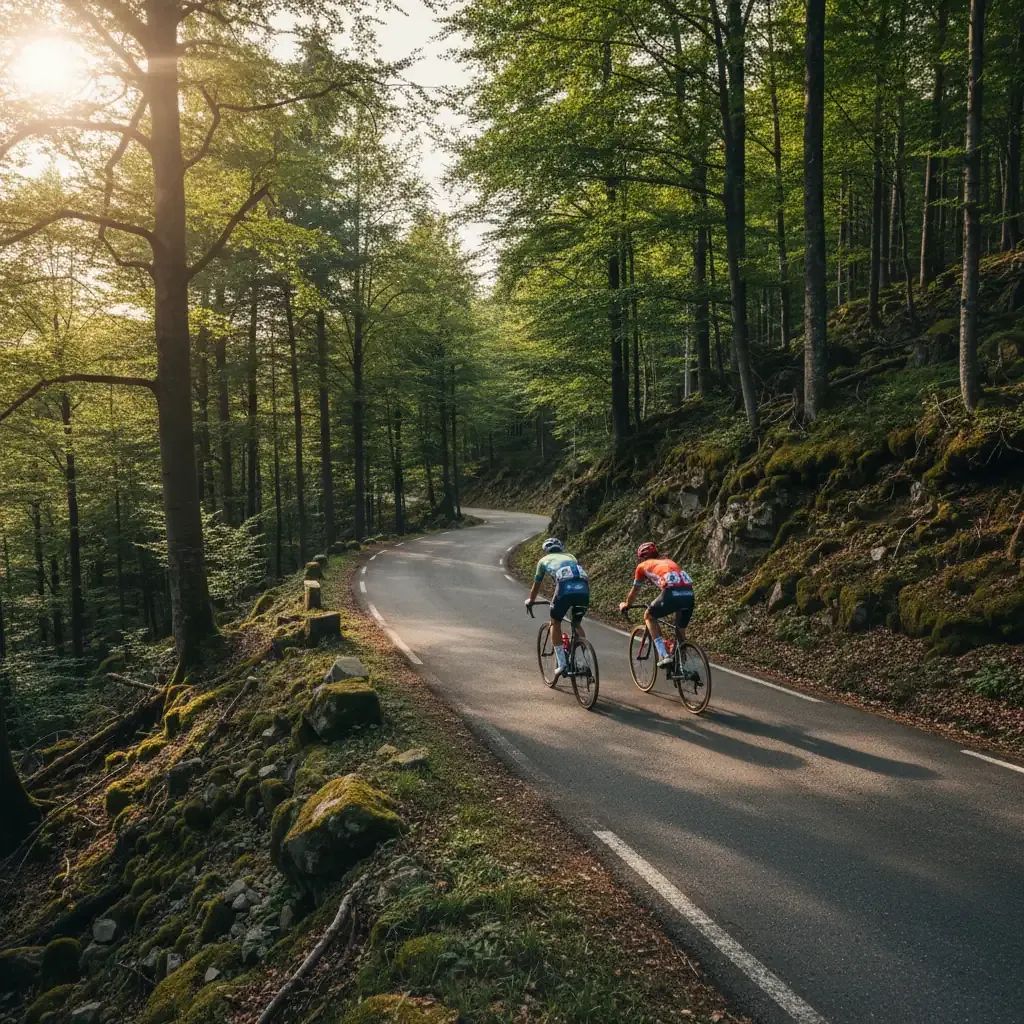
Slovenian cycling superstar Tadej Pogačar has claimed his fourth career victory at the Liegi-Bastogne-Liegi, cementing his legacy in one of cycling's most prestigious one-day races. The UAE Team Emirates rider crossed the finish line solo on the 259.5-kilometer course through Belgium's rugged Ardennes, finishing 45 seconds ahead of breakout French sensation Paul Seixas and 1 minute 42 seconds clear of Belgian champion Remco Evenepoel. For Italian cycling fans, the performance by Christian Scaroni (8th place) and Filippo Zana of Soudal-QuickStep (10th) offered a glimmer of encouragement in a race increasingly dominated by non-Italian climbers.
Why This Matters
• Historic achievement: Pogačar now ties Moreno Argentin and Alejandro Valverde with four career Liegi wins, sitting just one behind Eddy Merckx's all-time record of five.
• Third Monument of 2026: This marks Pogačar's third Monument Classic victory this season, consolidating his reign over the sport's biggest one-day races.
• Rising star debut: At just 19 years old, Paul Seixas announced himself on the global stage, becoming the youngest rider to finish second at Liegi in decades and reinforcing France's emerging talent pipeline.
The Race That Split Open Early
The 112th edition of La Doyenne, the oldest classic in professional cycling, was shaped by an early crash in the opening kilometers that fragmented the peloton. Pogačar and Seixas, both caught behind the incident, found themselves in the chase group and worked methodically to bridge the gap to the leaders. The collaboration between the Slovenian veteran and the French teenager became the defining subplot of the race, setting the stage for a dramatic finale.
As the race entered the decisive final 40 kilometers, Pogačar launched his signature move on the Côte de la Redoute, one of the most feared climbs in professional cycling. Only Seixas could respond, matching the Slovenian's acceleration as the field shattered behind them. For nearly 20 kilometers, the duo rode together, with Seixas refusing to yield despite facing a rider widely considered the best in the world.
Pogačar delivered the knockout blow on the Roche-aux-Faucons, approximately 14 to 15 kilometers from the finish. The gradient and relentless pace proved too much for the teenager, and Pogačar surged clear, extending his advantage with every pedal stroke. He arrived at the Liegi finish line alone for the third consecutive year, a demonstration of dominance rarely seen in the unpredictable world of one-day racing.
A Teen Phenom Makes His Mark
If Pogačar's victory was expected, Paul Seixas's performance was a revelation. Born in Lyon on September 24, 2006, the 19-year-old has been described as the sport's next generational talent—some already call him the "anti-Pogačar," a label that reflects both his potential and the sport's hunger for a new rival to the Slovenian's supremacy.
Seixas turned professional with Decathlon AG2R La Mondiale Team in 2025 and has wasted no time collecting results that most riders spend entire careers chasing. His 2026 season alone reads like a career highlight reel: he won the Giro dei Paesi Baschi overall (plus three stages and all four jerseys), claimed victory at the Freccia Vallone to become the youngest winner atop the Muro di Huy, and finished second to Pogačar at the Strade Bianche. His runner-up finish at Liegi adds another chapter to a season that has exceeded all expectations.
Before turning pro, Seixas won the junior time trial world championship in Zurich in 2024, along with the junior edition of Liegi-Bastogne-Liegi. His 2025 debut season featured a victory at the Tour de l'Avenir, often considered a proving ground for future Tour de France contenders, and a stunning seventh-place finish at the Giro di Lombardia, making him the youngest top-10 finisher at a Monument Classic in over a century.
Following the Liegi podium, Pogačar himself acknowledged the teenager's potential, calling his performance "incredible" and suggesting the sport had found a formidable new competitor. For cycling's Italian audience, the emergence of Seixas is both inspiring and sobering—it reflects the sport's shift toward younger, multi-disciplined athletes capable of excelling in both stage races and classics.
Pogačar Chases Merckx's Shadow
With this fourth Liegi victory (2021, 2024, 2025, 2026), Pogačar now stands level with Italian legend Moreno Argentin and Spanish great Alejandro Valverde in the all-time winner's list. Only the legendary Eddy Merckx, who won five times in the 1960s and 1970s, has claimed more victories at the Belgian classic.
At the finish line, Pogačar dedicated the victory to a former teammate who had passed away, a poignant moment that underscored the emotional weight even the sport's most dominant figures carry. His third Monument victory of the season suggests he is on pace for one of the most successful single-year campaigns in cycling history, a trajectory that has Italian sports media closely monitoring whether any Italian contenders can challenge his stranglehold on the sport's biggest prizes.
Italian Riders Find Limited Success
For Italian cycling, the results were mixed but not disastrous. Christian Scaroni finished 8th, a respectable placing in a race where merely surviving the brutal Ardennes climbs is an achievement. Filippo Zana, riding for the Belgian powerhouse Soudal-QuickStep, crossed the line in 10th, maintaining Italy's presence in the top tier but falling short of the podium finishes the nation's cycling heritage demands.
Italian teams and riders have struggled in recent years to match the firepower of UAE Team Emirates, Jumbo-Visma (now rebranded), and other super-teams that have reshaped the sport's competitive landscape. The dominance of riders like Pogačar and the emergence of talents like Seixas highlight a generational challenge for Italian cycling, which has historically dominated one-day classics but now finds itself racing for minor placings rather than victories.
What This Means for the Sport
The battle between Pogačar and Seixas offers a tantalizing preview of cycling's next decade. Pogačar, still in his mid-20s, shows no signs of slowing down and is already being compared to the sport's all-time greats. Seixas, meanwhile, has the tools and the mentality to challenge him—his resilience on the Côte de la Redoute demonstrated he won't be intimidated by reputation alone.
For Italian fans and riders, the lesson is clear: the sport is evolving rapidly, and the next generation will need to match not just the physical prowess of riders like Pogačar and Seixas, but also their strategic intelligence and mental fortitude. The Liegi-Bastogne-Liegi 2026 was a reminder that cycling's center of gravity has shifted, and Italy must adapt or risk being left behind in a sport it once dominated.


