
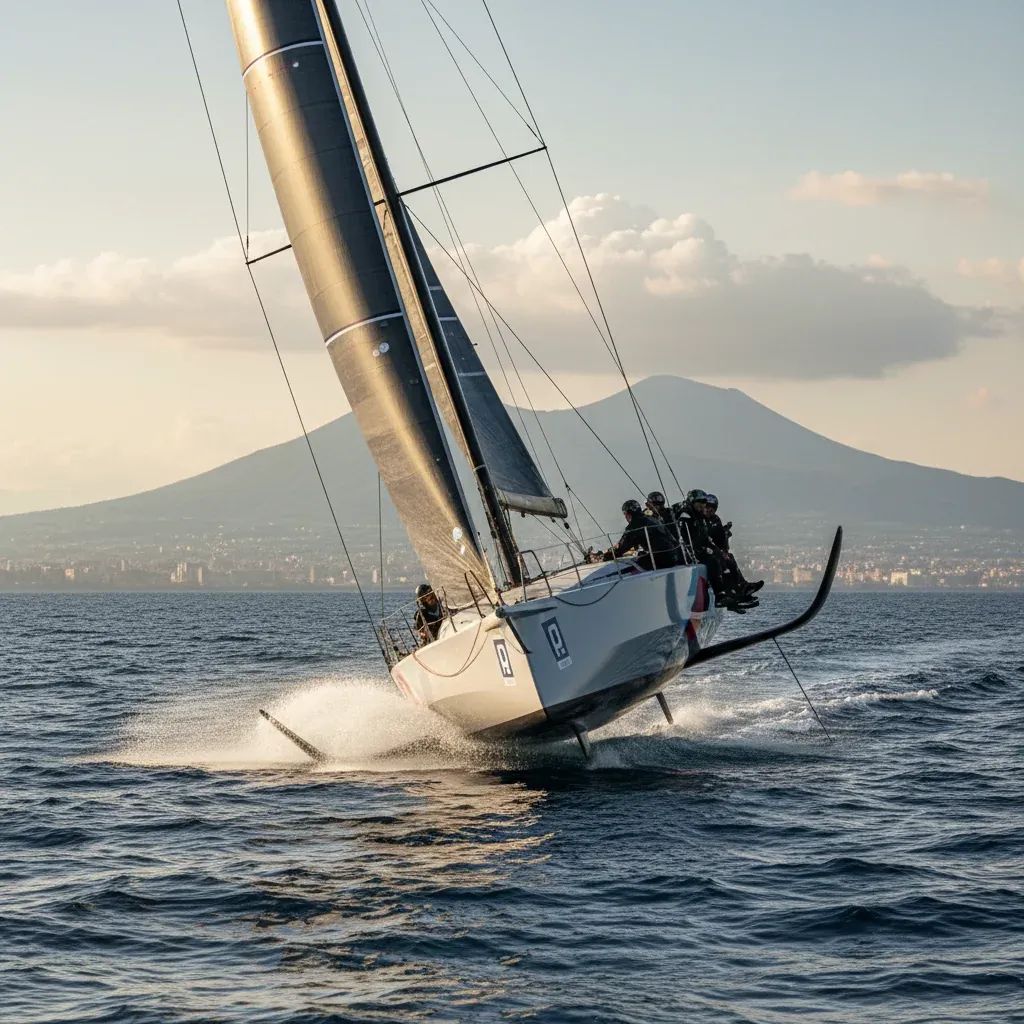
The Italian Ministry for Sport and Youth has launched a series of outreach programs designed to extend the reach of sailing—a traditionally elite sport—into the country's most disadvantaged neighborhoods, using the upcoming America's Cup 2027 in Naples as a catalyst for social mobility and urban regeneration.
Why This Matters:
• Direct employment: Youth from Caivano's sports camps will work at America's Cup events in Naples starting September, marking a tangible route from periphery to opportunity.
• €1.7B investment: The event anchors a massive redevelopment of Bagnoli, a former industrial wasteland, into a tourism and maritime hub.
• Education through sport: Sailing programs now enter public schools and community centers, connecting maritime culture with STEM learning for underserved populations.
Bringing the Sea Where There Is None
On a recent morning in Caivano—a Naples suburb long associated with socioeconomic hardship and limited opportunity—350 children gathered around a chlorinated swimming pool that had been transformed into an improbable regatta course. Two Optimist dinghies, the classic training sailboats, glided across the water powered not by Mediterranean breezes but by industrial fans positioned poolside. Instructors from the Campania section of the Italian Sailing Federation (FIV), supported by clubs including Circolo Nautico Arcobaleno Torre Annunziata and Scuola Vela Mascalzone Latino, guided young hands on tillers and sheets, translating wind dynamics into lived experience.
The event, held at the "Pino Daniele" sports center and organized by Sport e Salute—a state-controlled company managing public sports infrastructure—represents more than a novelty outreach day. It is part of a coordinated national strategy to leverage the 38th America's Cup, scheduled for Naples in 2027, as a vehicle for long-term social change in Italy's south. Minister Andrea Abodi described it as "another promise kept," emphasizing that sailing, with its blend of environmental respect, individual responsibility, and team coordination, offers a developmental model applicable far beyond the waterline.
From Periphery to Payroll
Diego Nepi Molineris, CEO of Sport e Salute, confirmed that several young people currently working at the Caivano sports center will be hired for America's Cup operations in Naples, beginning with preliminary regattas in September and continuing through the main competition cycle. "When we talk about sport as a social elevator, this is a small but tangible example worth communicating," he said, framing the initiative as a deliberate intervention in communities where career pathways are often narrow and precarious.
While specific employment figures remain undisclosed, the commitment signals an intentional pivot from symbolic gestures to concrete economic inclusion. The Illumina Camp participants in Caivano are now part of a talent pipeline intended to populate roles in event logistics, hospitality, and technical support as Naples prepares to host the world's oldest active international sporting competition.
Bagnoli: Regeneration or Gentrification?
Central to Italy's America's Cup legacy planning is the radical transformation of Bagnoli, a coastal district west of Naples scarred by decades of industrial pollution and abandonment. The area will serve as the primary operational hub for the Cup, housing team bases, a technical fan zone, and upgraded waterfront infrastructure. Naples Mayor Gaetano Manfredi has emphasized that hosting the event will "accelerate environmental rehabilitation and urban regeneration," converting Bagnoli into a new tourism and commercial center with guaranteed public access to the sea and a large public park.
The scale is significant: approximately €1.7B in combined public and private investment is earmarked for demolition, dredging, environmental remediation, and construction. Proponents argue this will generate sustained tourism revenue and maritime employment, spreading economic benefits across the Campania region, including inland areas and towns suffering from under-tourism.
Yet the project has sparked familiar concerns. Critics warn that Bagnoli's makeover risks creating a "luxury harbor" that prices out local residents and exacerbates inequality—a pattern observed in other cities that have hosted mega-events. Rio de Janeiro (2016 Olympics), London (2012), and Beijing (2008) all saw significant displacement of low-income populations, rising housing costs, and underutilized infrastructure post-event. In Atlanta, Olympic preparations involved the demolition of properties in predominantly Black neighborhoods under eminent domain. Athens 2004 left a legacy of financial strain and abandoned venues.
What This Means for Residents
For Italians living in or near Naples, the America's Cup serves as both opportunity and test case. The government's stated ambition is to ensure the event delivers lasting value to "families, communities, and the health of the city itself," according to Mayor Manfredi, who has pledged to make it the "most open and participated" edition of the Cup ever held.
Concrete measures include:
• School integration: The NEXT GEN 27 program will embed sailing education into curricula across Naples and surrounding municipalities, linking it to digital transformation, STEM subjects, and sustainability.
• Volunteer recruitment: An open call for volunteers targets participants from Naples and neighboring areas, offering experience in race village operations, visitor services, and media production. While unpaid, these roles are framed as pathways to professional networks in sports and events management.
• Maritime economy development: Minister Abodi has committed to promoting "sea education and economy" initiatives designed to cultivate maritime skills and create employment linked to Italy's extensive coastline.
However, the effectiveness of these programs depends heavily on execution and follow-through. Transparency protocols are in place to prevent criminal infiltration of construction contracts—a perennial concern in southern Italy—but the ultimate measure will be whether marginalized youth in places like Caivano gain meaningful, sustained access to the jobs and opportunities the event ostensibly creates.
Legacy Beyond the Regatta
Sport e Salute and the Ministry for Sport envision the America's Cup as a lever to shift perceptions of the Mezzogiorno—Italy's historically underdeveloped south—from a region requiring assistance to one projecting competence, vision, and pride. The choice of Naples and Bagnoli is framed as a statement of "the rediscovered strength of the South."
Nepi Molineris articulated the ambition plainly: "The future is not something we wait for; it is something we build, every day." The goal is to move beyond the spectacle of racing yachts and generate structural change—training a generation that sees the future "not as something to await, but as a horizon to conquer."
Whether that rhetoric translates into durable economic mobility, equitable urban development, and genuine inclusion will depend on political will, fiscal discipline, and community engagement over the next 12 months and beyond. For now, the children steering Optimists across a Caivano swimming pool represent both a promise and a gamble—that a global sporting event can become more than a showcase, and instead a foundation for opportunity where it has long been scarce.
The Global Precedent
International experience offers cautionary lessons. Barcelona's 1992 Olympics successfully catalyzed waterfront redevelopment and transportation infrastructure, but also set off gentrification that reshaped the city's social geography. Hangzhou's 2022 Asian Games accelerated urban expansion and infrastructure but concentrated development in districts hosting venues, leaving peripheral areas behind.
The Italian government's challenge is to avoid the pitfalls—displacement, cost overruns, underutilized facilities—while capturing the benefits: upgraded infrastructure, global visibility, and expanded economic activity. The emphasis on Caivano and other peripheral zones suggests an awareness of these risks, though the ultimate verdict will emerge only after the last yacht crosses the finish line and the cameras leave.


