
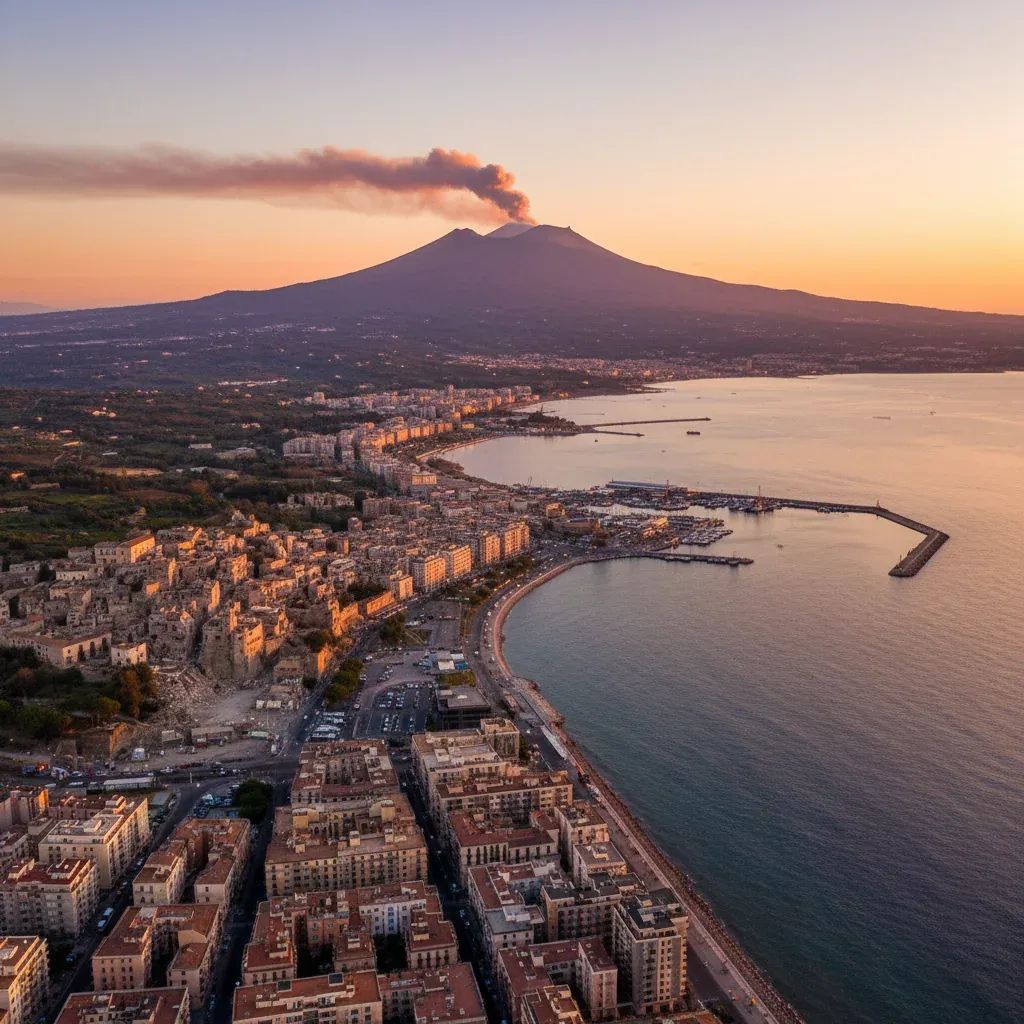
Italy's consumer protection agency Codacons has filed a formal complaint with the country's antitrust authority over car rental prices at Catania's Fontanarossa Airport that surged as much as 287% during volcanic ash disruptions that grounded flights in late August.
Why This Matters
• Price spikes affect stranded travelers: Four-hour rentals from Catania to Comiso jumped from €87 to €337 during the emergency.
• Antitrust investigation requested: Italy's competition watchdog (AGCM) has been asked to probe whether rental agencies exploited passengers' desperation.
• Broader pattern: Mount Etna's ash emissions have disrupted flights, forcing thousands to seek ground transport to reach Palermo, Trapani, and Comiso airports.
• Red alert status: Italy's National Institute of Geophysics and Volcanology (INGV) maintains aviation red alert status for volcanic disruptions, with flight suspensions likely during future activity.
The Pricing Surge Under the Microscope
When Codacons investigators conducted price comparisons using specialized booking engines, they uncovered a stark divide between emergency and normal pricing.
A four-hour rental from Catania to alternative Sicilian airports during the volcanic disruption carried charges of €141 to Palermo, €181 to Trapani, and €337 to Comiso—routes desperately needed by passengers whose flights had been canceled or diverted.
The same vehicles, rented on regular dates for identical duration and drop-off locations, cost dramatically less: €91 to Palermo, €107 to Trapani, and just €87 to Comiso. That final comparison represents the most extreme example: travelers forced to reach Comiso during the volcanic crisis paid nearly four times the typical rate for the exact same service.
The consumer advocacy group argues these disparities reveal exploitative pricing practices that take advantage of passengers trapped by circumstances beyond their control. Codacons contends that companies operating at Fontanarossa—including Enterprise, Hertz, Europcar, SIXT, Avis, Maggiore, and more than 20 other agencies—collectively capitalized on a captive market with no alternative transport options.
What Travelers Should Do NOW
Before booking your Sicily trip:
• Check INGV's aviation alerts at www.ct.ingv.it before heading to Catania Airport. The institute updates volcanic activity status regularly.
• Monitor airline announcements—they know flight disruption patterns better than anyone.
• Book car rentals at least 1-2 weeks in advance, even during peak season. Codacons' data shows this cuts emergency prices by 40-75%.
If you're already stranded:
• Don't book same-day rentals. Instead, consider train options to Palermo (210 km from Catania) or other airports if flights resume within hours.
• Ask rental agencies about pre-negotiated corporate rates or loyalty discounts—some offer 10-15% reductions that don't appear in online searches.
• Document everything. If prices seem unreasonable, file a complaint with Codacons or your regional consumer protection office.
What This Means for Travelers
Italy's Autorità Garante della Concorrenza e del Mercato (AGCM) now faces pressure to determine whether rental agencies violated fair competition rules during the emergency. The formal complaint requests a comprehensive investigation into whether the documented price increases constitute speculative behavior harmful to consumers in distress.
For anyone traveling through Sicily during volcanic activity periods, the implications are immediate. Mount Etna's eruptions create sudden demand for one-way car rentals across the island when flights are disrupted.
Industry data indicates that August is already Sicily's most expensive rental month, with typical daily rates around €70-€83 in normal conditions. But volcanic disruptions create a secondary pricing tier that far exceeds seasonal premiums. The four-hour rentals examined by Codacons translate to effective hourly rates of €35-€84, compared to normal rates of roughly €3-€4 per hour for similar vehicles on multi-day contracts.
European Context and Consumer Protections
Italy's situation mirrors broader tensions around airport rental pricing across the European Union. The European Commission has secured voluntary commitments from five major rental companies—Avis, Europcar, Enterprise, Hertz, and Sixt—to improve price transparency.
Those agreements require clear disclosure of total costs, including airport surcharges, fuel policies, and young driver fees, before booking confirmation. However, they don't directly address dynamic pricing during emergencies.
While EU consumer protection frameworks mandate honest advertising, they don't cap prices during crises or prevent companies from adjusting rates based on sudden demand spikes. Airport rentals routinely cost 15-30% more than city locations due to concession fees. But emergency pricing—when travelers have no practical alternatives—occupies a legal gray zone that national antitrust authorities must evaluate case by case.
The Volcanic Wildcard
Mount Etna's behavior has introduced persistent uncertainty into Sicilian travel planning. The volcano has been exceptionally active in recent years, with INGV maintaining red aviation alerts that indicate significant ash concentrations at flight altitudes. Airlines have diverted flights to Palermo (roughly 210 km west) and smaller airports at Trapani and Comiso.
This geography creates the exact conditions Codacons alleges rental agencies exploited. Passengers landing at Palermo who need to reach eastern Sicily—or Catania arrivals who must travel to alternate departure points—face limited choices: wait indefinitely for flight resumption, book expensive last-minute train tickets (if available), or rent a car for immediate departure.
The National Institute of Geophysics and Volcanology advises travelers to verify flight status directly with carriers before heading to any Sicilian airport. Early booking remains the most effective price protection.
Insurance and Vehicle Protection
For residents and frequent travelers in Sicily, comprehensive travel insurance that covers alternative transport during volcanic disruptions is increasingly important.
Standard policies often exclude "acts of God," but specialized coverage can reimburse rental costs or provide pre-negotiated rates with partner agencies. Volcanic ash also poses mechanical risks to rental vehicles. Fine particles can scratch paint, clog air filters, and damage engines.
Travelers should verify whether their rental agreement or personal insurance covers volcanic ash damage, which some agencies classify alongside sand and require supplemental coverage to protect against.
What Happens Next
The antitrust complaint now sits with AGCM investigators, who will determine whether to open a formal probe. If the authority finds evidence of coordinated pricing or abuse of dominant market position, rental agencies could face fines and be required to implement pricing controls during declared emergencies.
Italy lacks specific anti-gouging statutes comparable to some other jurisdictions, making the Codacons case a test of how existing competition law applies to crisis pricing. The consumer group argues that when travelers are effectively captive—grounded by natural disaster with urgent need to reach another departure point—standard supply-and-demand justifications for price increases no longer apply.
The investigation's outcome may take months, but the precedent could reshape how airport rental agencies price services during future emergencies—not just in Sicily, but across Italy's network of airports vulnerable to natural disruptions ranging from flooding to seismic events.


