
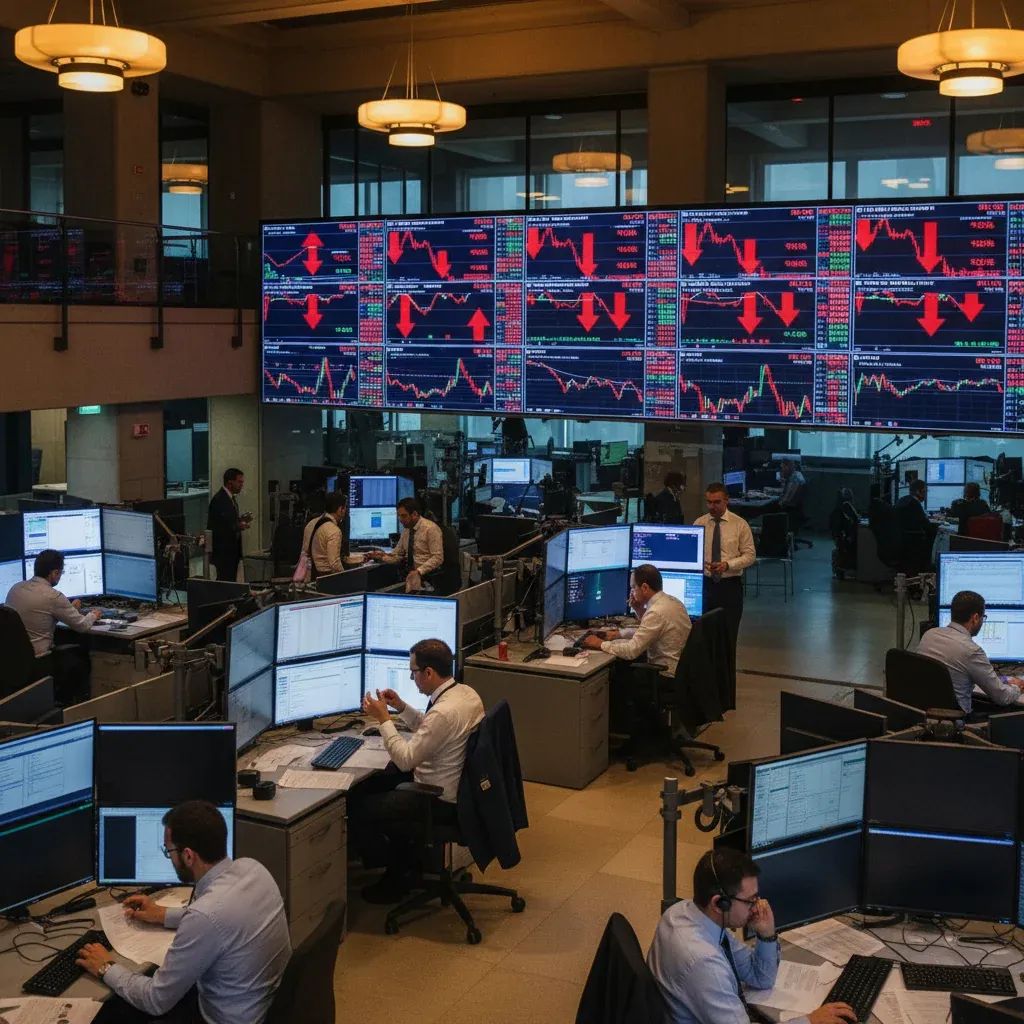
Italy's Milan Exchange showed resilience in today's trading, climbing 0.4% despite persistent geopolitical friction, as investors across Europe navigate uncertainty tied to Middle Eastern tensions and the closure of a critical global energy chokepoint.
Why This Matters:
• Hormuz Strait remains shut: The critical waterway through which roughly one-fifth of the world's petroleum passes is closed as diplomatic talks between Washington and Tehran have stalled, with no breakthrough expected soon.
• Italian tech stocks diverge: Technology and infrastructure leaders like STMicroelectronics (+3%) and Prysmian (+2.4%) drove gains, while defense contractor Fincantieri fell 1.9%, reflecting reduced demand expectations for military-adjacent sectors amid energy volatility.
• Oil volatility impacts European economy: Brent crude traded at $88.90 per barrel, up 0.4%, affecting fuel costs and energy prices across Italy and the broader eurozone.
• Central bank decision looming: The European Central Bank is expected to raise rates by 25 basis points at its September 10 meeting, as eurozone inflation remains elevated at around 3%, well above the 2% target.
Energy Corridor Becomes Economic Flashpoint
The Strait of Hormuz closure continues to ripple through European equity markets. The waterway's prolonged disruption creates a paradox where energy producers benefit from elevated prices while manufacturers and transport firms face rising costs that compress profits.
Tanker traffic through the strait has declined sharply. Brent crude is currently trading above $88 per barrel, higher than earlier projections. Natural gas prices in Europe also reflected the uncertainty, with Amsterdam TTF benchmark contracts rising to €62.43 per megawatt-hour, though gains moderated from earlier in the session.
Italian Equities Show Sector Fragmentation
Piazza Affari, Italy's main stock exchange, displayed mixed movements across sectors. STMicroelectronics led the FTSE MIB index (Italy's primary stock benchmark) higher on demand for semiconductors and computing infrastructure. Prysmian, a cable and infrastructure specialist, gained 2.4%, buoyed by its positioning in Southern European connectivity markets.
Ferrari added 1.1% after its limited-edition model achieved strong demand, demonstrating that ultra-luxury demand remains resilient. Utilities Italgas and wealth manager Fineco each rose 0.9%.
Banking stocks traded mixed. Intesa Sanpaolo edged up 0.1%, while Unicredit slipped 0.3%, as the Italian banking sector continues consolidation and faces regulatory oversight from European authorities.
Defense contractor Fincantieri dropped 1.9%, notably declining during Middle East tensions. Unlike traditional defense contractors that might benefit from geopolitical conflicts, Fincantieri—which specializes in shipbuilding and naval vessels—faces reduced investment visibility as companies prioritize expense controls amid energy uncertainty. Luxury apparel maker Brunello Cucinelli fell 0.9%.
What This Means for Italian Residents
The spread between Italian government bonds and German Bunds tightened to 76 basis points, signaling improved confidence in Italy's fiscal stability. The Italian government bond yield is now at 3.96%.
For people living in Italy, these market movements have practical implications: energy prices at the pump remain elevated due to the Hormuz situation, directly affecting fuel and heating costs heading into autumn. Companies in the energy-dependent sectors—manufacturing, transport, logistics—face margin pressures that could eventually impact employment and wage growth.
Technology-focused companies like STMicroelectronics, headquartered in Switzerland but with significant operations and workforce ties to Northern Italy, are among the few sectors showing strength. Their gains reflect genuine demand rather than speculation, offering more stability for Italian investors and pension funds with exposure to these companies.
The ECB rate increase expected in September will make mortgages and consumer credit more expensive across Italy, affecting families planning purchases or refinancing existing debts.
Central Bank Policy Remains Key Variable
The European Central Bank faces clearer pressure than the US Federal Reserve. With eurozone inflation at 3% and energy prices elevated due to Middle Eastern tensions, a September rate increase appears certain. The key question is whether the ECB will signal further tightening or pause for the fourth quarter to assess economic impacts.
The Bank of England also held rates steady in late July, though some committee members favored an increase as UK inflation is forecast to remain elevated.
Outlook Hinges on Diplomatic Resolution
European markets face competing forces in the weeks ahead. Any diplomatic breakthrough on the Hormuz Strait would likely trigger an equity rally, particularly benefiting transport, manufacturing, and consumer sectors pressured by elevated fuel costs. Energy prices could ease, reducing inflation pressures that central banks are fighting.
Conversely, further escalation could push Brent crude higher, intensifying inflationary pressures just as central banks attempt to manage economic growth.
Italian stocks reflect this broader European tension—modest gains sustained by technology sector strength, tempered by geopolitical uncertainty and the prospect of tighter monetary conditions. The Milan Exchange has proven resilient, but the path forward depends heavily on variables beyond corporate earnings: Middle Eastern diplomacy, central bank decisions, and the pace at which energy markets stabilize.
For now, the clearest signal from Italian market movements is that investors are favoring technology and infrastructure stocks while avoiding exposed sectors, reflecting cautious optimism about Italy's economic positioning amid European uncertainty.


