
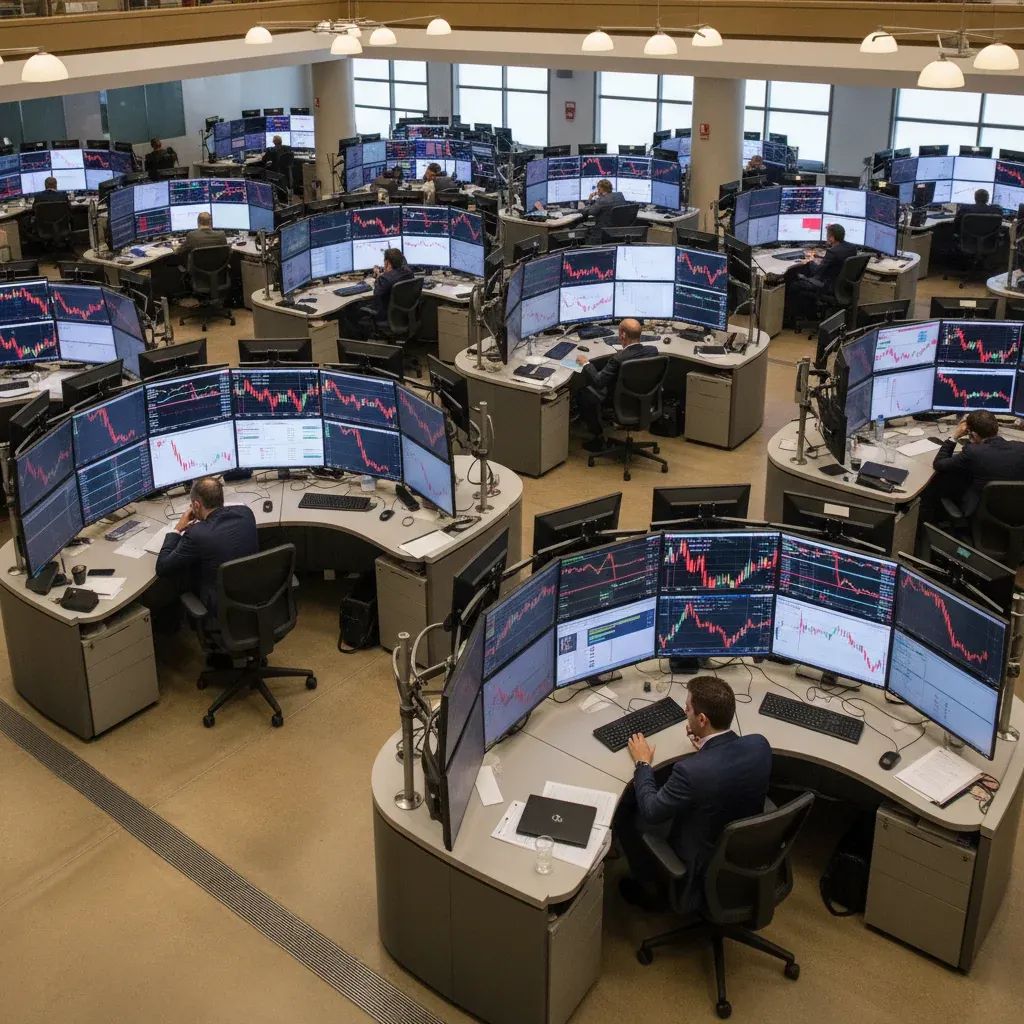
The Italy Stock Exchange shed its intraday gains on August 12, erasing a week-long rally as renewed fears over the Iran conflict and stalled diplomatic talks overshadowed positive inflation data from the United States. The Milan bourse closed marginally lower at -0.01%, while luxury stocks bore the brunt of downgrades from Deutsche Bank analysts who cited mounting geopolitical and consumer headwinds.
Why This Matters
• Energy Exposure: Italy remains vulnerable to oil price swings tied to Middle East tensions, with Brent crude hovering near $88 per barrel and European gas prices climbing again.
• Luxury Sector Under Pressure: Italian high-end brands Brunello Cucinelli and Moncler fell 2.78% and 2.28% respectively, reflecting broader sector weakness tied to flat Chinese demand and Middle East tensions.
• Ceasefire Outlook Uncertain: A ceasefire between Washington and Tehran remains fragile, with fundamental disputes over nuclear programs, sanctions relief, and regional stability unresolved.
Geopolitical Drag Interrupts Seven-Day Rally
European equity markets stumbled into the close on August 12 after a brief positive start, with the Stoxx Europe 600 sliding 0.2% to snap a seven-session winning streak. Frankfurt declined 0.23% and Paris fell 0.46%, while London edged down 0.1%. The late-session reversal came as investors digested hardening rhetoric from both Washington and Tehran, casting doubt on the viability of peace negotiations.
Piazza Affari lost all its gains to finish essentially flat. The Milan benchmark had opened higher on hopes that diplomatic progress might ease energy supply concerns, but those expectations dissolved as oil and gas prices resumed their climb. Brent crude stabilized around $88 per barrel—well below the March 2026 peak above $100—yet elevated enough to keep inflationary pressures alive across the Eurozone. European natural gas futures also ticked upward, reminding traders that the region's heavy reliance on imported energy leaves it exposed to Middle Eastern supply shocks.
The ceasefire, mediated by Pakistan in April, faces ongoing challenges. Fundamental disagreements persist on nuclear programs, sanctions relief, and regional security arrangements. Both sides continue diplomatic efforts, but core disputes remain unresolved as tensions simmer across the region.
Luxury Stocks Hit by Analyst Downgrades
Italy's premier fashion and apparel names took a beating after Deutsche Bank trimmed price targets across the luxury sector, citing three converging headwinds: stagnant Chinese demand, erosion of middle-class purchasing power among aspirational buyers, and the negative spillover from Middle East geopolitical tensions.
Brunello Cucinelli tumbled 2.78%, despite the bank maintaining a "Buy" rating and a €96.60 target price, positioning the Solomeo-based cashmere specialist as one of the few ultra-high-end brands capable of thriving in a polarized market. Moncler fell 2.28%, with Deutsche Bank holding a "Hold" rating and cutting its target slightly from €58 to €57. Across Europe, LVMH lost 2.9% and Hermès dropped 2.5%, both on reduced price objectives (€590 and €1,920 respectively) as analysts noted that flat demand from Chinese tourists—both domestically and abroad—has clouded an otherwise resilient earnings picture.
The downgrades reflect a broader recalibration within the sector. Luxury conglomerates face a squeeze from multiple directions: China's sluggish consumption recovery, elevated fuel costs crimping travel budgets, and geopolitical anxiety dampening discretionary spending. Deutsche Bank's strategy note emphasizes growing polarization in the industry, arguing that only brands anchored at the very top end of the market—or those with compelling turnaround narratives—will outperform in the coming quarters.
What This Means for Italian Investors
For those with exposure to Italian equities, the confluence of geopolitical risk and sector-specific headwinds demands a tactical reassessment. The luxury segment, which has historically delivered premium returns and commands significant index weight in Milan, now carries heightened volatility. Investors should weigh whether to trim positions in mid-tier luxury names vulnerable to aspirational buyer pullback, or to rotate into defensive sectors less sensitive to Middle East supply disruptions.
Energy importers face a double bind: higher input costs squeeze margins, while inflation concerns complicate the European Central Bank's path toward further monetary easing. Italy's heavy reliance on imported fossil fuels amplifies this vulnerability relative to more energy-independent peers.
Diversification remains the cardinal rule. Financial advisors across Italy are counseling clients to spread risk across sectors, geographies, and asset classes. Traditional safe havens—gold, government bonds, and stable-value instruments—have seen renewed inflows as a hedge against equity market swings. The yellow metal, in particular, tends to appreciate during geopolitical crises, offering a counterbalance to stock volatility.
That said, panic selling is rarely the optimal response. Historical data show that equity markets often recover relatively quickly from geopolitical shocks, even when initial reactions are sharp. Maintaining a long-term perspective, adjusting allocations gradually, and consulting with professional advisors can help Italian investors navigate turbulence without locking in losses through impulsive moves.
Earnings Season Closes with Muted Optimism
The final stretch of second-quarter earnings season has delivered broadly solid results, yet market participants remain circumspect. "Strong profits are necessary, but not sufficient to drive the next leg higher," noted one Milan-based analyst. Corporate performance has held up well in aggregate, supported by robust technology sector gains tied to artificial intelligence investment and resilient consumer spending in select categories. However, top-line growth is moderating, and forward guidance has turned cautious as executives factor in elevated energy costs, geopolitical uncertainty, and signs of consumer fatigue.
The Stoxx Europe 600 remains near all-time highs, a testament to underlying corporate strength and investor appetite for equities in a low-yield environment. Yet the index's proximity to peak levels also means limited upside cushion if conditions deteriorate. With geopolitical tensions simmering and no clear diplomatic breakthrough in sight, markets are bracing for potential headline risk in the days ahead.
Looking Ahead
Market participants are watching closely for any signals that diplomatic efforts might yield progress. Observers point to ongoing negotiations and ceasefire extensions as evidence that both sides recognize the costs of prolonged conflict. However, fundamental issues regarding regional stability and broader strategic interests remain divisive.
For Italian equity investors, the near-term outlook hinges on three variables: the trajectory of oil and gas prices, the health of Chinese luxury demand, and the ECB's policy response to inflation pressures. Should diplomatic efforts yield a breakthrough, energy costs could ease and risk appetite return. Absent such progress, markets may face a period of choppy trading as investors digest elevated geopolitical risk alongside still-solid corporate fundamentals.
In the interim, prudent portfolio management—diversification, selective hedging, and a steady hand—remains the best defense against uncertainty.


