The Italy Ministry of Economy faces a drastically reshaped industrial negotiation after the Milan Court of Appeal ordered the shutdown of the ex Ilva steelworks' hot production area in Taranto by October 28, 2026—a ruling that threatens not only the south's largest industrial employer but also satellite facilities across northern Italy, including Genoa's Cornigliano plant, where roughly 1,000 jobs now hang in the balance.
Why This Matters:
• Shutdown deadline set: The hot production area must cease operations by October 28, 2026, unless complete asbestos removal and emissions controls are installed—requirements experts say are technically impossible within the timeframe.
• Genoa plant at risk: Cornigliano depends entirely on Taranto for raw material; the shutdown cascades north, imperiling Liguria's steel workforce.
• €700–800M compliance cost: Full compliance with the court's asbestos removal mandate could cost up to €800M, far beyond the €100M emergency funding allocated by the Italy Cabinet in July 2026.
• Buyer still interested—barely: Indian conglomerate Jindal reaffirmed acquisition interest but warned all agreements are contingent on "definition of relevant terms," code for legal and financial clarity the court order just obliterated.
What This Means for Italy Residents and Investors
Understanding the legal significance: Italian appellate court rulings issued by specialized commercial sections are directly enforceable and carry criminal liability for non-compliance, unlike legal systems where appeals automatically delay enforcement. This designation makes the Milan Court's decree exceptionally consequential—government commissioners cannot simply wait out the decision or negotiate indefinitely.
For expats and Italy-based professionals in manufacturing, logistics, or environmental sectors, the ex Ilva saga offers a case study in how judicial enforcement of environmental standards can abruptly rewrite industrial policy. Companies operating legacy heavy-industrial assets in Italy should anticipate that deferred maintenance and asbestos liabilities will face intensifying scrutiny, particularly where citizen advocacy groups pursue direct legal action.
For Genoa-area residents, the immediate question is whether Cornigliano's cold-rolling operations can secure an independent feedstock supply—either through imports or by linking to non-Taranto Italian producers—or whether the facility will enter prolonged idleness. Regional authorities are pushing for legal and financial decoupling, but no concrete supply-chain alternative has been announced.
Investors eyeing Italy's steel sector should note that Jindal's continued interest, despite the judicial bombshell, signals confidence either in a government legislative workaround (such as a decree suspending the shutdown pending full remediation) or in a longer-term transformation of the site around low-emission electric-arc furnaces. The €100M government injection suggests Rome intends to prevent immediate liquidation, buying time for negotiation—but the appellate decree's non-appealability means any solution must ultimately satisfy the court's health-and-safety criteria or persuade the same judges that "significant new circumstances" warrant revision.
Court Ruling Declares "Checkmate" on Decades-Old Pollution Crisis
The Milan Court of Appeal's specialized business section issued an enforceable decree on July 27, 2026 that overturns years of provisional permits and political compromises. Unlike a first-instance tribunal order from earlier in 2026—which allowed the operator to avoid shutdown by updating environmental permits and committing to "reasonable timelines"—the appellate decision grants no flexibility: production stops by October 28, 2026, and resumption requires total asbestos removal from blast furnaces and emissions reductions to safe particulate matter (PM10/PM2.5) levels.
The order stems from a lawsuit filed by Tarantini Parents Association, represented by attorneys Maurizio Rizzo Striano and Ascanio Amenduni, who argued the facility's "progressive deterioration" poses an ongoing public health threat. Rizzo Striano described the outcome as "checkmate after many checks," adding that the decree is not appealable to Italy's Supreme Court, though the same judge could modify it if "significant new facts" emerge. He dismissed the notion that compliance is feasible, calling the prospect of removing asbestos from operating blast furnaces while maintaining six million tonnes annual output "pure science fiction."
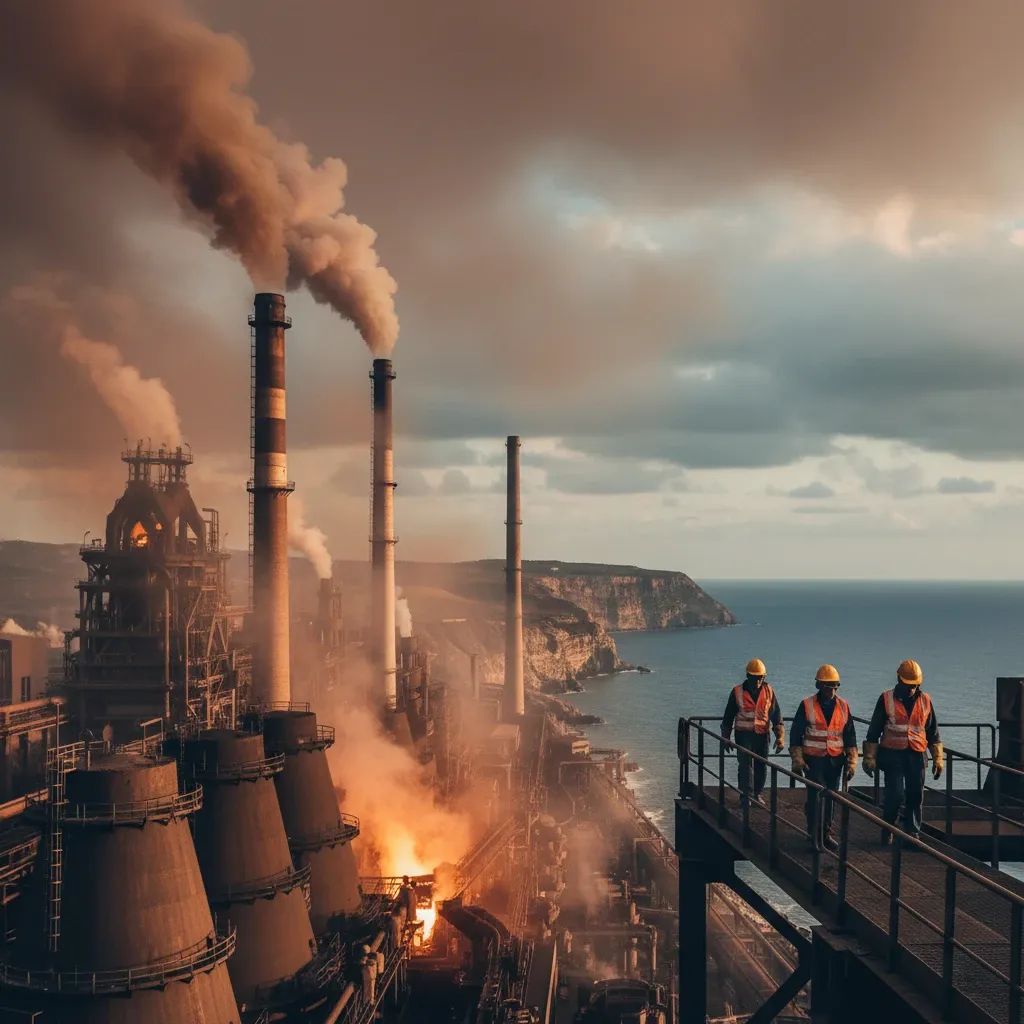
The appellate panel's reasoning highlighted decades of deferred maintenance and asbestos legacy—insulation material embedded in the cowper heat recuperators that preheat blast air. Giancarlo Quaranta, the government-appointed commissioner overseeing Acciaierie d'Italia (the company's current legal name), testified that dismantling and reconstructing a single cowper cluster requires roughly 11 months; removing all asbestos from the complex would take at least two years and likely render only one of the site's blast furnaces salvageable. Antonio Gozzi, president of Federacciai (the national steel industry federation), likened the court's technical prescription to "demanding a car run without an engine."
Government Scrambles to Preserve Industrial Continuity
Alfredo Mantovano, undersecretary to the Italy Prime Minister's Office, convened an emergency industrial crisis table at Palazzo Chigi on July 27, 2026, hours after the ruling became public. According to officials present, Mantovano acknowledged "a striking synchronicity between the government's negotiation calendar, worker consultations, and the judicial timeline," but insisted the administration would not engage in "polemic with judicial authority." He pointedly rebuked the plaintiff's lawyers' chess metaphor, saying, "This is not a game—workers and companies do not deserve to be pawns in a match."
The Italy Council of Ministers confirmed an additional €100M tranche for Ilva's extraordinary administration on July 27, 2026, earmarked to sustain the cold-rolling area and preserve operational continuity while sale negotiations proceed. Economy Minister Giancarlo Giorgetti told reporters the appellate decree "overturns" a sale process that had been "close to conclusion," signaling that the legal intervention may have extinguished months of painstaking deal structure.
Yet the buyer remains nominally at the table. Jindal Group, through its legal adviser Chiomenti law firm, issued a statement reaffirming interest in acquiring "both the cold and hot production areas" and pledged to build a new carbon-free furnace at Taranto. The commitment, however, is "subject to the finalization of relevant agreements"—language that leaves ample room for renegotiation or withdrawal if legal or financial obstacles prove insurmountable.
Genoa's Cornigliano Facility Faces Immediate Fallout
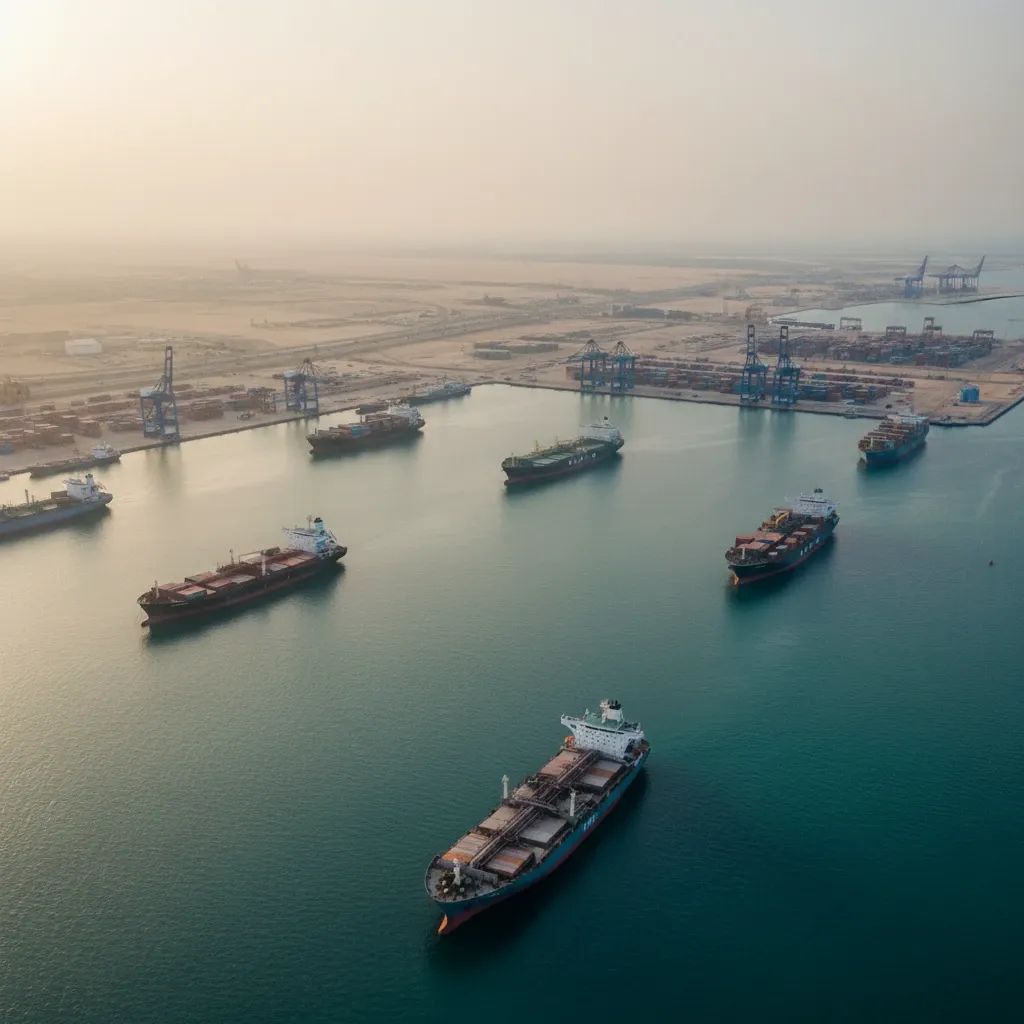
Liguria Regional President Marco Bucci told journalists on the sidelines of a tourism data briefing that he was scheduled for a videoconference with the relevant minister to discuss the ruling's implications for Cornigliano, the Genoese coastal plant that processes semi-finished steel from Taranto's hot mills. "Obviously I was concerned as soon as I read the news," Bucci said. "Cornigliano is important and must continue to operate one way or another. I am convinced Cornigliano should grow and reach its full industrial potential—today it is not running at 100% capacity, and that is what we must achieve as quickly as possible."
The stakes for Liguria are concrete: roughly 1,000 direct employees at Cornigliano depend on feedstock from Taranto, and FIOM-CGIL metalworkers union warned the shutdown could trigger "immediate and devastating repercussions" across cold-rolling operations in Genoa. Confindustria Genova e Alessandria (the regional employers' confederation) has proposed separating the northern plants' fate from Taranto's, advocating for operational autonomy that would allow Cornigliano and the Novi Ligure facility to continue producing tinplate and zinc-coated steel—segments with combined target volumes exceeding one million tonnes annually.
Bucci indicated that discussions with Jindal or alternative buyers had not yet occurred in detail: "I don't know anything yet; as soon as the minister gives us information, we will talk and form our judgment. In any case, I don't see problems for Cornigliano. In fact, Cornigliano is valued as one of the sites that must grow."
Longer-term visions for the Genoese waterfront industrial zone extend beyond steel: regional authorities and port stakeholders are exploring reallocation of surface rights to Società per Cornigliano by the end of 2026, enabling diversification into renewable energy clusters, circular economy hubs, maritime logistics, and ecological transition research. A welfare agreement renewed for 2026 provides €390 monthly to about 200 Cornigliano workers in extraordinary administration engaged in public-utility projects, a modest but symbolic cushion during uncertainty.
Technical Impossibility Meets Political Reality
Industry insiders describe the appellate order as a legal Gordian knot: compliance appears technically unattainable within the timeframe, yet defiance exposes government-appointed commissioners to personal liability for damages and potential criminal charges for "willful failure to execute a judicial injunction." The plaintiff's attorney underscored that the October 28, 2026 deadline is intended solely to allow safe decommissioning procedures, not to complete remediation; failure to halt operations by that date could trigger damage claims against the commissioners and escalate enforcement action.
Federmeccanica, the national engineering employers' association, warned the ruling could "decree the death of the plant," while USB union called for nationalization to safeguard both employment and public health. Political voices ranged from lament—describing the decision as "extinguishing Taranto's industrial future and Italian steelmaking"—to cautious optimism that judicial pressure might force a genuine environmental overhaul rather than perpetual deferral.
The Countdown Begins
The deadline of October 28, 2026 marks a pivotal moment for Italy's steel sector. Whether that date represents the end of Europe's largest integrated steelworks or the catalyst for its long-overdue reinvention remains an open question—but for workers in Taranto and Genoa alike, the answer will arrive within months.