
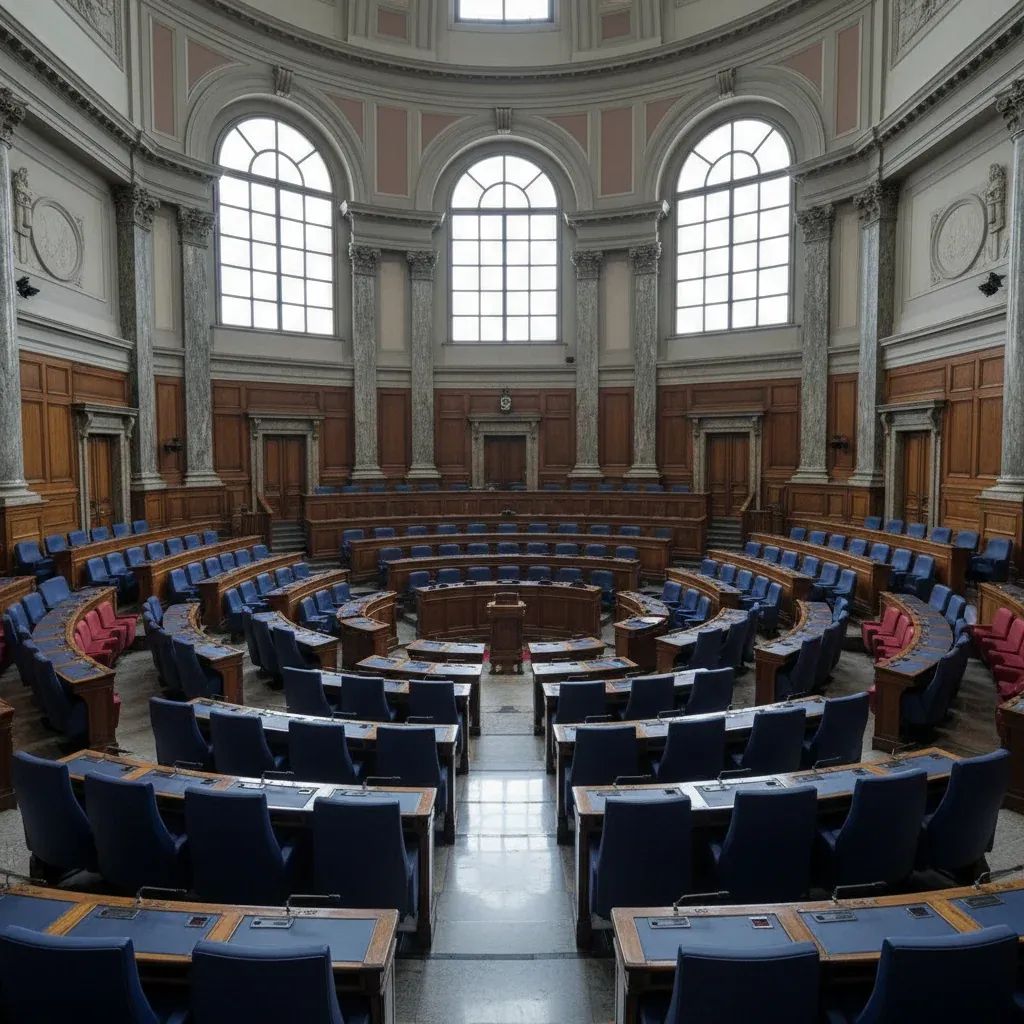
The Italian Parliament has green-lit a legislative motion that could fundamentally reshape how the country's largest metropolitan areas govern themselves, setting the stage for cities like Milan, Naples, and Turin to gain law-making powers currently reserved for Rome and regional governments.
Why This Matters:
• Law-making autonomy: 14 metropolitan hubs—from Genova to Palermo—may soon draft local legislation on transport, commerce, and urban planning without waiting for regional or national approval.
• Constitutional overhaul ahead: The Lega party plans to introduce a constitutional amendment bill within weeks, aiming to grant legislative functions, not just administrative ones.
• Milan in focus: The party explicitly frames this as an empowerment move for Italy's economic capital, long frustrated by centralized decision-making.
• Timing matters: This comes as Rome itself is mid-process to acquire regional-level legislative powers through a separate constitutional reform.
From Administrative to Legislative: The Lega's Gambit
On April 29, Italy's Chamber of Deputies approved a parliamentary motion (ordine del giorno, or OdG) spearheaded by Igor Iezzi, vice-deputy leader of the Lega parliamentary group. The motion commits the government to evaluate constitutional-level reforms that would grant metropolitan capital municipalities the same legislative toolkit currently being carved out for Rome Capitale.
Iezzi's announcement to the press was unambiguous: the party will soon file a constitutional law proposal (proposta di legge costituzionale, or pdl) to formalize these powers. The motion passed with majority support after the government deferred to the floor, signaling at least tacit backing from the ruling coalition.
This represents a significant pivot. During committee negotiations earlier this year, an amendment to the Rome Capitale constitutional bill initially proposed expanded functions for other metropolitan capitals. But after "various reformulations and negotiations," according to Iezzi, that amendment was downgraded to administrative functions only—essentially enhanced bureaucratic capacity, not the power to enact local laws. The newly approved motion seeks to reverse that compromise.
What Legislative Powers Actually Mean
The distinction is far from semantic. Administrative functions involve executing existing laws: issuing permits, managing public services, coordinating local projects. Legislative functions, by contrast, allow an entity to write new laws within defined policy areas.
Under the constitutional reform currently advancing for Rome Capitale (expected to modify Article 114 of the Constitution), the city would gain concurrent legislative powers in areas such as:
• Land use and urban governance
• Cultural and environmental heritage promotion
• Organization of cultural activities
And exclusive legislative powers (residual competence) in:
• Local public transport
• Local administrative policing
• Commerce, tourism, and artisan trades
• Social services and public housing
• Administrative organization of the capital
Critically, healthcare remains off-limits. These powers would take effect only after the first elections of a new Assemblea di Roma Capitale, a body akin to a regional legislature. Until then, regional laws from Lazio continue to apply.
If extended to other metropolitan capitals, such legislative authority would allow cities like Milan—described by Iezzi as the "economic and productive heart of the country"—to tailor local regulations on transport networks, housing policy, and commercial zoning without waiting for regional assemblies or national decrees. In practical terms, this means Milan could set its own rules for short-term rental platforms like Airbnb without waiting for Lombardy's regional government to act, or establish its own public transport regulations suited to urban density and commuter patterns. It's the difference between asking permission and making the rules.
The 14 Cities That Stand to Benefit
Italy currently recognizes 14 metropolitan cities (città metropolitane), administrative divisions established in 2014 to replace provincial governments in major urban areas. These include:
• Northern Italy: Milan, Turin, Genova, Bologna, Venezia
• Central Italy: Firenze, Roma Capitale
• Southern Italy and Islands: Napoli, Bari, Reggio Calabria, Catania, Palermo, Messina, Cagliari
Each metropolitan capital already serves as the administrative hub for a broader territorial zone, managing infrastructure, strategic planning, and economic development. But they lack the normative autonomy that legislative powers would provide. The Lega's proposal would, in theory, place all 14 on a path toward quasi-regional status, at least in specific policy domains.
Political Context: Decentralization vs. Fragmentation
The Lega has long championed decentralization and regional autonomy, rooted in its Northern Italian base and historical ties to federalist movements. Earlier this year, Senator Massimiliano Romeo (Lega) emphasized the party's commitment to granting Milan special powers analogous to Rome's, depositing a constitutional bill in the Senate and co-sponsoring amendments in the Chamber alongside Iezzi.
Yet the proposal has sparked debate over whether further legislative fragmentation risks complicating Italy's already layered governance structure. Critics—including voices from opposition parties and some constitutional experts—have raised concerns about:
• Jurisdictional overlap: How will legislative powers be coordinated between metropolitan capitals, their host regions (such as Lombardy for Milan or Campania for Naples), and the national government?
• Financial adequacy: Article 119 of the Constitution mandates that new powers come with corresponding resources. Without clear funding mechanisms, legislative autonomy could become a hollow promise.
• Legal uncertainty: Poorly defined boundaries between concurrent and exclusive powers could spawn litigation and delay implementation.
During the Rome Capitale bill negotiations, these concerns led to the administrative-only compromise for other metropolitan cities. The Lega's motion seeks to reopen that conversation, arguing that economic powerhouses like Milan deserve parity with the political capital.
What This Means for Residents
For people living in Italy's major urban centers, this legislative shift—if it materializes—could translate into tangible changes:
• Faster regulatory response: Local laws on ride-sharing, short-term rentals, or pedestrian zones could be enacted without waiting for regional approval.
• Tailored public services: Cities could craft transport policies, social housing rules, or tourism levies that reflect local demographics and economic pressures.
• Increased accountability: Residents would vote for an assembly with actual law-making power, not just an advisory council, potentially sharpening electoral focus on urban governance.
• Complexity risk: Navigating local, regional, and national laws could become more confusing, especially for businesses operating across multiple metropolitan areas.
The timeline remains uncertain. Constitutional amendments require approval by both chambers in two successive readings, or a single reading followed by a referendum if opposition demands one. Given the complexity and the precedent-setting nature of the Rome Capitale reform, expect months—if not years—of debate, amendment, and negotiation before any new legislative structures take shape.
The Road Ahead
Iezzi has indicated that the Lega will present its constitutional bill "shortly." Whether the government coalition—led by Giorgia Meloni's Fratelli d'Italia—will fully endorse the measure remains to be seen. The motion's passage suggests openness, but constitutional reforms demand broader consensus and often involve horse-trading across party lines.
Meanwhile, the Rome Capitale constitutional reform continues its parliamentary journey. Its fate will likely influence the trajectory of any similar legislation for other cities. If Rome's new powers prove politically viable and constitutionally sound, the case for extending them strengthens. If they stall or face legal challenges, the Lega's ambitions for Milan and beyond may founder.
For now, the political signal is clear: Italy's largest cities are pushing back against decades of centralized control, demanding not just more money or more staff, but the authority to write the rules themselves. Whether that push succeeds will shape the balance of power in Italian governance for a generation.


