
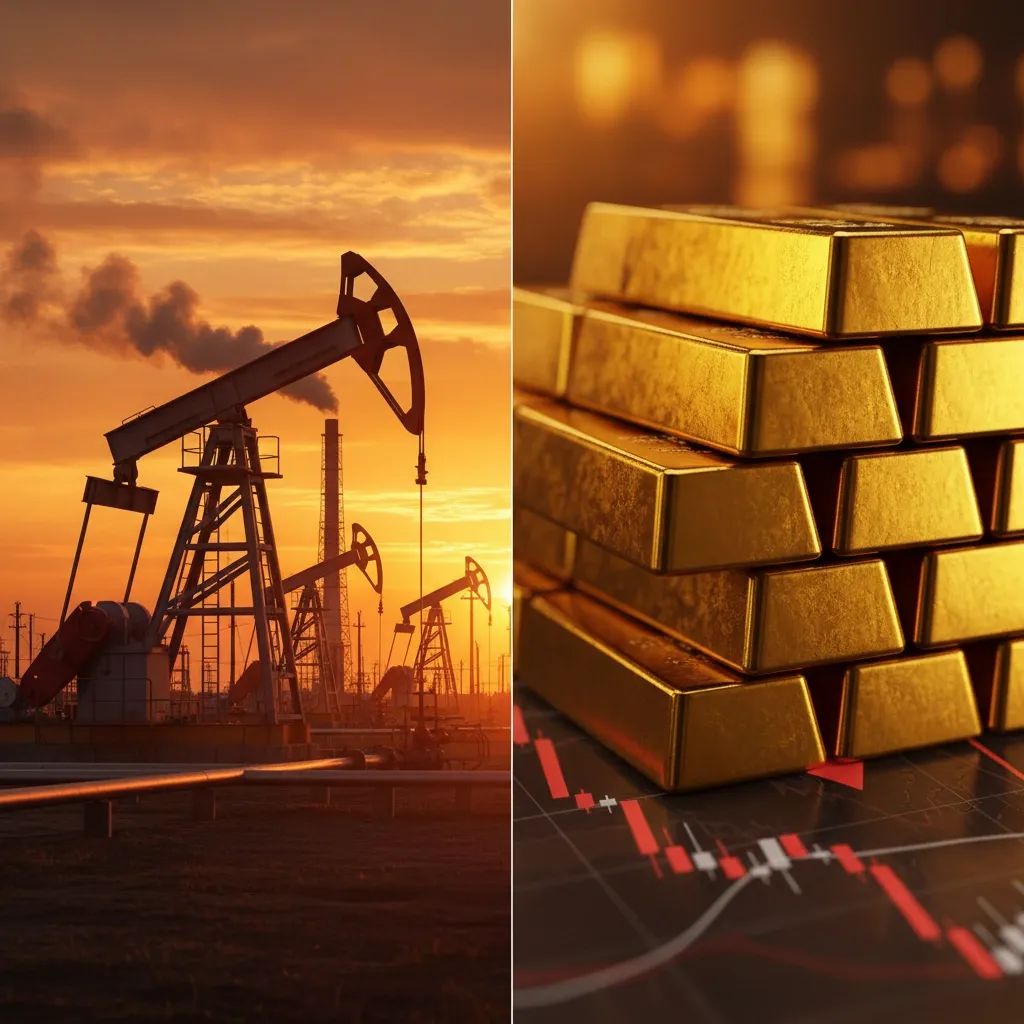
The Italian economy is bracing for a fresh wave of energy-driven inflation as Middle East tensions trigger a sharp spike in oil prices and send global markets into defensive mode. Weekend military strikes on Iran by a joint U.S.-Israel coalition have ignited fears of supply disruptions through the Strait of Hormuz, the narrow waterway that carries roughly 20% of the world's seaborne crude oil and a significant portion of liquefied natural gas destined for Europe.
For households and businesses across Italy, the consequences could be immediate: higher fuel costs at the pump, rising electricity bills, and renewed pressure on consumer goods prices just as inflation had begun to ease. The European Central Bank's carefully calibrated interest rate policy now faces a wildcard scenario, with analysts warning that a prolonged crisis could force policymakers to choose between controlling inflation and supporting fragile economic growth.
Energy Markets in Shock
Brent crude surged past $78 per barrel, climbing 7.5% in early trading Monday, while West Texas Intermediate (WTI) jumped 7.1% to $71.77. Those figures represent the steepest single-day gains since the outbreak of hostilities in Gaza in late 2023, and analysts at Barclays now project prices could reach $100 per barrel if supply interruptions escalate. Some worst-case scenarios envision $120 oil should the Strait of Hormuz face a sustained blockade.
Italy's dependence on energy imports makes it particularly vulnerable. The country sources the bulk of its natural gas via pipeline from North Africa and Russia, but also relies heavily on LNG shipments from Qatar, which transit the Strait. A prolonged closure or disruption could more than double European gas prices, adding an estimated 0.5% to inflation in the medium term, according to forecasts circulated by European energy analysts.
Major shipping firms, including MSC and Maersk, have reportedly suspended transits through the area, opting for longer routes around the Cape of Good Hope. That detour adds roughly 10 days to shipping times and significantly raises freight costs, a burden that will eventually filter down to consumer prices for everything from electronics to clothing.
Why the Strait of Hormuz Matters
The Strait of Hormuz is a 21-mile-wide chokepoint between Iran and Oman, and its strategic importance cannot be overstated. On an average day, 17 to 20 million barrels of oil pass through its waters, along with substantial volumes of LNG. For China, India, Japan, and South Korea, the strait is the lifeline for energy security. But Italy and the broader European Union are also exposed, particularly as Europe has sought to diversify away from Russian gas following the Ukraine conflict.
Alternative pipeline routes exist—Saudi Arabia and the United Arab Emirates operate overland pipelines with a combined capacity of about 2.6 million barrels per day—but these fall far short of replacing Hormuz's throughput. Even if OPEC+ follows through on its recent pledge to increase production by 206,000 barrels per day in April, the physical challenge of moving that oil without Hormuz remains daunting.
Iran has long threatened to close the strait in response to military aggression, and while such a move would devastate its own economy, the current escalation suggests Tehran may be willing to absorb that cost. According to intelligence assessments circulating in European defense circles, Iranian Revolutionary Guard forces have the capability to disrupt shipping through mine-laying, missile strikes, and fast-attack boat swarms.
Safe Haven Rally: Gold, Dollar, and Bonds
Investors across Italy and Europe are responding predictably to the uncertainty. Gold surged 2.02% to $2,583.97 per ounce, extending a rally that began in mid-February when tensions first flared. Silver climbed 2.09% to $31.23, while some commodities desks reported intraday gains for gold exceeding 3.9% as Asian markets opened in panic mode.
The U.S. dollar strengthened against major currencies, with the euro sliding to $1.1725, the British pound falling to $1.3372, and the Swiss franc weakening to $1.2963. For Italians holding dollar-denominated assets or planning transatlantic travel, the shift provides a modest cushion, but it also signals that global investors are fleeing risk and seeking the perceived safety of U.S. Treasury bonds and the greenback.
Cryptocurrencies, often touted as a hedge against geopolitical instability, showed muted reactions. Bitcoin edged up 0.7% to $66,133, while Binance gained 0.8%, Solana added 0.4%, and Dogecoin inched up 0.1%. Cardano bucked the trend, slipping 0.5%. The lackluster performance suggests that digital assets have not yet earned "safe haven" status in the eyes of institutional investors.
Stock Markets Tumble from Tokyo to Milan
Asian equity markets bore the brunt of Monday's sell-off. The Tokyo Nikkei plunged 1.35%, shedding 890 points to close at 57,959.86. The Japanese yen depreciated to ¥156.80 per dollar and ¥184 per euro, reflecting investor pessimism about export-dependent sectors that will face higher energy input costs.
Hong Kong's Hang Seng dropped 2%, Seoul's KOSPI fell 1%, and Mumbai's Sensex declined 1.8%. Only Shanghai's composite index managed a modest 0.5% gain, likely supported by state-directed buying and investor hopes that Beijing's infrastructure stimulus will cushion the blow.
European stock futures pointed to a similarly grim opening, with Milan's FTSE MIB, Frankfurt's DAX, and Paris's CAC 40 all trading down in pre-market activity. Wall Street futures also signaled losses, with the S&P 500 and Nasdaq both indicating declines exceeding 1% at the opening bell.
For Italian investors, the message is clear: risk appetite has evaporated. Portfolio managers are rotating out of cyclical stocks—particularly energy-intensive industrials, airlines, and consumer discretionary names—and into defensive sectors like utilities, healthcare, and consumer staples. Banks are also under pressure, as rising energy costs threaten to squeeze corporate borrowers and dampen loan growth.
What This Means for Italian Households and Businesses
The most immediate concern for residents and companies in Italy is the potential for a renewed inflationary pulse. Diesel and gasoline prices, which had stabilized in recent months, are likely to climb again. Freight and logistics firms will pass higher fuel costs onto clients, raising prices for imported goods ranging from food to electronics. Small and medium enterprises, which make up the backbone of the Italian economy, face margin compression as energy bills rise faster than they can adjust pricing.
The Bank of Italy and the European Central Bank had been on track to continue gradual rate cuts, but a sustained energy shock could force a policy pivot. If inflation climbs back above the ECB's 2% target, the central bank may pause or even reverse course, keeping borrowing costs elevated. That would hit Italian households with variable-rate mortgages and businesses reliant on credit lines.
Tourism, a cornerstone of the Italian economy, could also feel secondary effects. Higher airfares and fuel surcharges may dampen international travel demand, particularly from long-haul markets in Asia and the Americas. Meanwhile, domestic consumers may curtail discretionary spending if disposable income is eroded by energy and food price increases.
Geopolitical Wildcard: Duration and Escalation
The duration and intensity of the Middle East crisis remain the critical unknowns. If diplomacy prevails and tensions de-escalate within days or weeks, markets could stabilize quickly. But if the conflict widens—drawing in regional powers like Saudi Arabia or triggering a sustained closure of the Strait of Hormuz—Italy and Europe face a scenario reminiscent of the 1973 oil embargo, with all the economic and political turmoil that entails.
China, India, and other BRICS nations have called for immediate de-escalation and diplomatic engagement, but their ability to influence events on the ground is limited. Russia, preoccupied with its war in Ukraine, has condemned the U.S.-Israel operation but is unlikely to provide significant military support to Iran. China has urged restraint and is reportedly offering technical assistance to Tehran, but Beijing is equally concerned about disruptions to its energy supply chain.
European leaders, including officials in Rome, have emphasized the need for a negotiated settlement and have urged all parties to respect international law. However, the European Union's limited leverage in the region and its dependence on the United States for security guarantees mean that Italy and its neighbors are largely bystanders in a crisis that could reshape their economic fortunes.
Long-Term Implications: Energy Security and Inflation
Beyond the immediate market turbulence, the crisis underscores the fragility of global energy supply chains and the strategic vulnerability of import-dependent economies like Italy. Policymakers in Brussels and Rome are likely to accelerate discussions on energy diversification, renewable energy investment, and strategic petroleum reserves.
Italy has made progress in reducing its reliance on Russian gas, but the current crisis reveals that alternative sources—particularly LNG from the Middle East—are equally exposed to geopolitical risk. Expanding domestic renewable capacity, enhancing storage infrastructure, and forging new supply partnerships with stable producers in Africa and the Americas will be essential components of any long-term strategy.
Inflation, meanwhile, remains the wildcard. If energy prices remain elevated for months rather than weeks, the 0.5% to 0.7% inflation boost projected by analysts could become entrenched, complicating the ECB's efforts to engineer a soft landing for the European economy. Italian consumers, already weary from two years of price pressures, would face another round of belt-tightening, with knock-on effects for consumption, savings, and political stability.
The Strait of Hormuz has long been recognized as a global flashpoint, but the events of this weekend have transformed that abstract risk into a tangible threat. For Italy, the stakes are high: a nation heavily reliant on energy imports, deeply integrated into global supply chains, and still recovering from the economic aftershocks of the pandemic and the Ukraine war. How this crisis unfolds in the coming days will determine whether Monday's market jitters were a brief scare or the opening act of a more prolonged economic ordeal.


