
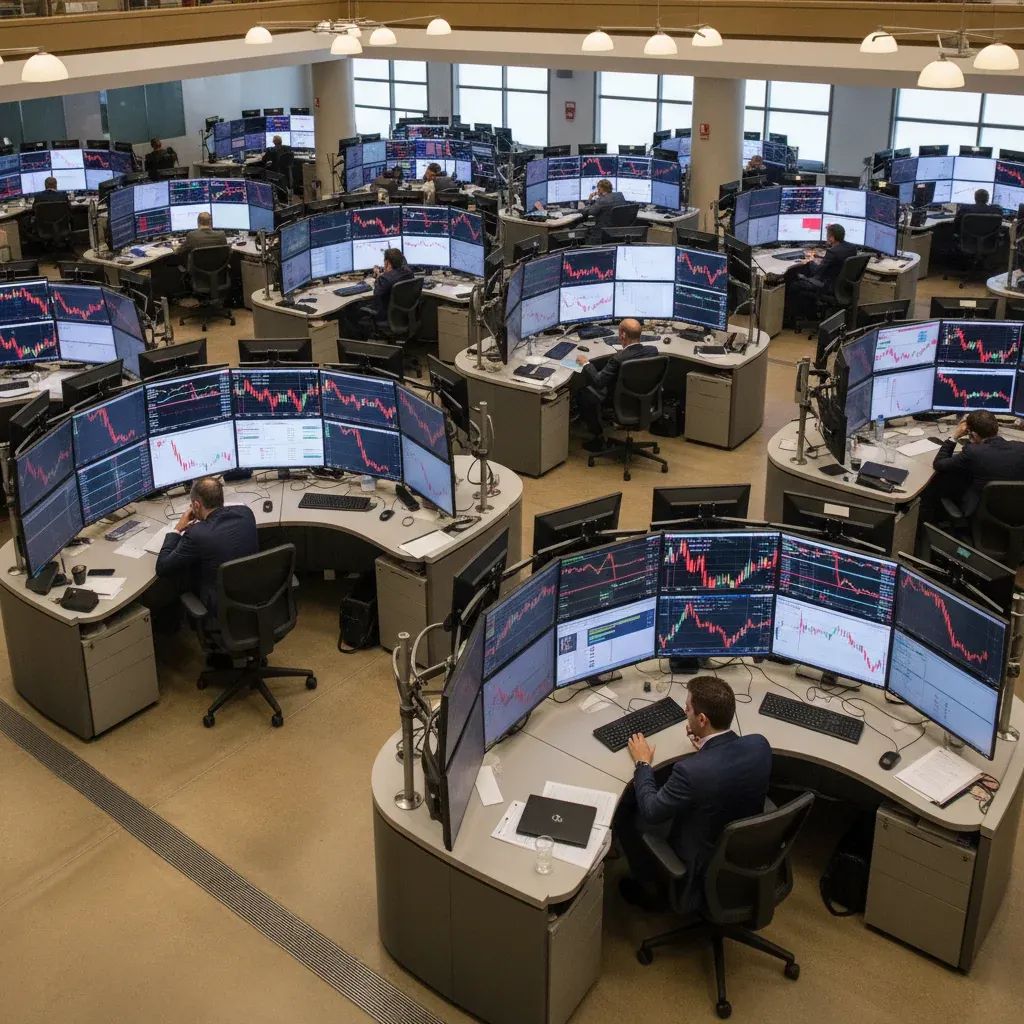
MILAN, March 10, 2026 — Italy's major equity index shed nearly 2% on Monday as geopolitical turmoil in the Middle East rippled through European markets, hitting domestic investors across multiple sectors and sending energy costs sharply higher—a development that threatens to complicate both household budgets and industrial planning for months ahead.
Why This Matters:
• Energy bills set to climb: Natural gas surged 39% to €44.2 per megawatt-hour, signaling potential increases in heating and electricity costs for Italian households and businesses.
• Portfolio pain across key sectors: Luxury goods, banking, insurance, and automotive stocks—all significant components of Italian retirement and investment portfolios—posted losses between 2% and 4%.
• Manufacturing optimism meets inflation risk: While eurozone factory output hit a four-year high in February 2026, input costs are accelerating at the fastest pace in three years, squeezing margins for Italian producers.
Geopolitical Shock Sends Markets Reeling
The Milan Stock Exchange closed down 1.9% on Monday as European bourses absorbed the impact of a joint U.S.-Israeli military strike on Iranian targets. The operation has sparked fears of broader regional escalation, particularly concerning the potential closure of the Strait of Hormuz—the narrow maritime chokepoint through which roughly 20% of the world's oil and a similar share of liquefied natural gas pass daily.
Wall Street futures pointed to a 1% opening drop, while the broader STOXX 600 index climbed 1.5%, reflecting a mixed picture across the continent. Madrid suffered the steepest losses at -2.4%, followed by Frankfurt at -2%. Paris and London also slipped, down 1.8% and 1% respectively.
For residents in Italy, the immediate concern centers on the dramatic spike in commodity prices. Brent crude jumped to $79.16 per barrel, while West Texas Intermediate settled at $72.66. Natural gas prices surged nearly 40% in a single session, a move that energy analysts warn could translate into higher utility bills within weeks if the crisis persists.
Automobiles and Luxury Take the Hit
Italian blue-chip equities bore the brunt of the sell-off. Stellantis, the automotive giant with significant operations in Turin and elsewhere across the country, plunged 5.5%—the sharpest decline on the FTSE MIB. The drop comes as European auto sales struggle to regain pre-pandemic momentum, with January 2026 registrations down 3.5% year-on-year across the EU, EFTA, and the UK.
Despite a 6.2% growth in Italian registrations in January 2026—the strongest among major European markets—the broader sector remains fragile. High interest rates, elevated sticker prices, and regulatory uncertainty around emissions targets continue to weigh on consumer demand. Stellantis has posted gains in volume this year, driven by Fiat (+31.3%), Opel (+17%), and Citroën (+14%), yet investor sentiment turned sharply negative Monday on fears that higher fuel costs and supply chain disruptions could derail the recovery.
Luxury goods also suffered, with the sector down 3.6% as investors fretted over discretionary spending in an uncertain economic environment. Brunello Cucinelli, the Umbria-based cashmere and fashion house, lost 3.8%, reflecting broader anxiety about Chinese demand and travel disruptions that could impact high-end tourism and retail sales.
Banking and Insurance Under Pressure
Financial stocks slumped across the board. BPER Banca fell 3.9%, while Unipol, one of Italy's largest insurers, dropped 3.7%. The banking sector declined 3.2% on average, with insurance stocks off 1.7%.
The retreat came even as Italian savers demonstrated strong appetite for sovereign debt. The Italy Treasury Ministry's latest BTP Valore bond offering for retail investors collected over €3.3 billion by midday Monday, with more than 94,000 contracts signed. The issuance, which opened Monday morning and runs through Friday at 1:00 PM, underscores continued confidence in government paper despite broader market volatility—a dynamic that offers Rome some fiscal breathing room but highlights the flight-to-safety mentality gripping investors.
Energy Winners and Defense Stumbles
Not all sectors retreated. Eni, Italy's state-controlled energy major, surged 3.5% as oil prices rallied. The equity energy sector across Europe gained 3.3%, directly benefiting from the commodity price shock. Italgas, the natural gas distribution network operator, rose 1.7%, buoyed by expectations of higher volumetric margins in a tight supply environment.
Surprisingly, defense stocks edged lower by 0.2%, despite the escalation. Leonardo, Italy's aerospace and defense champion, bucked the trend with a 3.4% gain, but the broader sector's muted response suggests investors may be pricing in a short-lived conflict rather than sustained military expenditure.
Airlines and tourism stocks were hammered, down 3.6% and 2.8% respectively, as traders anticipated route disruptions, higher jet fuel costs, and a drop in leisure travel to the region.
What This Means for Residents
For Italians, the confluence of geopolitical risk and surging energy prices poses a dual threat. Higher gas and oil costs will likely feed through to electricity bills, transportation expenses, and food prices—particularly for households still adjusting to elevated inflation that has persisted since 2022.
The eurozone manufacturing sector showed resilience in February 2026, with the HCOB PMI jumping to 50.8 from 49.5 in January 2026—the strongest reading in 44 months. German factories, which drive demand for Italian intermediate goods, posted a PMI of 50.9, while France's index softened slightly to 50.1. New orders increased, and production expanded vigorously, with business optimism reaching levels not seen since early 2022.
Yet the PMI report also flagged a troubling trend: input cost inflation accelerated for the third consecutive month, hitting the highest level in just over three years. Manufacturers are passing those costs on, with selling prices rising at the fastest pace since March 2023. For Italian producers—especially in energy-intensive industries like ceramics, steel, glass, and chemicals—this squeeze between rising input costs and uncertain demand creates a precarious operating environment.
Corporate Spotlight: Duferco's Mixed Results
Duferco, the industrial conglomerate with steel and energy operations across Italy, reported fiscal year 2025 revenues surging 46% to $26.9 billion (€22.95 billion), driven by its steel mills and energy trading division. However, net profit fell from $152.4 million to $86.8 million (€74.05 million) as energy markets normalized and steel demand remained sluggish in the prior year.
Chairman Antonio Gozzi described the balance sheet as "solid," with net working capital exceeding $1.02 billion (€870 million) and liquidity at $690 million (€588.64 million). Financial debt rose above $1.09 billion (€930 million), leaving net financial debt at $405 million (€345.51 million).
For 2026, Duferco anticipates global steel demand to grow 1.3%, with a stronger 3.2% uptick in Europe. The company's San Zeno plant near Brescia has achieved "solid technical performance," delivering cost efficiencies and improved service quality. In energy, Duferco plans to expand trading, develop renewable capacity and storage systems, and bolster its retail portfolio in Italy—a strategy that could prove timely given the current price volatility.
Strait of Hormuz: The Trillion-Dollar Chokepoint
The Strait of Hormuz remains the single most critical pressure point in global energy markets. If Iran were to block or seriously disrupt traffic through the strait, analysts estimate crude oil prices could surge past $100 per barrel, with some scenarios envisioning $120 to $130. Such an outcome would add 0.6% to 0.7% to global inflation, with European core inflation potentially rising 1.5 to 3 percentage points in more severe scenarios.
For Italy, which imports the bulk of its energy needs, a prolonged crisis could mirror the 2022 shock triggered by the war in Ukraine—forcing industrial rationing, demand destruction, and renewed pressure on the European Central Bank to reconsider its monetary policy trajectory. Policymakers may be compelled to pause or even reverse interest rate cuts, complicating efforts to support economic growth and manage public debt servicing costs.
Major shipping lines including Maersk, MSC, CMA CGM, and Hapag-Lloyd have already suspended operations or rerouted vessels around Africa, adding weeks to delivery times and driving up freight and insurance premiums. These logistical bottlenecks will translate directly into higher costs for imported goods, from electronics to industrial machinery.
Market Outlook: Caution and Volatility
Gold edged up 0.09% to $5,394 per ounce, while silver held steady at $95.25, down 0.02%. The U.S. dollar strengthened against major currencies, including the euro, as investors sought safe havens.
For Italian investors, the outlook remains uncertain. While the BTP Valore issuance reflects confidence in sovereign debt, equity markets face a difficult balancing act between manufacturing momentum, escalating input costs, and geopolitical risk. The next few sessions will likely hinge on developments in the Middle East and any signals from the European Central Bank regarding its policy stance in the face of renewed inflationary pressures.
Residents should brace for potential increases in energy bills and monitor portfolio exposures to sectors most vulnerable to prolonged conflict—particularly automotive, luxury, travel, and energy-intensive manufacturing. Conversely, energy and utility holdings may offer some insulation, though regulatory and political risks remain.
The day's trading underscored a harsh reality: even as Italy's economy shows tentative signs of recovery, external shocks can swiftly derail progress and impose real costs on households and businesses alike.


