
The Stretto di Messina company, the state-backed entity tasked with building the suspension bridge across the Strait of Messina, has confirmed it has not yet received the final text of the Consiglio Superiore dei Lavori Pubblici (CSLLPP) approval for the definitive project. Chief Executive Pietro Ciucci told ANSA that the firm anticipates no surprises: nearly all the recommendations flagged by the CSLLPP were already factored into the executive design phase, as were the observations from the project's independent Scientific Committee.
The statement arrives nine days after the CSLLPP — Italy's highest technical authority for public works — voted unanimously on August 6 to approve the bridge's definitive design, but attached a 353-page document containing 361 binding prescriptions and 77 further recommendations. Those directives now stand between the project and the first physical construction works, raising immediate questions for Italian taxpayers, regional authorities in Sicily and Calabria, and international investors watching one of Europe's most ambitious infrastructure proposals.
Why This Matters
• Timeline at risk: The sheer volume of technical prescriptions — spanning seismology, wind modeling, corrosion control, and rail safety — will delay site mobilization by several months, despite the government's target to start work by late 2026.
• Cost clarity postponed: The €13.5B price tag quoted by the Stretto di Messina company has yet to clear scrutiny from the Corte dei Conti (Court of Auditors), which has already rejected prior funding approvals over incomplete financial documentation and environmental waivers.
• Regulatory bottleneck: Italy's Environmental Impact Assessment for the project returned a negative verdict, forcing the government to invoke IROPI (Imperative Reasons of Overriding Public Interest) — a procedure blocked pending further clarification from auditors and ministries.
What the CSLLPP Actually Demanded
The council's approval is conditional, not celebratory. Among the most significant technical demands:
Seismic and geological reassessment. Much of the subsurface data underpinning the bridge design dates back decades and relies on outdated survey technology. The CSLLPP has mandated new microzonation studies, updated fault mapping for active seismic lines, and fresh modeling of ground deformation scenarios — particularly for the foundations of the bridge's two main towers and the massive anchorage blocks on each shore. The 1908 Messina earthquake, one of Europe's deadliest, remains the reference event, and the council insists on three-dimensional nonlinear analysis of the bridge-soil-foundation system under extreme shaking.
Aeroelastic and wind-load verification. Engineers must now account for downbursts, microbursts, tornadoes, and Medicanes (Mediterranean hurricanes), phenomena not fully modeled in the original submission. The CSLLPP has called for high-Reynolds-number wind-tunnel tests and computational fluid dynamics simulations to prove the deck will remain stable during construction — not just after completion — and throughout its design life.
Material durability and structural redundancy. The orthotropic steel deck, high-strength cables, and suspension system must undergo updated fatigue modeling. The council has also required rigorous definitions of assembly sequencing, pre-tensioning protocols, and corrosion-protection systems. Critically, the bridge must demonstrate robustness against disproportionate collapse: localized damage — whether from derailment, vehicular impact, or structural failure — cannot trigger a cascade failure of the entire span.
Railway integration. The CSLLPP has flagged concerns about train-track-bridge interaction, calling for prototype testing of the rail expansion joints and fresh analysis of deck deformations under live loads. The geometry of approach ramps and rail gradients on both the Sicilian and Calabrian sides must be brought into line with current norms.
Phased review gates. Perhaps most significant for project sequencing, the council has stipulated that all Phase A prescriptions must be validated before progressing to Phase B of the executive design. This bars the contractor from advancing work in separate parcels and effectively imposes a gate review at the halfway mark of detailed engineering.
Impact on Residents and Regional Economies
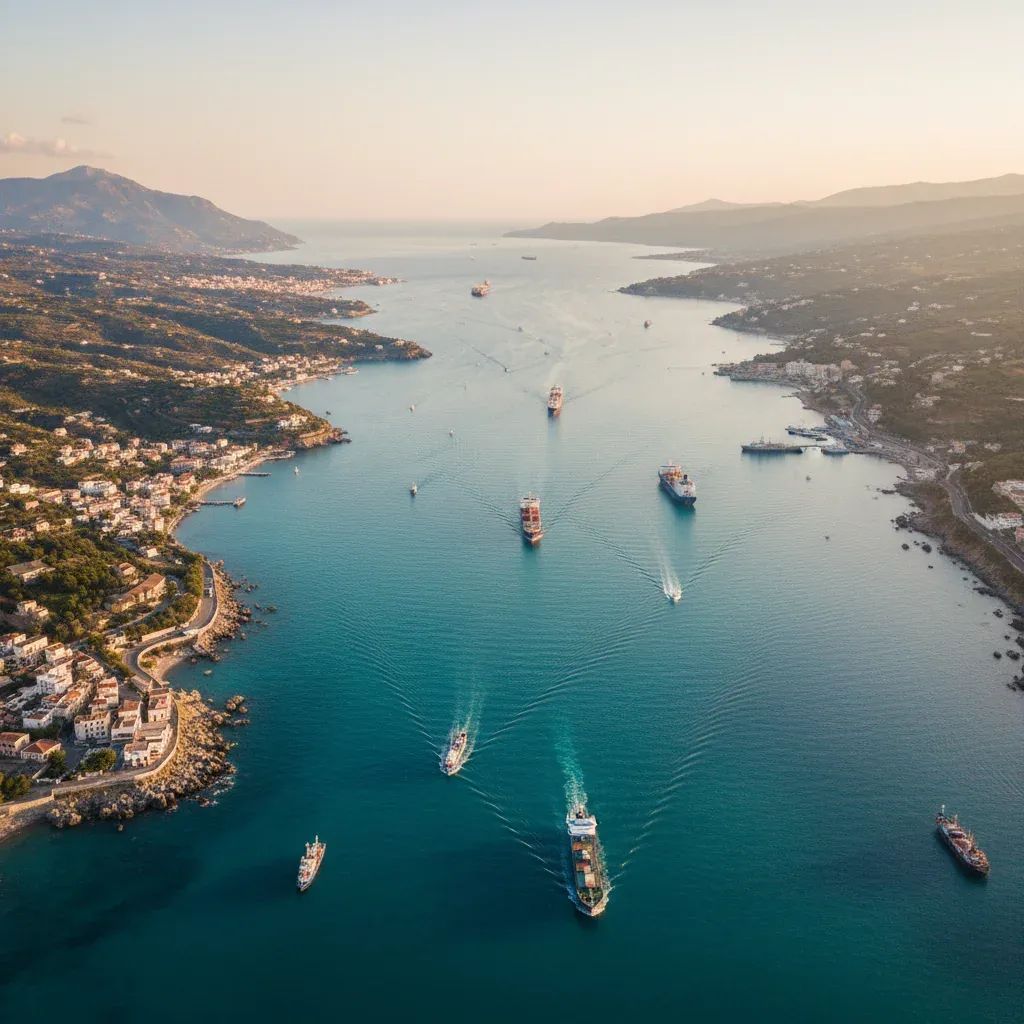
For Sicilians and Calabrians, the bridge has long been portrayed as a remedy for isolation and economic stagnation. Yet the latest round of technical requirements translates into further delays in a project that has been discussed, designed, shelved, and revived repeatedly since the 1960s. Regional businesses that anticipated contracts for preliminary works now face an indefinite wait, while transport operators — freight, passenger rail, and road hauliers — must continue to rely on the existing ferry network across the strait, which remains prone to weather disruptions and capacity constraints.
The Corte dei Conti's refusal to sign off on funding adds a fiscal dimension. The court has cited unjustified cost escalations, incomplete financial disclosures, and irregularities in the environmental override procedures. Until those issues are resolved, no public money flows to construction. That places the burden on the Ministry of Infrastructure and Transport to satisfy auditors while simultaneously coordinating the technical responses demanded by the CSLLPP.
Environmental groups — including Greenpeace, Legambiente, Lipu, and WWF — continue to argue the project violates EU Habitat and Birds Directives, pointing to protected sites on both shores that would be affected by construction and operation. The negative Environmental Impact Assessment has not been overturned; it has merely been set aside pending the IROPI justification, a maneuver environmental lawyers describe as procedurally fragile.
Political and Administrative Friction
Transport Minister Matteo Salvini has publicly set an end-of-2026 deadline for final Court of Auditors clearance, aiming to break ground before the next election cycle. Yet that timeline now appears optimistic. The two-stage executive design process — Phase A for supplementary studies and baseline data, Phase B for full construction drawings — is itself a multi-month undertaking. Add to that the need for fresh seismic surveys, wind-tunnel campaigns, and prototype fabrication for critical components, and the earliest realistic start for earthworks slips into 2027.
Critics also point to potential conflicts of interest within the governance structure. Ciucci serves simultaneously as CEO of the Stretto di Messina company and as a government-appointed commissioner, a dual role opposition lawmakers argue blurs accountability. Meanwhile, some members of the Scientific Committee — the nine-expert body advising the project — have publicly defended the bridge in open letters, raising questions about the independence of their technical assessments.
What Comes Next
The Stretto di Messina company has maintained that the 2034 completion target and €13.5B budget remain achievable, insisting that many of the CSLLPP's recommendations were already in the pipeline. Ciucci's assurance to ANSA echoes that position: the firm collaborated closely with the council's verification teams and contends the prescriptions do not constitute surprises.
Nonetheless, the formal receipt of the CSLLPP's 353-page dossier will trigger a clock. The company must respond with updated technical submissions, coordinate fresh field investigations, and submit revised designs for another round of review — all while the Court of Auditors and environmental regulators hold parallel authority over funding and permits.
For anyone living in southern Italy, the practical takeaway is straightforward: the bridge is approved in principle but not yet shovel-ready, and the gap between political announcements and physical construction remains measured in years, not months. Whether the project ultimately reshapes regional connectivity or remains a monument to bureaucratic ambition will depend on the next phase of engineering scrutiny, financial transparency, and environmental adjudication — each of which now sits squarely in the critical path.


