
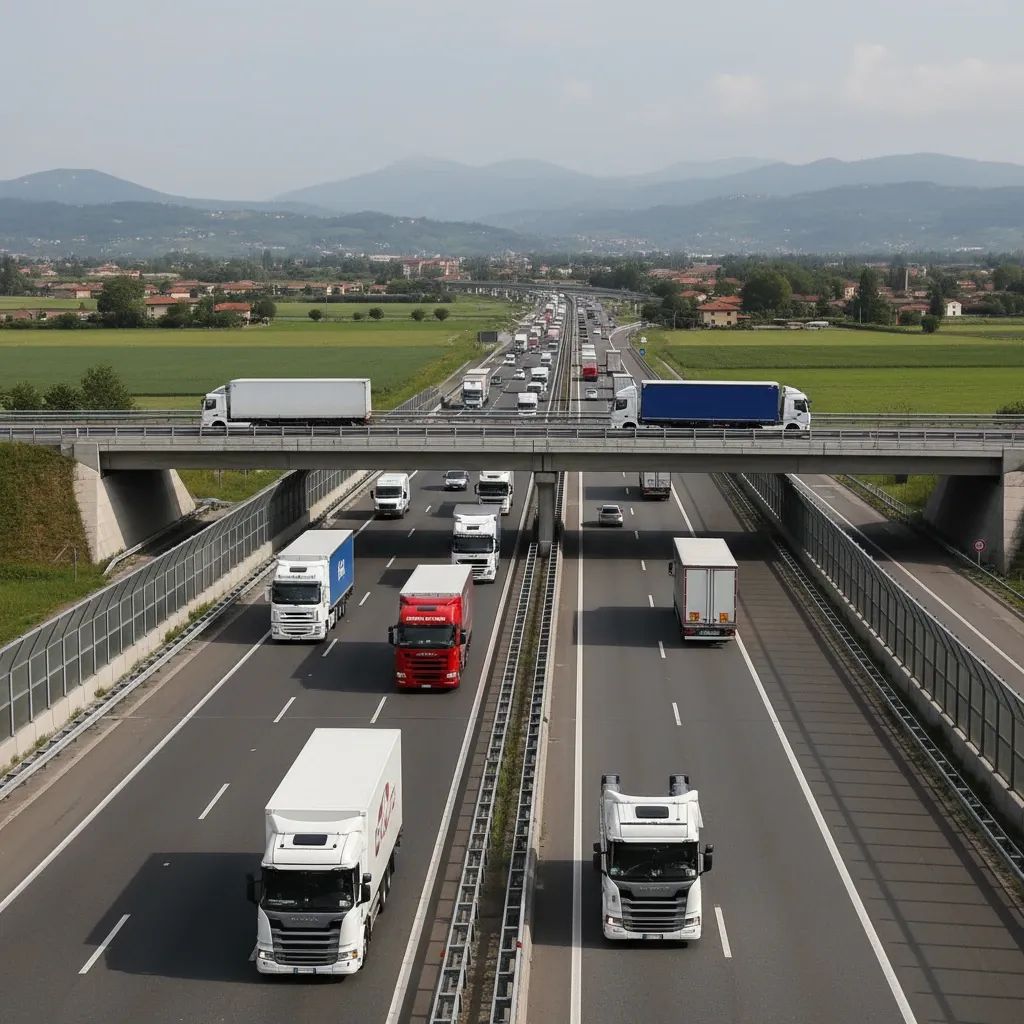
Italy's road freight industry is preparing for a nationwide shutdown that could cripple supply chains from April 20 to 25, 2026, threatening empty supermarket shelves and widespread economic disruption across the country. The decision, confirmed by Unatras (the National Union of Road Freight Associations) and Trasportounito Fiap, comes after what industry leaders describe as "deafening silence" from Rome on diesel price surges that have pushed thousands of transport firms to the brink of insolvency.
Why This Matters
• Diesel costs have exceeded €2 per liter, according to industry associations adding approximately €9,000 in annual operating costs per heavy vehicle—enough to push many operators into the red.
• The Liguria ports (Genova, La Spezia, Savona) will be the epicenter of the action, with ripple effects hitting Lombardy and Piedmont hardest.
• 85% of Italy's goods travel by road, according to transport sector data, meaning even a few days of stoppage can cascade into inflation, production halts, and bare retail shelves.
• Government fuel relief measures have been deemed "insufficient and in some cases counterproductive" for professional haulers, particularly due to commercial diesel regulations.
What Triggered the Shutdown
The Italy freight transport sector, representing roughly 100,000 companies and 500,000 workers, faces what operators call an unsustainable economic squeeze. The core grievance centers on diesel, the industry's lifeblood. With prices climbing beyond the €2 threshold, according to Unatras, the average heavy goods vehicle now shoulders an extra €9,000 yearly burden—a figure that wipes out already thin profit margins for many small and mid-sized operators.
Compounding the pain, clients have been cutting compensation by as much as €0.40 per liter, according to industry sources, effectively transferring fuel cost inflation directly onto transport firms. The result: operators are hauling freight at a loss, unable to renegotiate rates in a sector where margins have historically hovered in the single digits.
Unatras and Trasportounito Fiap argue that Rome's interventions—including excise duty reductions—have failed to reach the professional transport segment. The commercial diesel framework, they contend, has paradoxically excluded the very companies that invested in environmental compliance and road safety upgrades. A promised tax credit decree remains unissued, and there has been no compensation for the shortfall in excise reimbursements.
The Scope and Timing of the Shutdown
The shutdown window runs from April 20 through April 25, 2026, a period rescheduled by the Guarantee Commission for Strikes to avoid overlaps with other industrial actions and ensure adequate notice. Despite the rescheduling, the Commission has formally requested the withdrawal of the stoppage, citing the potential for "serious disruption to essential services."
The action will hit northwestern Italy hardest. The ports of Genova, La Spezia, and Savona—critical nodes for containerized imports and exports—will serve as the protest's focal points. From there, the blockade will radiate into Lombardy and Piedmont, two regions that account for a disproportionate share of national manufacturing output and logistics hubs.
Unatras has delegated authority to its executive office to finalize the exact modalities of the shutdown, with some indications that the federation might extend or shift action into May 2026 if negotiations fail. Meanwhile, according to union statements, a separate freight shutdown in Sicily was recently called off following talks with Transport Minister Matteo Salvini, though specifics of any agreement have not been publicly disclosed.
What This Means for Residents
For anyone living in Italy, the practical consequences are immediate and tangible. Food supply chains are the most vulnerable: fresh produce, dairy, meat, and other perishables rely on just-in-time delivery schedules that cannot absorb multi-day shutdowns. Expect empty or depleted shelves in supermarkets, particularly for milk, fruit, vegetables, and packaged meat.
Here's what residents should do to prepare:
• Stock up now on perishables: Buy 5-7 days' worth of fresh milk, cheese, yogurt, fresh vegetables, and meat. Frozen alternatives are reliable backup options.
• Prioritize essentials: Focus on bread, eggs, fresh fruit, and any dietary staples your household depends on. These items disappear fastest during supply disruptions.
• Don't overlook medicines and hygiene products: While pharmacies typically maintain separate supply chains, pharmacists may face delivery delays for certain medications. Fill prescriptions before April 20, 2026.
• Fuel stations may see queues: Some residents may panic-purchase fuel. Consider topping up your vehicle's tank by April 19, 2026, but avoid hoarding.
• Online orders will face delays: Expect 7-10 day delays for deliveries during and immediately after the shutdown period. Order non-urgent items in advance.
Beyond groceries, the disruption will ripple into manufacturing. Factories dependent on incoming raw materials or outgoing finished goods may face production slowdowns or temporary shutdowns. The automotive, fashion, and machinery sectors—cornerstones of northern Italy's economy—are especially exposed.
Prices are likely to rise. Even a brief interruption in freight flows tightens supply, and retailers typically pass those costs to consumers. The risk of a "panic purchasing" wave also looms: the mere threat of scarcity can trigger hoarding behavior, exacerbating actual shortages.
For businesses, the stakes are existential. Small and medium-sized transport companies—the backbone of Italy's logistics sector—face mounting insolvency risks. Many operators report monthly losses in the thousands of euros per vehicle. If the shutdown persists or recurs, the sector could see a wave of bankruptcies, further weakening supply chain resilience in the medium term.
Industry Demands and Government Response
Unatras has outlined a clear set of demands to avert or end the shutdown:
• Immediate issuance of the tax credit decree for fuel purchases.
• Reimbursements for the excise duty shortfall that failed to benefit professional haulers.
• Urgent liquidity support for transport firms, including suspension of tax and social security payments.
• A minimum €0.20 per liter fuel rebate, effectively clawing back part of the recent price surge.
• Advocacy at the European Union level for a temporary state aid framework to stabilize the sector.
The industry warns that "if road transport stops, the country stops"—a reference to the sector's role as the circulatory system of Italy's €2 trillion economy. Unlike rail or maritime freight, which handle bulk and long-haul cargo, road transport is the final mile for nearly everything from groceries to spare parts.
As of April 18, 2026, according to available reports, there has been no public statement from the Italy Cabinet or the Ministry of Transport indicating concessions or new relief measures. The absence of dialogue has hardened the resolve of the transport federations, which describe their decision as "painful but inevitable."
Broader Economic and Social Implications
The shutdown underscores deeper vulnerabilities in Italy's logistics architecture. The country's 85% reliance on road freight—among the highest in Europe—leaves it acutely sensitive to fuel price shocks and labor disputes. Rail and waterway alternatives remain underdeveloped compared to northern European peers, and the pandemic exposed fragilities in just-in-time supply models.
Inflation is another concern. Italy's consumer price index has been volatile in recent years, and supply-side shocks—particularly in food and energy—have a disproportionate impact on household budgets. A prolonged freight disruption could reignite inflationary pressures just as the European Central Bank considers monetary policy adjustments.
There is also a political dimension. The transport sector's ability to bring the economy to a standstill makes it a potent bargaining chip, but it also raises questions about the balance between the right to strike and the public's right to uninterrupted essential services. The Guarantee Commission has historically walked a fine line, acknowledging workers' grievances while urging restraint to protect citizens.
What Comes Next
The next 48 hours will be critical. If Rome schedules emergency consultations with Unatras and Trasportounito Fiap and offers tangible fuel relief or liquidity guarantees, the shutdown could be called off or scaled back. Conversely, silence from the government will likely cement the April 20, 2026 start date and could prompt other transport federations to join or extend the action into May 2026.
For now, residents should prepare for potential supply disruptions. Stock up on essentials—especially perishables—and expect delays in online orders and retail restocking. Businesses reliant on inbound logistics should review inventory buffers and communicate proactively with suppliers.
The freight industry insists this is not merely a labor protest but a survival imperative. With thousands of firms already operating in the red, the shutdown is both a cry for help and a demonstration of the sector's systemic importance. Whether it forces Rome to the negotiating table or triggers a broader economic crisis remains to be seen.


