
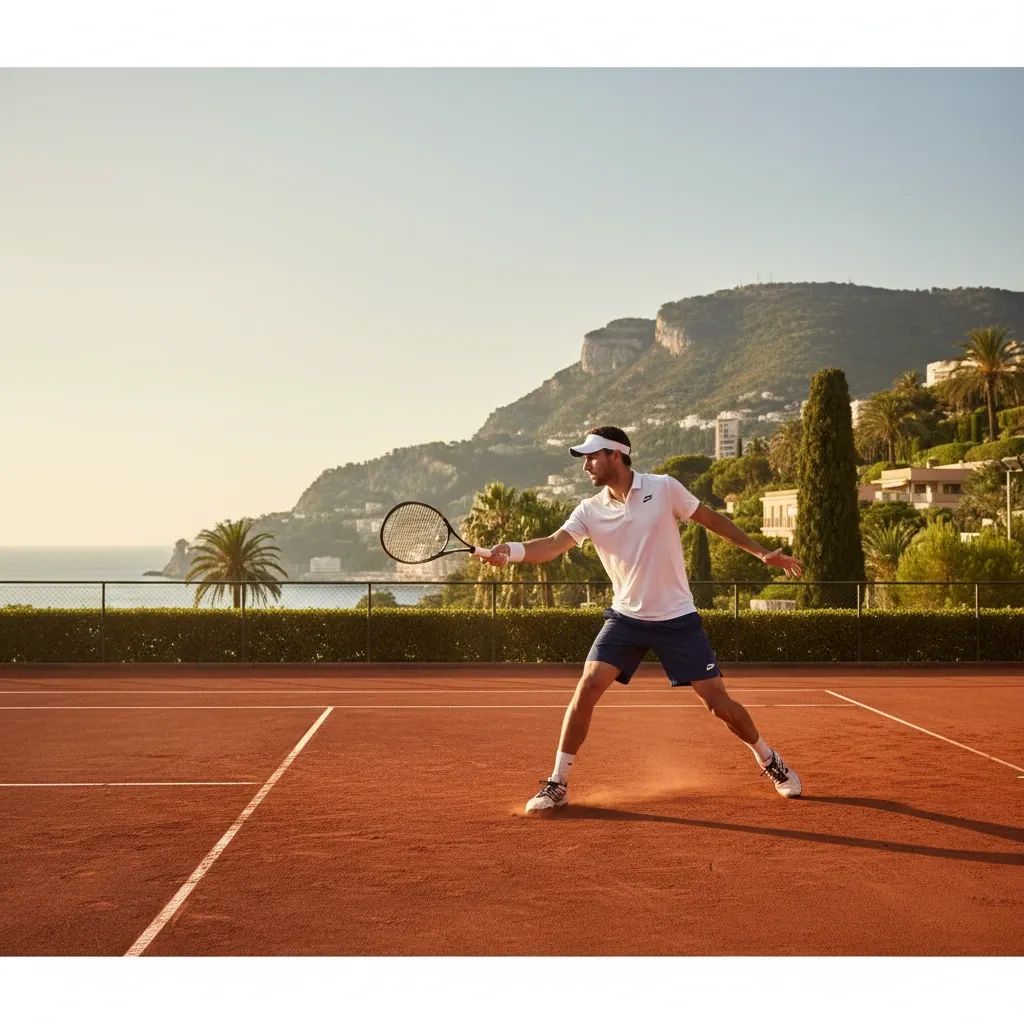
As Monte Carlo's Masters 1000 tournament enters its crucial second-round phase this week, Italy's tennis stars face a pivotal test. With Jannik Sinner (world No. 2) and Lorenzo Musetti (world No. 5) set to debut after first-round byes, the stakes extend beyond titles to the delicate arithmetic of world ranking points.
Italy's ATP Tour has entered the crucial spring clay-court season with 7 players ranked inside the global Top 100, a depth of talent that positions the nation among Europe's tennis powerhouses. The tournament represents the first major test of 2026 on European red clay. Sinner arrives with the weight of expectation but also opportunity: as the world No. 2, any result here will replace the points earned 52 weeks ago at the 2025 edition. A deep run—semifinal or better—would not only consolidate his position but could position him to challenge Alcaraz for the top spot. Musetti, occupying a more fluid position at world No. 5, has long been celebrated for his natural flair on clay, and Monte Carlo offers him a chance to cement his place in the Top 5 and potentially climb higher. The tournament awards up to 1,000 ranking points to the champion, making it a pivotal moment in the season's hierarchy.
On the women's side, Jasmine Paolini remains Italy's highest-ranked player at world No. 8 in the WTA rankings, with minimal movement at the top this week.
Italy's Expanding Tennis Footprint
The Mediterranean nation's tennis renaissance is no longer confined to a single star. While Jannik Sinner continues to anchor Italy at the sport's summit—holding the world No. 2 ranking—the country's strength lies in its breadth. Behind Sinner and Musetti, five additional Italians occupy spots in the Top 100: Flavio Cobolli (No. 13), Luciano Darderi (No. 19), Lorenzo Sonego (No. 63), Mattia Bellucci (No. 73), and Matteo Berrettini (No. 91).
This clustering of talent in the upper echelons is rare among European tennis nations. Italy's 7 players in the ATP Top 100 place the nation third globally behind the United States and Spain in terms of depth. The country's 20 representatives inside the Top 255 create a competitive domestic environment, with players pushing each other in training and sharing insights on tour conditions.
The presence of 20 Italians inside the Top 255 underscores a broader development pipeline. Younger players are securing direct entry into ATP 250 and 500 events, avoiding the grueling qualification rounds that can drain stamina and confidence. For a country historically dominant in football, the tennis surge reflects systemic investment in coaching, academies, and clay-court infrastructure—a surface that suits the tactical, patient style many Italian players favor.
What Monte Carlo Means for Sinner
Jannik Sinner faces a critical points-defense scenario at this year's tournament. The Monte Carlo Masters awards 1,000 points to the winner, 600 to the runner-up, and 360 to semifinalists. Sinner's ranking points are constantly recalibrated based on a rolling 52-week window, meaning underperformance here could see him lose ground to rivals like Zverev (No. 3) or Djokovic (No. 4), both of whom are expected to contend.
Beyond the numbers, Monte Carlo is the opening salvo of the European clay swing, a stretch that culminates in the French Open. Sinner, who has historically been more dominant on hard courts, has worked to refine his movement and stamina on slower surfaces. A title in Monaco would signal that he has closed the gap with Alcaraz, widely considered the clay-court heir to Rafael Nadal.
Sinner benefits from a first-round bye as a top seed, allowing him to enter the tournament fresh while lower-ranked opponents grind through early matches. His second-round debut will be closely watched by fans and analysts alike, as any slip-up would be magnified in the context of the ranking race.
Musetti's Chance to Break Through
Lorenzo Musetti has long been celebrated for his natural flair on clay, with a one-handed backhand reminiscent of vintage tennis aesthetics. His challenge is consistency: converting talent into sustained results at the biggest tournaments.
Monte Carlo offers Musetti a chance to cement his place in the Top 5 and potentially climb higher. A semifinal or final appearance would yield substantial ranking points and bolster his confidence heading into Rome and Paris. More importantly, it would solidify his standing as Italy's second alpha, a legitimate Grand Slam contender rather than a stylish underachiever.
Musetti's path is aided by the same first-round bye afforded to Sinner, but his draw will determine whether he faces early pressure from resurgent clay-court specialists or enjoys a gentler route to the quarterfinals. The Italian's ability to manage momentum—often a weak point in his game—will be tested in the best-of-three format, where every set matters.
The Broader Italian Contingent
Beyond the headliners, Flavio Cobolli (No. 13) and Luciano Darderi (No. 19) represent Italy's emerging generation. Both are capable of upsetting higher seeds, particularly on clay, where tactical discipline can neutralize raw power. A quarterfinal run for either would be considered a breakthrough, elevating them into the conversation for future Grand Slam seedings.
Lorenzo Sonego (No. 63) and Mattia Bellucci (No. 73) face tougher paths but can still accumulate valuable points. For Sonego, a veteran of the circuit, Monte Carlo is an opportunity to arrest a recent slide in form. Bellucci, newer to the ATP Tour's upper tier, needs consistent results to maintain his ranking position.
Matteo Berrettini (No. 91) remains a wildcard. Once a Wimbledon finalist and Top 10 stalwart, his career has been derailed by injuries. Monte Carlo could serve as a litmus test: does he still have the physicality to compete at Masters 1000 level?
What This Means for Residents
For tennis fans living in Italy, the Monte Carlo Masters offers immediate engagement opportunities. RAI Sport and Sky Italia provide comprehensive coverage, with matches available via streaming apps. The tournament's proximity—both geographically and culturally—makes it a natural focal point for Italian audiences.
Italian bookmakers have featured promotions tied to the nation's players throughout the tournament. Success for Italian players boosts visibility for domestic sponsors—brands like Lavazza, Alfa Romeo, and Technogym have invested heavily in tennis partnerships. Strong showings also drive merchandise sales and increase demand for tickets to Italy-hosted events later in the spring, including the Rome Masters in May.
Paolini Holds Steady on WTA Side
While the men dominate headlines, Jasmine Paolini remains Italy's flag-bearer in women's tennis at world No. 8. The latest WTA rankings showed minimal movement at the top, with Paolini maintaining her position. Her consistency—both in results and ranking—provides stability as Italy's women's program seeks to develop additional Top 50 players.
Paolini's next major test arrives later this month on European clay, where she has historically performed well. For now, her ranking ensures direct entry into all Premier-level events, a privilege that reflects years of steady improvement.
The Path Forward
Italy's tennis community watches with anticipation as the clay season accelerates. Sinner and Musetti carry the nation's hopes, but the depth behind them ensures that even if the stars falter, Italy's presence on the world stage remains formidable. The Monte Carlo tournament represents a crucial early indicator of how the country's considerable talent will translate into results during this critical period of the tennis calendar.


