
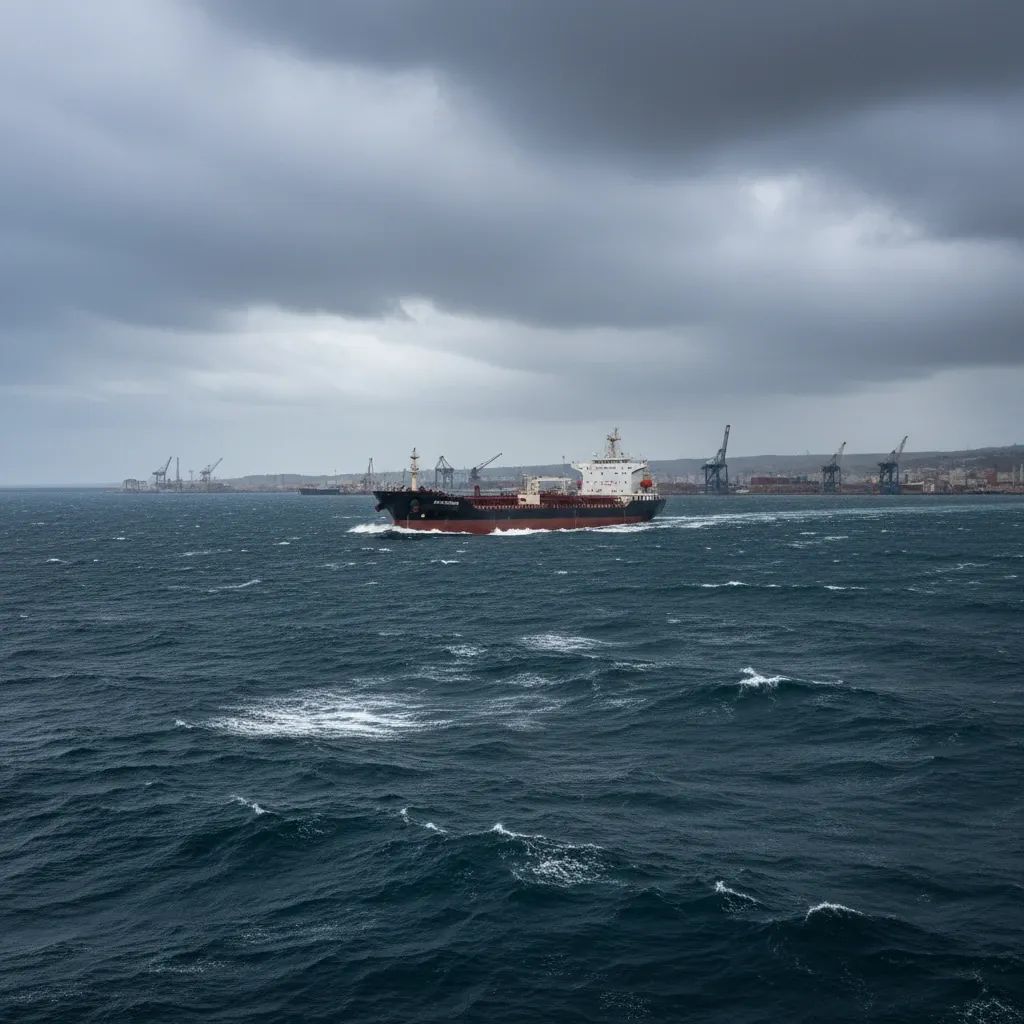
The Russian Federation has issued a strong warning to European nations: any seizures of Russian merchant vessels will be met with "equivalent responses" anywhere Moscow deems necessary, including the Pacific. President Vladimir Putin framed the warning aboard the missile cruiser Varyag during naval exercises in Russia's Far East, accusing the European Union of "piracy and robbery" for planning to confiscate and sell cargo from vessels suspected of sanctions evasion.
Why This Matters:
• Maritime trade routes through European waters face heightened tension as Russia threatens retaliatory seizures against vessels from EU member states.
• Italy's shipping industry, heavily reliant on Mediterranean and global trade, could face disruption if Moscow targets commercial traffic in response to EU enforcement actions.
• Legal ambiguity persists: while the EU claims authority under sanctions packages adopted in 2026, Putin contends the measures violate international maritime law.
The EU's Escalating Crackdown on Shadow Fleet
The European Union has dramatically intensified its enforcement campaign against Russia's so-called "shadow fleet"—a network of aging tankers and cargo ships used to circumvent sanctions on Russian oil exports. France, the United Kingdom, and Sweden have already intercepted or detained multiple vessels suspected of operating under this covert network, which numbers hundreds of ships according to EU sanctions lists.
The 2026 sanctions package introduced a critical new mechanism: it authorizes EU member states to sell petroleum and other goods seized from sanctioned vessels intercepted at sea. This marks a significant escalation beyond detention, effectively allowing the liquidation of Russian-linked cargo. The EU's Operation IRINI, the Mediterranean maritime security mission, has been granted expanded authority to board ships when reasonable suspicion exists regarding identification or compliance with international norms.
For Italy, whose ports handle significant energy imports and serve as Mediterranean transit hubs, the policy creates both enforcement obligations and exposure. Italian authorities must now balance cooperation with EU directives against the potential for Moscow's promised "adequate response."
Putin's Threat: Global Waters, Not Just European Seas
Putin's declaration deliberately avoided geographic limits. Speaking from the Varyag in Russia's Pacific theater, he emphasized that retaliatory actions would not necessarily occur in the waters where Russian vessels are seized, but "wherever we consider necessary and appropriate, anywhere, including in the area of responsibility of the Pacific Fleet."
The Russian president characterized EU enforcement as violations of international maritime law, targeting what he described as "peaceful economic operators." His language mirrors accusations Russia faced when its forces detained Ukrainian grain vessels early in the conflict.
Dmitry Medvedev, deputy chairman of Russia's Security Council, suggested Russia would have the right to attack any merchant vessel from hostile nations suspected of transporting goods destined for adversaries. While Medvedev's comments represent a more extreme position than Putin's official statement, they signal the range of options Moscow may be considering.
International Maritime Law: A Contested Battleground
The legal foundation for vessel seizures under sanctions remains contentious territory. The UN Convention on the Law of the Sea (UNCLOS) establishes fundamental principles including "innocent passage" through territorial waters and freedom of the high seas. Coastal states maintain sovereignty within 12 nautical miles of their baseline and can enforce domestic laws, including administrative seizures for violations.
However, unilateral sanctions applied beyond territorial waters enter murkier legal terrain. When seizures occur on the high seas against vessels flagged by third states, questions arise regarding violations of sovereign equality principles and maritime freedom. The 1952 Brussels Convention and 1999 Geneva Convention on ship arrest address "maritime claims"—damages, salvage, charter disputes, crew wages—but do not directly cover politically motivated sanctions enforcement.
UN Security Council resolutions carry different weight: member states are generally obligated to implement such measures, which can override general maritime freedom principles. Yet the current EU actions stem from unilateral sanctions, not Security Council mandates, creating space for Russia to contest their legitimacy under international law.
Italy's Exposure: Shipping, Banking, and Energy Vulnerabilities
Maritime Risk and Italian Shipping Companies
Italian interests face multiple pressure points in this escalating maritime confrontation. The country's merchant fleet ranks among Europe's largest, with vessels regularly transiting global waters including those under Russian Pacific Fleet oversight. Should Moscow follow through on Putin's threat, Italian-flagged ships—or those owned by Italian operators—could become targets regardless of their cargo or destination.
Italian shipping companies, port operators, and industry associations have not yet issued unified public guidance on the threat, though maritime insurers are reportedly reviewing coverage terms for vessels in higher-risk regions. Businesses seeking information on exposure can contact the Confitarma (Italian Shipowners' Association) and the General Confederation of Italian Industry (Confindustria) for updated risk assessments and compliance resources.
Banking Sector Vulnerabilities
Italy's banking sector has already experienced Russia's retaliatory capacity. In 2024, Russian courts ordered the seizure of assets belonging to European financial institutions within Russian territory, signaling Moscow's willingness to use legal mechanisms against European firms with Russian operations or holdings.
Energy Interconnections
Energy flows present another vulnerability. While Italy has substantially reduced dependence on Russian natural gas since 2022, diversifying to North African and Middle Eastern suppliers, any broader maritime disruption could affect global energy markets and transportation costs. The EU's specific prohibition on maintenance services for Russian LNG tankers and Arctic icebreakers aims to obstruct Russia's northern export projects, but also demonstrates the sector's interconnection.
EU Funding Ukraine with Frozen Russian Assets
Parallel to the vessel seizure campaign, the European Union has ramped up its utilization of immobilized Russian Central Bank assets. Recently in 2026, Brussels collected interest generated from these frozen holdings, with amounts transferred to support Ukraine.
European Commission President Ursula von der Leyen emphasized that "Russia must pay for the destruction it has caused." Transfers allocate the majority toward supporting loans to Ukraine, with portions directed to the European Peace Facility for Ukrainian military and defense requirements.
Critically, these transfers derive from interest accrued on liquid holdings, not the principal value of frozen assets, which remain blocked. This distinction matters for international precedent and potential counterclaims, though Russia has already demonstrated its willingness to seize European bank assets within its jurisdiction.
What This Means for Italy-Based Businesses and Travelers
Maritime operators should reassess risk exposure for vessels transiting regions where Russian naval forces maintain presence, particularly the Pacific, Black Sea approaches, and Arctic routes. While immediate implementation of Putin's threat remains uncertain, the declaration itself creates operational uncertainty.
Italian companies with Russian operations or assets face continued volatility. The pattern of escalating measures—EU members confiscating Russian vessels and cargo, Moscow retaliating against European holdings—suggests the situation may intensify.
Travelers and expatriates should note that while Putin's threats target commercial shipping rather than civilian aviation or passenger vessels, broader tensions affect insurance costs, routing decisions, and service availability for connections involving Russian territory or airspace.
For Italy's exporters, particularly those in manufacturing and luxury goods, the maritime enforcement environment adds complexity to supply chain planning. Shipping lines may adjust routes, increase premiums, or decline certain cargoes to avoid sanctions-related complications, even for legitimate trade with non-sanctioned destinations.
The Enforcement Reality: Hundreds of Ships, Limited Interdiction
Despite the EU's sanctions list encompassing hundreds of shadow fleet vessels, actual interdictions remain relatively limited. France and Sweden have conducted high-profile operations, but the sheer volume of global maritime traffic and jurisdictional complexities constrain systematic enforcement.
The Italian Coast Guard and customs authorities, like their EU counterparts, must balance sanctions enforcement with maintaining commercial flow through Italian ports, which handle roughly 500 million tons of cargo annually. Overly aggressive screening could disrupt legitimate trade, while insufficient vigilance risks sanctions violations and EU scrutiny.
Russia, for its part, has demonstrated restraint thus far beyond rhetorical warnings and recent banking asset seizures. Whether Moscow would actually target European merchant vessels—risking further isolation and potential military escalation—remains an open question. Putin's statement carefully framed the threat as conditional: "If this is implemented in practice, we will be forced to respond equivalently."
Looking Ahead: Escalating Economic Pressure and Maritime Uncertainty
The maritime confrontation reflects the broader tensions in the Ukraine conflict: both sides escalate pressure through economic and quasi-military measures while avoiding direct armed confrontation between Russian and NATO forces. The EU's intensified enforcement aims to constrain Moscow's energy revenue, while Russia's warnings seek to deter implementation through the threat of retaliation.
For Italy and other Mediterranean economies, this creates a challenging operational environment. Neither full compliance nor deliberate non-enforcement offers a straightforward solution. Italian authorities must navigate EU obligations, domestic commercial interests, and the uncertain risk of Russian retaliation against Italian-linked vessels in distant waters.
The current timeframe positions this confrontation amid ongoing shipping season pressures, with Mediterranean routes operating under sustained scrutiny. Any actual Russian interdiction attempts would likely generate immediate international crisis, testing whether Moscow's threat represents genuine policy intention or strategic messaging designed to influence European unity on sanctions enforcement.
What remains clear: the assumption that commercial maritime traffic operates outside geopolitical tension zones no longer holds. Italian shipping companies, insurers, and port operators are adjusting to an environment where sanctions compliance carries direct operational risk, and where vessels flying EU member flags may face scrutiny in waters far from European shores.


