
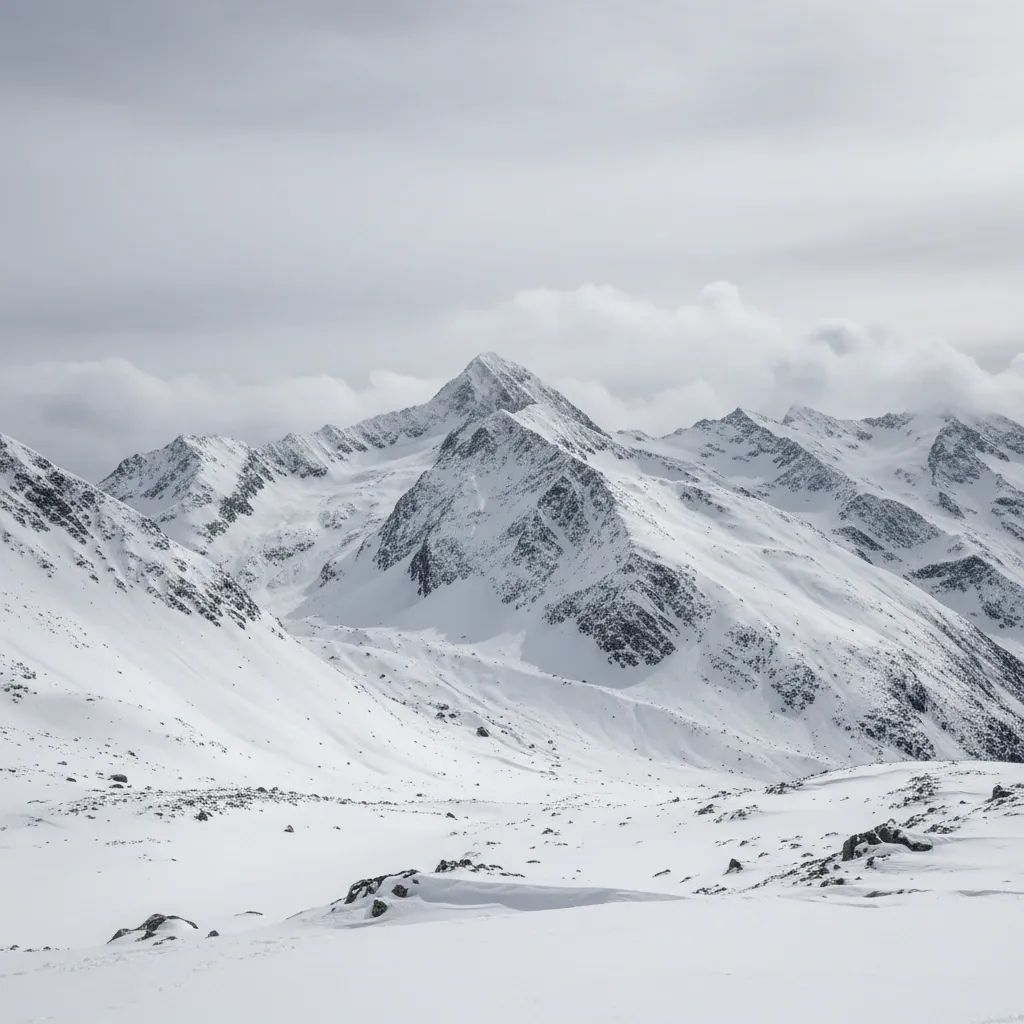
Why Europe's Deadliest Avalanche Winter Since 2018 Demands Your Attention
The Alpine region endured a devastating winter that shattered a 7-year safety record. Between November and March this past winter, 136 people lost their lives to avalanches across Europe—nearly double the 70 deaths recorded the previous year. For those living in or visiting Italy's mountain regions, the impact was particularly severe: 38 Italians died, marking the nation's heaviest toll in a generation and establishing a grim new reality about how environmental conditions are reshaping mountain risk.
For residents in Italian mountain regions—from Valle d'Aosta to Trentino-Alto Adige—here's what you need to know about staying safe. This winter demonstrated that today's avalanche hazards demand immediate access to reliable forecasts, proper training, and honest self-assessment. Italian authorities provide these tools through the Meteomont Carabinieri app (daily avalanche bulletins), ARPA regional avalanche centers (Lombardia, Piedmont, and other regions), and the Italian Alpine Club (CAI) network, which offers ARTVA training and certified guide connections. Understanding these resources and using them is no longer optional.
Why This Matters
• Italy faced an unprecedented avalanche season relative to the last two decades, with fatalities concentrated in early-season terrain where rescue resources were still mobilizing.
• Unpredictable snowpack structure—not heavier snowfall—emerged as the primary killer, creating persistent weak layers that triggered widespread slab avalanches. What this means for you: weak-layer avalanches are notoriously difficult to predict and can occur on slopes rated as moderate danger.
• Warming temperatures and rain-on-snow cycles are becoming seasonal fixtures rather than exceptions, requiring fundamental shifts in how forecasters assess danger and how recreationalists prepare.
• Transnational systems are adapting: Italy, France, and Austria are piloting AI-powered avalanche prediction tools and harmonized warning protocols designed specifically for the instability patterns now defining Alpine winters.
The Numbers Behind Europe's Winter of Extremes
When the European Avalanche Warning Services compiled its seasonal summary in March, the figure of 136 European fatalities stunned mountain safety professionals. The previous winter had claimed 70 lives—a significant toll on its own. But this doubling wasn't anomalous noise; it was a clear signal that Alpine conditions had shifted into a different regime.
To find a comparable death toll, analysts had to reach back nine winters, to 2017-18, when 147 Europeans perished in avalanche incidents. That earlier spike was treated as an outlier. This past season suggests otherwise.
Within Europe, the casualty geography is uneven. Italy's 38 deaths position it as the continent's avalanche ground zero for this winter. France recorded 32 fatalities, Austria 30. Switzerland, despite vast alpine terrain and heavy winter recreation, logged only 15 deaths—closer to its long-term average despite regional pressures. Spain reported 8, Slovakia 6, Slovenia 3, and Andorra 2. Single deaths occurred in Norway and Poland.
The concentration among Italy, France, and Austria reflects both the scale of their high-altitude landscapes and the sheer volume of winter mountaineering activity within them. These regions don't merely host occasional ski tourers; they draw tens of thousands of backcountry enthusiasts annually, each representing potential exposure to avalanche terrain.
The tragedy that encapsulated the season occurred on November 1 in Cima Vertana in the Trentino-Alto Adige region. A group of mountaineers triggered a slab avalanche on the 3,169-meter peak; five climbers were buried and killed. The incident exemplified a recurring vulnerability: early-season touring, when snowpack vulnerabilities remain difficult to assess and mountain rescue services haven't yet reached full operational tempo, carries outsized risk. By November's end, the full operational capacity of rescue helicopters and personnel had not yet mobilized across all Alpine zones.
What Happened to the Snow: A Structural Breakdown
Understanding this winter's lethality requires examining not storm intensity or raw precipitation totals, but the internal architecture of the snowpack itself. The Italian Alpine Service and regional meteorological institutions identified a cascading sequence of microstructural failures.
The problem began with persistent weak layers—fragile ice-crystal formations sandwiched within the broader snowpack. These layers remained brittle and slippery for weeks, essentially creating lubricants upon which subsequent snowfall rested uneasily. What this means for you: weak-layer avalanches can be triggered by a single person's weight or even remote triggering from nearby slopes.
A second structural factor compounded the weakness: below-average snow accumulation. Across the Alps, fresh snow reached only 50-75% of the multi-decade median. This scarcity meant that when heavy precipitation episodes arrived—in late November, early December, and mid-February—50 to 100 centimeters of fresh snow fell directly onto already-destabilized layers rather than a robust base. The result was immediate: widespread slab avalanche activity followed each storm within 24 to 48 hours.
Temperature fluctuations amplified danger further. By late February, the freezing level climbed to an unusually high 3,000-3,200 meters. This abnormal warmth triggered rapid meltwater infiltration through the snowpack; water trickled downward, dissolving crystal-to-crystal bonds and triggering what forecasters call "wet" or spring-type avalanches—unpredictable phenomena where gravity, not slope angle alone, becomes the governing variable.
Wind sculpting played a secondary but significant role. On leeward slopes, wind-transported snow accumulated into unstable drifts—highly concentrated snow masses that fracture with minimal triggering force. A skier's or climber's weight alone sufficed to initiate failure.
By mid-February, portions of the western Alps had reached avalanche danger level 5—the maximum on Europe's standardized scale. Savoie in France issued red alerts. Mountain roads closed. What meteorologists characterized as a "critical confluence" persisted for consecutive days—an alignment of hazards that saturated rescue resources and tested the judgment of even seasoned professionals.
How Authorities Warn—and What You Must Do With That Information
Italy, France, and Austria operate under a unified framework: the European Avalanche Warning Services protocol. All three nations employ a common five-level danger scale and standardized nomenclature for snowpack problems. A mountaineer crossing from Italy into Austria encounters identical warning language—no translation friction, immediate recognition of conditions.
For Italian mountain residents and visitors, here's where to access critical information:
• Meteomont Carabinieri app: Issues daily avalanche bulletins specifying danger ratings and discrete snowpack problems (persistent weak layers on north-facing slopes, wind-slab vulnerability in gullies, expected avalanche size). Download this now if you venture into mountains.
• ARPA Regional Avalanche Centers: ARPA Lombardia, Piemonte, and other regional environmental agencies publish supplementary bulletins granular to their territories.
• Certified Mountain Guides: The IFMGA-certified guide network operates through the Italian Alpine Club (CAI) and professional associations. At danger levels 4 or 5, guides will refuse bookings; this is your signal that self-directed touring is inadvisable.
Yet sophisticated warnings and technology cannot mandate compliance. Many backcountry users consult forecasts superficially or not at all. Plenty carry rescue equipment—an ARTVA transceiver, shovel, and probe—without having practiced burial-search protocols. An airbag backpack offers survival benefit only if its wearer understands when not to venture out. This knowledge gap between available information and user competency remains the system's critical weakness.
The Boom in Backcountry Recreation—and Its Toll
Ski touring and off-piste mountaineering have surged across Italy and the broader Alps in recent years. Social media exposure, increasingly affordable lightweight equipment, and the appeal of uncrowded terrain beyond resort boundaries have drawn newcomers—many lacking formal avalanche training—into high-risk environments.
This growth masks a troubling asymmetry: expertise has not kept pace with participation. Many touring skiers do not consult daily forecasts. Others lack an ARTVA transceiver or know how to use it under time pressure. Some operators in the commercial guiding sector operate without proper credentialing or liability insurance.
If you live in or regularly visit Italian mountain regions, here's what's required going forward:
Get ARTVA-certified training through the CAI or a professional guide service. This is not optional if you tour backcountry.
Consult forecasts every morning via the Meteomont app—not once, but daily, before heading out.
Hire a certified guide at danger levels 3 or higher if you lack demonstrated competency.
Cancel tours at danger levels 4 or 5 entirely, regardless of your skill level.
Know your limitations and be willing to turn back. Regulatory changes are underway—licensing requirements for guides are tightening, insurance mandates expanding—but no policy can substitute for individual judgment.
A Transnational Response: AI and Data Integration
Recognition that this past winter was not a statistical anomaly has prompted institutional innovation. Italy and France jointly launched the RESIL-AV project, which harnesses artificial intelligence to refine avalanche forecasting. The initiative processes data from automated snow sensors scattered across the Alps, feeding machine-learning algorithms designed to identify the microstructural signatures of instability. The target is hyper-local prediction—forecasting danger not at regional scale but for specific valleys and peaks—enabling rapid alerts for critical mountain roads where avalanche runout threatens traffic and isolated villages.
Simultaneously, Italy's Associazione Interregionale Neve e Valanghe (A.I.NE.VA) coordinates prevention across all regions, aggregating historical incident data into a geographic information system. If a particular slope has been identified as a recurring avalanche path over decades, zoning authorities incorporate that into land-use decisions.
What Comes Next: Practical Steps for Italian Mountain Residents
The winter season has closed, but its lessons remain unresolved. Spring melt and late-season incidents may incrementally raise the European death toll before summer settles in. What is already clear, however, is that Italy's Alps—and the entire Alpine chain—have entered a period of intensified volatility. Those who venture into them must prepare with that reality embedded in their planning.
Your immediate action steps:
Download the Meteomont Carabinieri app now and bookmark the ARPA regional centers for your area.
Enroll in ARTVA training through your local CAI section or a professional guide association. Find certified instructors at www.cai.it (Italian Alpine Club) or www.norgecai.it (Northern branches).
Understand your skill level honestly. If you lack formal avalanche education, hire a guide. The cost of a day's guidance is a fraction of the cost of rescue or recovery.
Share this information with friends and family who tour the mountains. Peer pressure toward safe practice is powerful.
The choice to turn back when conditions feel unstable, to cancel when the forecast is ambiguous, or to acknowledge personal skill limitations requires no regulation; it requires honesty. Make it now, before next winter arrives.


