
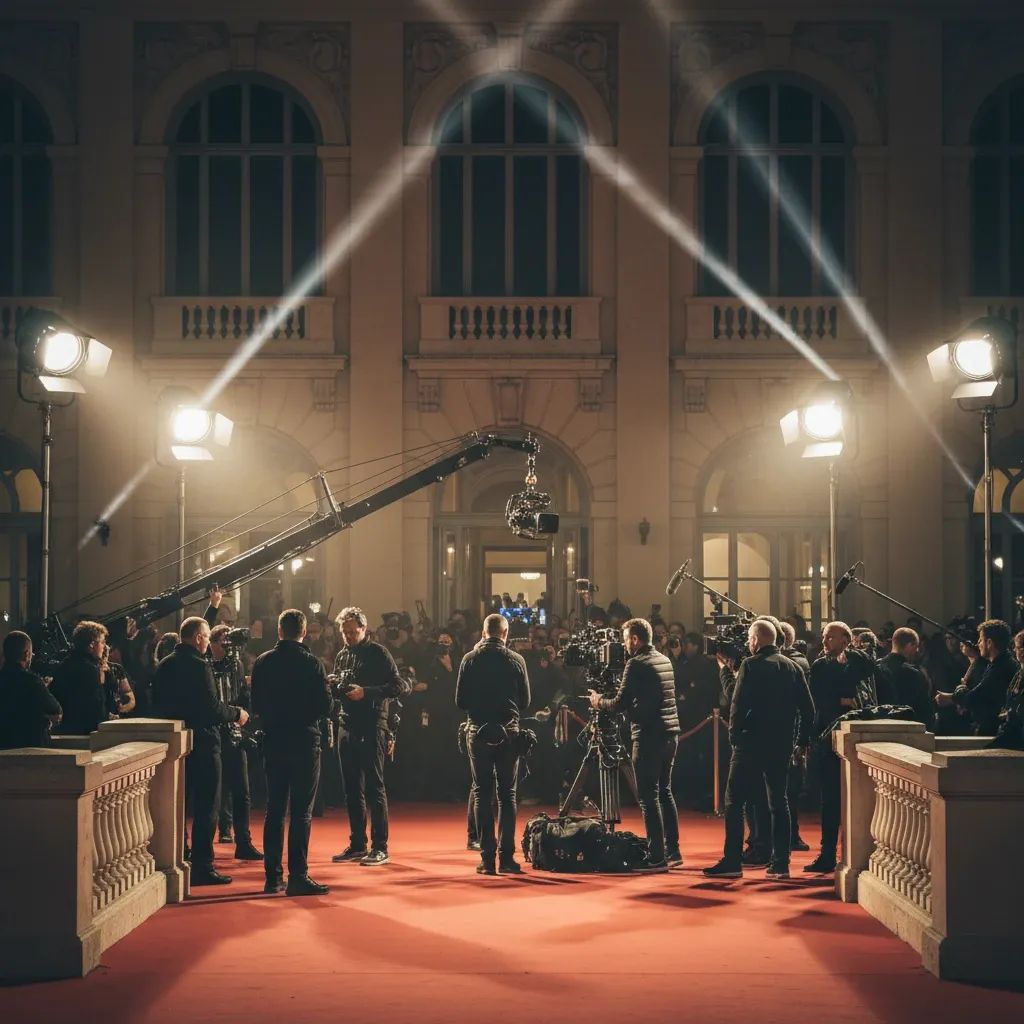
When Italy's film community reads the 2026 Cannes roster, it won't find a single Italian director competing for cinema's highest prize—a gap that stings more for what it reveals about the industry's precarious economics than for the symbolic loss alone.
Why This Matters
• The Production Model Reality: Italian studios now bankroll foreign-directed projects more readily than they finance homegrown auteur work, signaling a structural inversion toward service-sector filmmaking.
• Funding Architecture Under Strain: A €90 million cut to the Domestic Film Fund allocated for 2026, paired with expanded tax credits for foreign productions, has shifted government incentives away from nurturing original Italian storytelling.
• Export Competitive Disadvantage: Fewer resources, smaller star rosters, and a comedy-heavy output have made Italian films structurally harder to market internationally compared to German, French, or Spanish competitors.
The Timing and the Framing
The 79th Cannes Film Festival (May 12–23, 2026) announcement arrived in mid-April 2026 with one notable caveat: festival organizers would reveal the final roster over coming days, leaving theoretical space for a late Italian addition. Even so, the preliminary selection confirmed what Italy's film sector has been privately acknowledging—this coming May, no domestic auteur is expected to clear the international competitive bar.
Thierry Frémaux, the festival's general delegate, addressed the absence during the Paris press briefing with diplomatic restraint. When journalists drew the inevitable parallel to Italy's third consecutive World Cup exclusion, he sidestepped the sting with carefully rehearsed optimism. "Italy is a great country of cinema," Frémaux said. "Perhaps we haven't encountered films that merit main competition placement. It happens. The films will return."
The festival chief then pivoted to historical precedent, reminding the room that France itself sat out four consecutive World Cup tournaments between 1962 and 1974 before capturing the trophy in 1998. The subtext was unmistakable: dormancy doesn't equal permanent irrelevance.
Yet the framing glosses over harder institutional questions. Italy's absence feels less like cyclical timing and more like structural realignment in how the industry now operates.
Where Italian Presence Still Registers
Italian absence at the competition level masks a more complex reality across the festival's broader ecosystem. The nation's acting talent, production infrastructure, and financial capital remain woven throughout multiple selections—a presence that tells a revealing story about Italy's evolving role in global cinema.
A Writer Watches Himself on Screen
Erri De Luca, the Neapolitan novelist and political essayist known for lyrical explorations of working-class struggle and social justice, will appear in the competition entry La Vie d'une Femme (A Woman's Life), directed by Charline Bourgeois-Tacquet, a French filmmaker. The narrative tracks Gabrielle (Léa Drucker), a surgeon navigating simultaneous professional disintegration and personal devastation as her mother's Alzheimer's deteriorates. Gabrielle grows closer to a writer who shadows her hospital work for literary inspiration.
De Luca's participation carries methodological weight beyond mere casting. An Italian cultural figure appears within a project conceived, financed, and directed through French institutional channels—a visual proxy for how Rome-based talent and infrastructure now enhance foreign-authored work rather than anchoring domestically-originated stories. Charles Berling and Mélanie Thierry round out the ensemble in what amounts to character-focused European art cinema, a form Italy once dominated but now primarily supplies performers and locations for rather than steers.
The Rome Production Capital Pipeline
Our Films, the Rome-based production company led by Lorenzo Mieli and Mario Gianani, will co-produce Fatherland, a competition-tier entry directed by Polish auteur Paweł Pawlikowski, whose earlier works Ida and Cold War accumulated festival prestige across years of global exhibition. Mubi, the specialist film platform, coordinated international funding architecture.
This co-production model—Italian production resources and infrastructure supporting non-Italian creative vision—has hardened into industry standard. It sustains Rome-based jobs and studio utilization but accelerates a troubling narrative inversion: Italy finances ambitious cinema less often than it executes it for others. The arrangement treats Rome studios as technical asset rather than creative epicenter, a functional degradation with long-term cultural and commercial consequences.
Cinecittà as Set Piece
Roma Elastica, directed by Bertrand Mandico and screening in the festival's Midnight Screenings section, serves as a stylized meditation on 1980s Italian genre filmmaking. Shot between May and June 2025 across Cinecittà Studios and locations in Nice and La Gaude, the narrative centers on an aging actress filming her final picture in Rome. Marion Cotillard and Isabella Ferrari lead an ensemble including Franco Nero, Ornella Muti, and Noémie Merlant.
Redibis Films and Dugong Films handled Italian co-production duties. The selection exemplifies how Rome and its infrastructure—Cinecittà particularly—function as muse and location for international productions seeking European credibility and physical production capacity. The setting becomes character; the city becomes asset. The creative origin remains elsewhere.
The Economic Undercurrents
Italy's sidelining at Cannes intersects with quantifiable industry contraction that official sources avoid confronting directly. Between 2012 and 2022, the number of registered film production enterprises expanded, yet the sector's aggregate value added declined 3.4% annually—a dynamic revealing expansion without economic vitality or sustainability.
Cinema Attendance and Streaming Disruption
Cinema attendance bottomed during pandemic lockdowns. Recovery efforts, including the Cinema Revolution promotional initiative, have staged partial comeback but haven't reclaimed 2019 baselines. Streaming consumption now dominates how Italians access film, reshaping producer behavior toward smaller-budget content designed for home screens rather than theatrical impact. For residents across Italy, this means fewer distinctive Italian films reaching local cinemas, with programming increasingly dominated by international blockbusters and dubbed foreign content.
Funding Cuts and Job Market Impact
The Italy Cinema Fund (Fondo Cinema e Audiovisivo) traditionally anchored domestic creative financing. Yet 2026 budget allocations signal troubling priorities. Government has simultaneously reduced domestic creative funding by €90 million while expanding tax credits for foreign productions shooting on Italian soil.
Industry observers read this as institutional preference for Italy as production location over Italy as creative origin. The pivot advantages international producers seeking cost-efficient European manufacturing while starving the conditions under which Italian filmmakers develop ambitious, export-oriented work. For people living and working in Italy's film sector, this translates to diminished opportunities for production development, reduced financing for emerging directors, and job instability across production companies and studios. Public funding froze entirely through 2024 amid regulatory overhaul, paralyzing mid-stage productions across dozens of projects and amplifying financing uncertainty for emerging voices—effectively limiting career pathways for Italian filmmakers and technical crews.
The Export Paradox and Cultural Soft Power
Italian films face stubborn international resistance despite domestic marketplace stability. Comedy—the genre backbone of Italian output—rarely translates culturally beyond the peninsula. Low production budgets constrain technical polish and production value. The absence of internationally recognized star power complicates securing pre-sales guarantees from foreign distributors.
Yet paradoxically, the quantity of Italian films marketed internationally increased 123% between 2017 and 2021. The expansion suggests increased production volume without corresponding visibility or critical recognition. Titles move into foreign markets without systematic promotion, critical discovery, or distribution infrastructure. Volume masquerades as penetration; outputs outnumber outcomes.
Competing European industries—particularly France, Germany, and Spain—maintain superior promotional machinery, deeper pools of recognized talent, and more ambitious production budgets. Italian producers operate at structural disadvantage on the competitive field despite geographic and technical advantages. For residents in Italy, this diminishment of cultural soft power affects how the nation is perceived globally and undermines the prestige and economic returns that successful cinema brings to communities where productions operate.
Reading the Absence Accurately
Festival officials characterize 2026 as temporary market adjustment rather than systemic breakdown. Italy's international festival presence waned through the 1980s before resurging during the 2010s with directors like Paolo Sorrentino, whose The Great Beauty received international recognition and an Oscar nomination for Best Foreign Language Film in 2014. Matteo Garrone appeared regularly in competition lineups through recent editions.
Yet contemporary absence registers qualitatively different. The nation produces more films with fewer resources. The chasm between domestic box office success and international festival recognition has widened measurably. The current production infrastructure—optimized around tax incentives favoring volume—may have sacrificed the conditions cultivating Palma d'Or–caliber ambition.
Thierry Frémaux offered reassurance, but institutional economics tell a different story. Italian cinema remains visible and employed, yes. Italian directors remain largely invisible where prestige gets recognized and allocated. Whether that gap reflects temporary market timing or permanent structural reorientation shapes the industry conversation for seasons to come.


