
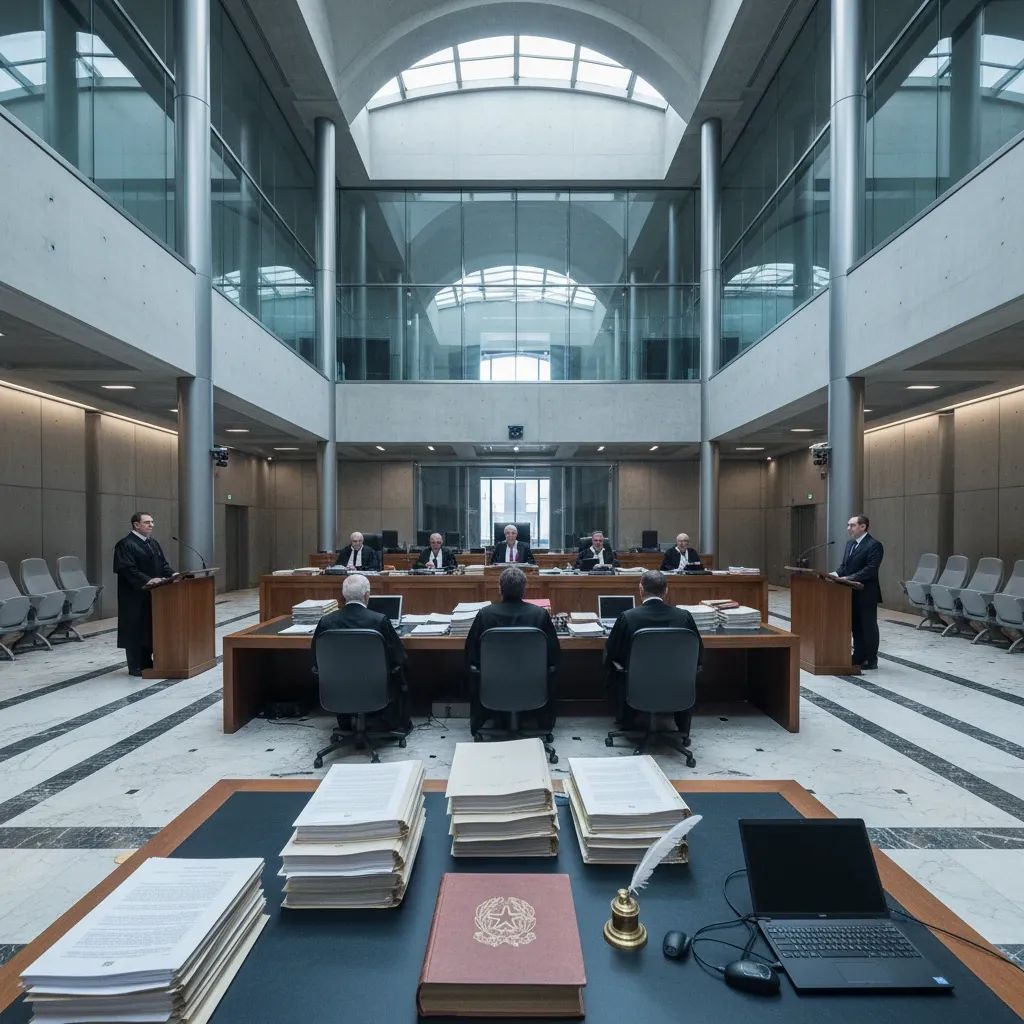
The Italian Chamber of Deputies has effectively frozen a criminal investigation into alleged mob-linked money laundering, refusing prosecutors access to crucial evidence while political factions clash over parliamentary immunity and judicial oversight. At the center of the controversy: text messages between a former government minister and a convicted mafia associate.
Rome's chief prosecutor Francesco Lo Voi escalated the standoff today, sending a formal letter to Chamber President Lorenzo Fontana demanding verification of chat transcripts and reiterating their "absolute necessity" for an ongoing investigation into the Senese crime clan. The move postponed a scheduled parliamentary floor vote and sent the matter back to the authorization committee, which will reconvene Monday at the earliest.
Why This Matters
• Parliamentary immunity is blocking evidence in an active organized crime investigation involving restaurants potentially used for money laundering
• The case tests whether Italy's legislature can shield communications between lawmakers and convicted criminals from judicial scrutiny
• A deputy from the ruling Fratelli d'Italia party voluntarily submitted the same messages to prosecutors while parliament debates whether to authorize their use
• The procedural tangle highlights ongoing tension between Italy's judiciary and the current center-right coalition government
The Restaurant Partnership That Sparked Investigation
Andrea Delmastro, a Fratelli d'Italia deputy who resigned as undersecretary of justice in March, became a business partner in a Rome steakhouse called "Bisteccheria d'Italia" through his investment company Le 5 Forchette. The restaurant was officially registered to the teenage daughter of Mauro Caroccia, a restaurateur now serving four years in Viterbo prison for acting as a front man for the Senese clan, a Rome-based Camorra organization.
Rome's Anti-Mafia District Directorate (DDA) is investigating whether the steakhouse served as a vehicle for laundering criminal proceeds. While Delmastro is not under investigation himself, prosecutors consider his communications with Caroccia essential evidence in building the case against the imprisoned restaurateur.
Caroccia's attorney voluntarily deposited the text exchanges with the Rome Prosecutor's Office on July 27, arguing they demonstrate no criminal intent behind the restaurant ownership. Yet prosecutors still formally requested parliamentary authorization to use the material—a requirement when evidence involves sitting lawmakers protected by constitutional immunities.
Parliamentary Gridlock Over Evidence Access
The Chamber's Authorization Committee initially denied the prosecutor's request on July 22, triggering immediate outcry from opposition parties. Committee president Devis Dori (Green Alliance) subsequently authorized members to review the conversations starting this week, but the Fratelli d'Italia majority objected and appealed directly to Chamber President Fontana.
Fontana responded by requesting an opinion from the Rules Committee, effectively blocking committee members from viewing the chats until at least Monday. The floor vote originally scheduled for today was cancelled after Lo Voi's letter arrived, and the entire matter returned to committee review.
The procedural freeze means the Rome Prosecutor's Office cannot officially incorporate the evidence into its investigation, despite possessing copies from both Caroccia's defense team and, as of today, from Delmastro himself.
Deputy Claims Transparency While Parliament Blocks Access
Delmastro issued a statement declaring he personally forwarded the disputed conversations to prosecutor Lo Voi via certified email. "I have nothing to hide," the Fratelli d'Italia deputy asserted, adding he hopes "the unacceptable exploitation by certain political factions, who have tried to stir up trouble and only raised mud, will now cease."
His voluntary submission creates an unusual situation: the evidence subject sits in prosecutors' hands courtesy of the lawmaker involved, yet the Italian Parliament continues debating whether judicial authorities may legally use it. Opposition parties argue the delay obstructs justice, while government coalition members defend the procedural review as protection of constitutional prerogatives.
Forza Italia representatives criticized the late submission of new documentation as "anomalous," while Five Star Movement and Democratic Party deputies demanded immediate transparency and a swift authorization vote.
The Senese Clan Connection
Caroccia's criminal conviction stems from his role managing businesses on behalf of Michele Senese, a Camorra boss whose organization has operated in Rome for decades. Prosecutors determined Caroccia's restaurant "Da Baffo" and other establishments served as fronts for the clan's financial interests.
In 2019, an arson attack destroyed one of Caroccia's restaurants. He has publicly stated that Delmastro was the only person who offered assistance after the fire, characterizing their subsequent business relationship as legitimate and unconnected to organized crime. The Rome DDA takes a different view, treating the partnership as potentially relevant to understanding the clan's asset concealment methods.
The Le 5 Forchette investment company that linked Delmastro to the steakhouse represents the type of corporate structure prosecutors routinely scrutinize in fraudulent asset transfer investigations. Italian anti-mafia laws make it a specific offense to hold property or business interests on behalf of criminal organizations, with enhanced penalties when the underlying crimes involve mafia-type associations.
Impact on Legislative-Judicial Relations
The standoff over the Delmastro chats marks the latest friction point between Italy's judiciary and the ruling coalition. The former justice undersecretary previously faced a separate legal problem involving leaked information about imprisoned anarchist Alfredo Cospito's prison communications, for which he received an eight-month suspended sentence in April (currently under appeal).
That conviction, combined with the restaurant partnership controversy, forced his resignation from government but not from parliament. As a deputy, he retains immunities that require Chamber authorization before prosecutors can use evidence involving his communications—even when voluntarily provided.
The Rules Committee opinion requested by Fontana could establish precedent for how parliament balances judicial cooperation against constitutional protections. Monday's committee session will determine whether members can review the prosecutor's latest submission, which includes a CD containing the complete message archive extracted from Caroccia's seized phone.
Opposition lawmakers have indicated they will push for the authorization vote to reach the full Chamber floor by next week, arguing further delay undermines Italy's anti-mafia investigations. Government coalition members maintain the procedural review protects parliamentary independence from judicial overreach.
For residents watching the procedural chess match, the practical question remains straightforward: whether the Italian legislature will permit evidence in an active organized crime case to be used, or whether parliamentary immunity will effectively place certain communications beyond prosecutorial reach—even when the lawmaker involved claims to welcome scrutiny.


