
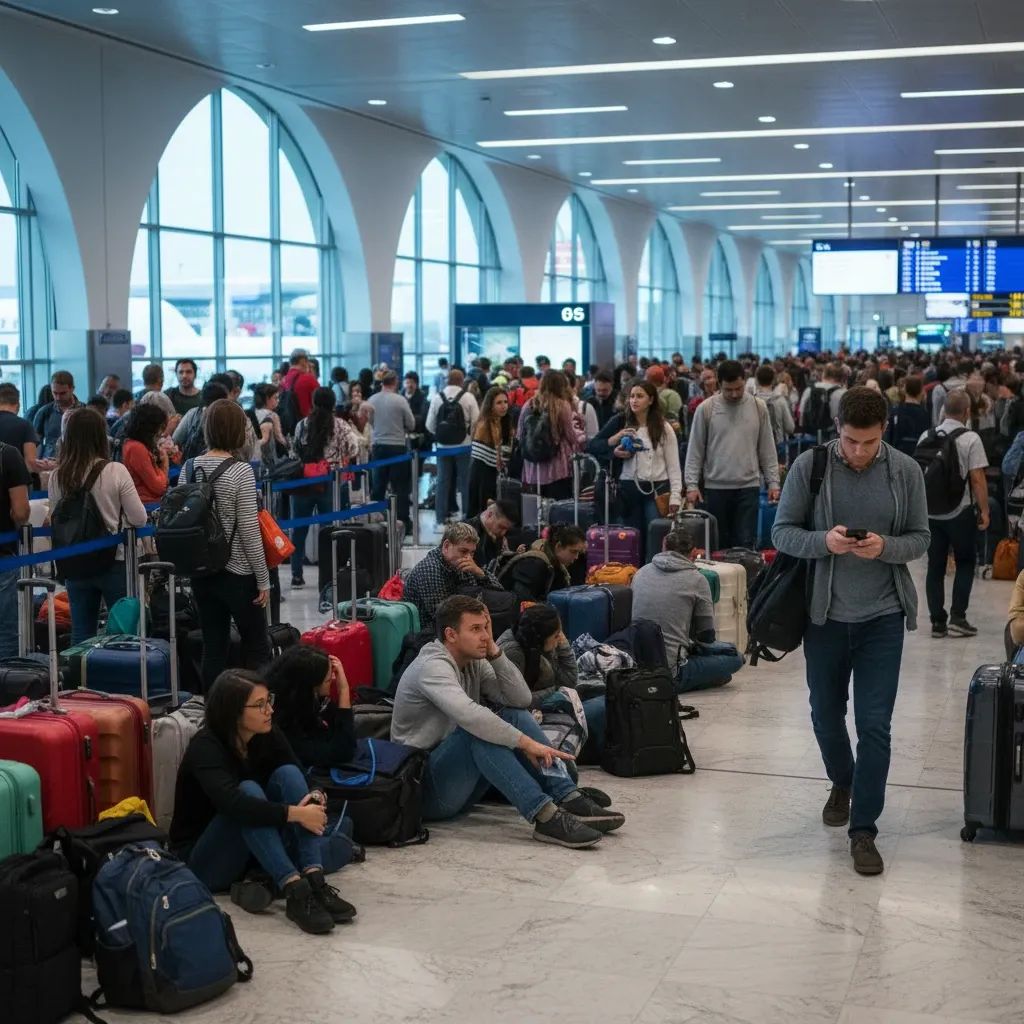
The Italy Administrative Court (TAR Lazio) has sided with the national Strike Guarantee Authority in a landmark decision that reshapes how railway workers can halt high-speed and holiday train services, a ruling that prioritizes passenger mobility over union autonomy. The July 30 judgment, made public on August 1, dismisses appeals from three major railway unions and confirms new minimum service thresholds that will keep 33% of high-speed trains running even during strikes on weekends and public holidays.
Why This Matters:
• Holiday travel protection: New mandatory service windows (7-10 AM and 6-9 PM) on festive days mean guaranteed trains for family visits and tourist trips.
• High-speed guarantee: At least one-third of Alta Velocità and Intercity trains must operate during strikes, matching regional rail obligations.
• Legal precedent: The ruling grants Italy's Strike Authority sweeping power to rewrite strike rules when unions and employers deadlock, even without their consent.
New Framework for Railway Strikes
The contested regulations, imposed by the Garante degli Scioperi (Italy's independent Strike Guarantee Commission), fundamentally update strike protocols that had remained frozen since 1999 for the Ferrovie dello Stato (FS) group. The three challenging unions—Or.S.A. Ferrovie, Federazione Fast Confsal, and Ugl Ferrovieri—argued the changes violated workers' constitutional strike rights and unfairly restricted industrial action in the rail sector.
TAR judges disagreed. In their published decision, the court found that the explosive growth of Alta Velocità services and the transformation of Italy into a mass tourism destination created "radically altered passenger flows" that the old 1999 rulebook never anticipated. The judges wrote that maintaining outdated strike protocols would cause "disproportionate harm" to travelers who now depend on high-speed rail for intercity commuting and holiday travel.
The revised regulations establish two core obligations. First, railway operators must guarantee service during two three-hour windows on holidays: morning departures from 7:00 to 10:00 and evening returns from 18:00 to 21:00. Second, a minimum 33% quota of high-speed and Intercity trains must circulate during strikes, mirroring the percentage already mandated for regional commuter services. This quota applies regardless of whether the strike occurs on a weekday or a Sunday.
European Law and Passenger Rights
TAR Lazio anchored its reasoning in EU Regulation 2021/782, which came into force in June 2023 and strengthens passenger protection across the European Union during travel disruptions, including strikes. The regulation obliges rail operators to offer passengers timely alternative solutions—such as rerouting, refunds, or replacement transport—within 100 minutes of a cancellation or significant delay.
The Italian court noted that the Strike Authority's 33% threshold directly addresses Italy's obligations under this EU law. By ensuring a baseline level of train circulation, the new rules reduce the likelihood of stranded passengers and make it feasible for operators to provide the re-protection services demanded by Brussels. In effect, the judgment treats mobility as a constitutional and European right that must be balanced against, not subordinated to, the right to strike.
This aligns Italy more closely with practices in Spain, where the Transport Ministry routinely mandates service minimums of 73% for high-speed trains and 65% for medium-distance routes during strikes. By contrast, the United Kingdom imposes fewer statutory minimums, though recent legislative proposals seek to introduce mandatory service levels in key transport sectors. France and Germany rely on a mix of constitutional balancing and collective bargaining, but both recognize the continuity of public service as a constraint on unlimited strike action.
What This Means for Residents and Travelers
For anyone living in or traveling through Italy, the practical impact is straightforward: strikes will no longer bring high-speed rail to a complete standstill. If you have booked a Frecciarossa or Italo ticket for a weekend getaway or a holiday visit to family in the south, you now have statutory assurance that at least one-third of scheduled trains will run, even if unions call a full-day stoppage.
The guaranteed time windows—morning and evening on holidays—are designed to protect the most common travel patterns: tourists arriving for weekend breaks and residents returning home after visiting relatives. Previously, a Sunday strike could leave travelers marooned at Milano Centrale or Roma Termini with no recourse. Now, operators must publish which trains fall within the guaranteed quota, giving passengers certainty when booking.
However, the ruling does not eliminate disruption. A 33% quota still means two-thirds of trains may be canceled, and the guarantee applies only to high-speed and Intercity services, not to regional trains outside the specified time bands. During peak travel periods—especially around August holidays—engineering works can compound the problem. Throughout August 2026, for example, scheduled track maintenance on the Milan-Bologna, Milan-Venice, and Florence-Rome high-speed lines is adding up to 90 minutes to journey times, independent of any strike action.
Passengers retain the right to full refunds or rebooking if their train is canceled or delayed beyond a threshold due to strike action, in line with EU Regulation 2021/782. Both Trenitalia and Italo publish lists of guaranteed trains in advance of strikes, and these lists must now comply with the court-approved quotas.
Authority Over Negotiation: A Power Shift
Perhaps the most significant element of the TAR ruling is its endorsement of the Strike Authority's substitutive power. Italian law allows the Garante to impose strike regulations unilaterally when employers and unions cannot reach agreement. The railway unions challenged this, arguing it undermined collective bargaining and violated the principle of social partnership.
The court rejected that argument, affirming that the Commission possesses "full substitutive authority in case of negotiation deadlock" and recognizing its "technical discretion" to weigh competing constitutional rights. In practical terms, this means the Garante can rewrite strike rules for any sector—not just railways—whenever it judges that existing agreements inadequately protect essential services.
This represents a power shift away from unions and toward the state regulator. Critics within the labor movement argue it erodes the autonomy of collective bargaining, while consumer advocates and business groups welcome the move as long overdue. The 1999 agreement, they point out, predated not only the Alta Velocità network but also the explosion of low-cost air travel and the rise of Italy as a year-round tourism economy.
No National Rail Strikes in August 2026
Ironically, the ruling arrives during a statutory blackout period for national transport strikes. Under Italian law governing essential public services, railway strikes are prohibited from July 27 to September 3, a grace period designed to protect summer tourism and holiday travel. The first post-blackout railway strike is already scheduled for September 7 by Trenitalia Piemonte regional staff.
The August calm does not mean smooth travel, however. The aforementioned engineering works on key high-speed corridors—particularly the Milan-Bologna line (closed between Piacenza Est and Melegnano from August 10-17, adding 60 minutes to journeys) and the Milan-Venice route (Verona to Vicenza, August 2-16, adding up to 90 minutes)—will test passenger patience as thoroughly as any strike. These diversions onto the traditional, slower network can bottleneck regional and freight services, compounding delays across the system.
Broader Context: Balancing Rights in a Tourism Economy
Italy's judicial validation of stricter strike rules reflects a broader European trend toward prioritizing service continuity in liberalized transport markets. As national rail monopolies have fragmented and private operators like Italo have entered the high-speed market, regulators face pressure to ensure competitive service levels and protect consumer rights.
The TAR decision also acknowledges demographic and economic realities: Italy's economy increasingly depends on tourism revenue (worth approximately 13% of GDP), much of it concentrated in summer and holiday periods. Unpredictable strikes during peak travel windows impose costs not only on individual passengers but on hotel operators, tour companies, and regional economies dependent on visitor spending.
For residents, the ruling introduces a measure of predictability. Whether you are commuting from Naples to Rome for work or planning a long weekend in Venice, you can now assume a baseline level of service during strikes. The trade-off, from a labor perspective, is a dilution of strike effectiveness: if one-third of trains still run, the economic pressure on the employer diminishes, potentially weakening unions' bargaining leverage.
The unions that lost this case have not publicly signaled whether they will appeal to higher administrative courts or seek redress through Italy's Constitutional Court. For now, the new strike framework stands, and the next major test will come in September when the blackout period lifts and unions are free to call national actions under the court-approved rules.


