
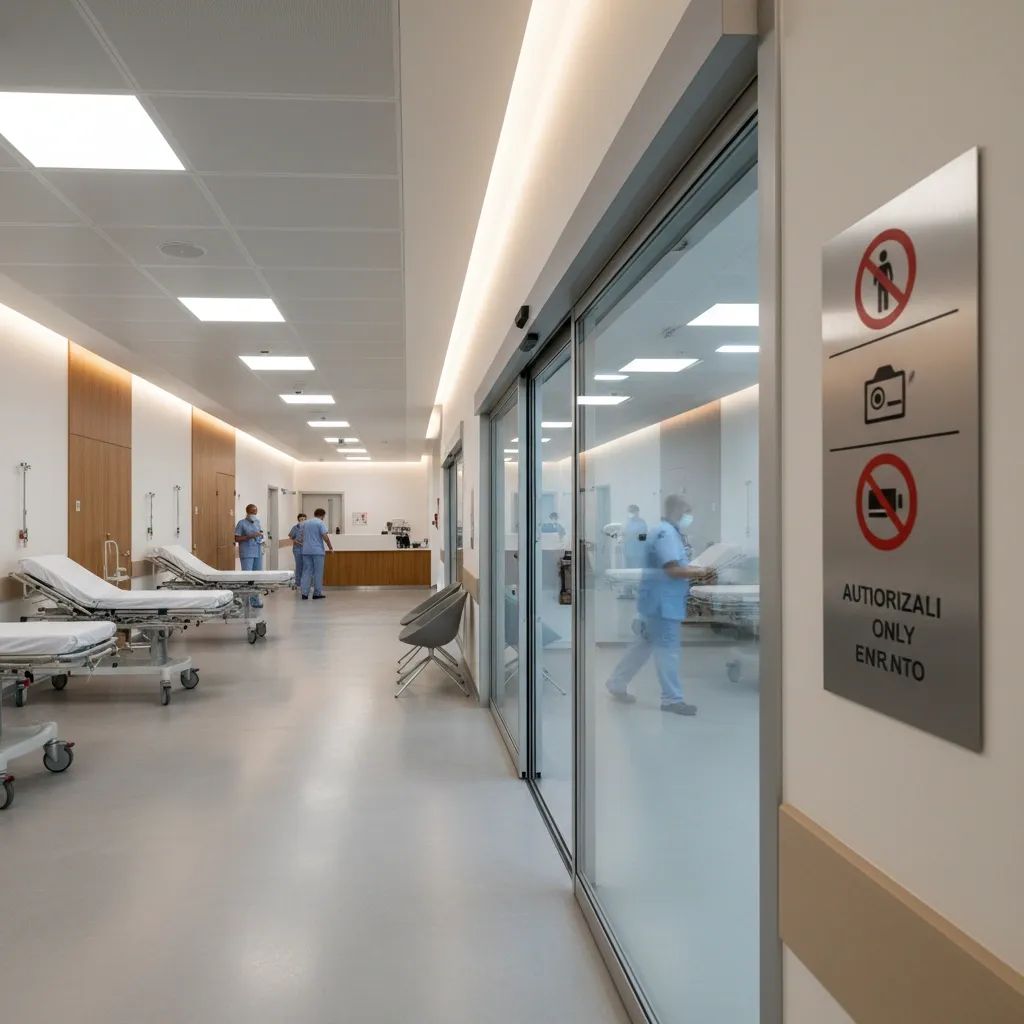
Italy's healthcare workforce weathered nearly 18,000 violent incidents in 2025, according to newly released government data that underscores a persistent safety crisis affecting frontline medical professionals. While the raw count of attacks declined marginally from the prior year, the Ministry of Health disclosed Thursday that 23,367 individual workers became victims—a jump that signals each episode is affecting multiple staff members at once.
Why This Matters
• Nurses bear the brunt: Among healthcare workers, women account for approximately 73% to 76% of assault victims, with nurses representing the highest-risk category at 55% of all reported cases—a figure consistent across most Italian regions, though regional variation exists.
• Emergency rooms remain flashpoints: The majority of violence occurs in Pronto Soccorso departments, psychiatric units, and ambulance transports.
• Underreporting obscures the scale: Experts estimate that while fewer than 15% of victims file formal reports, approximately 57% report incidents informally or to colleagues rather than through institutional channels, meaning many cases never enter official statistics and the true figure could be substantially higher.
• Legal penalties toughened: New 2024 legislation introduced arrest in flagranza (arrest upon being caught in the act) for aggressors and made prosecution automatic—no victim complaint required.
The Numbers Tell a Darker Story
The Italy Ministry of Health's annual observatory report tallied 17,985 attacks across hospital wards, clinics, and mobile emergency units last year. That figure represents a modest decline from 18,392 incidents in 2024, but the victim count rose by roughly 1,300 people year-on-year—evidence that assailants are increasingly targeting groups of providers rather than individuals. In practical terms, that translates to roughly 49 attacks every day, or two per hour, somewhere in the national health system.
Verbal abuse dominates the landscape, comprising 69% of documented episodes. Physical assaults account for 25%, while the remaining 6% involve property destruction—smashed equipment, vandalized offices, or broken windows. Patients themselves are the primary aggressors, followed closely by relatives and caretakers, many of whom snap under the strain of long wait times and overcrowded facilities.
Who Gets Hit Hardest
Female healthcare workers shoulder a disproportionate share of the danger. Surveys indicate that women make up approximately 73% to 76% of assault victims, with the higher percentages concentrated among nurses, reflecting both the gender composition of the nursing profession in Italy and the particular vulnerability of roles involving direct patient care. Nurses lead all categories with 55% of incidents, while physicians account for 16 to 17% and socio-health aides another 10 to 11%.
The Red Cross reported that 68% of attacks on its personnel occur during ambulance transfers, when crews work in confined spaces with agitated or intoxicated patients. Meanwhile, hospital emergency departments—perpetually understaffed and overburdened—serve as the primary stage for violence, followed by psychiatric diagnosis and care units (SPDC) and general wards. A worrying trend shows assaults spreading into territorial clinics and continuity-care services, areas that historically saw lower incident rates.
What Drives the Violence
The root causes form a tangled web of systemic pressure and communication breakdown. Italy's public health system, chronically short on personnel, struggles with staffing vacancies that balloon wait times and leave existing workers stretched thin. A patient arriving at the Pronto Soccorso for a non-critical issue might wait four to six hours before being seen, stoking frustration that spills over into verbal tirades or physical confrontation.
Unrealistic expectations compound the problem. Families arrive convinced the hospital can reverse late-stage disease or deliver instant diagnoses, and when reality falls short, disappointment morphs into blame. Poor communication—whether due to language barriers, time constraints, or institutional opacity—leaves patients feeling ignored, which surveys consistently link to higher aggression risk.
Overcrowding itself creates a pressure-cooker atmosphere. Emergency bays designed for 20 patients routinely house 40, with gurneys lining corridors and relatives clustering in narrow hallways. The chaos breeds anxiety, and anxiety breeds conflict.
The Underreporting Crisis
Perhaps the most troubling revelation is how much violence never surfaces. Multiple studies indicate that reporting patterns vary significantly: fewer than 15% of victims file formal reports through official institutional channels, while many others discuss incidents informally with colleagues or supervisors, and a substantial portion report nothing at all. Some fear retaliation from patients or their families; others view hostility as an unavoidable occupational hazard, normalized by years of exposure. Still others distrust that institutional complaint channels will yield meaningful action.
This silence skews the data downward and hampers prevention efforts. If hospital administrators and policymakers lack accurate numbers, they cannot allocate resources—security personnel, conflict-resolution training, architectural redesigns—where they matter most.
What This Means for Residents
For anyone living in Italy and relying on the Servizio Sanitario Nazionale (SSN), this violence has cascading consequences. Burned-out staff leave the profession at higher rates, exacerbating shortages and lengthening wait times further—a vicious cycle. Hospitals forced to divert budget toward security infrastructure—metal detectors, panic buttons, surveillance cameras—have less to spend on medical equipment or specialist hires.
If you visit an emergency room, expect heightened security measures: body cameras on nurses, uniformed police stationed near triage desks, and strict visitor limits during peak hours. Some facilities now screen entrants with metal detectors and post signage warning that aggression triggers immediate arrest. The upside is a safer environment for workers; the downside is a more impersonal, fortress-like atmosphere that can feel unwelcoming to genuinely distressed patients.
The Government's Response
In November 2025, the Ministry of Health updated Recommendation No. 8, expanding protections beyond doctors and nurses to include administrative staff, porters, and front-desk clerks—anyone who interacts with the public. Proposed safeguards range from 24-hour video surveillance and panic alarms to architectural tweaks that let staff escape quickly if confronted.
The Decree-Law 137/2024, converted into Law 171/2024, raised legal stakes significantly. Assailants now face arrest in flagranza (caught in the act), even hours after the incident if caught on camera—a provision called "flagranza differita." Prosecutors can move forward without a victim's complaint, removing the burden from traumatized healthcare workers. Sentences for causing injury to medical personnel carry stiffer penalties, mirroring protections granted to law enforcement.
Regional and European Context
Italy's assault rate—with studies indicating more than 27% of nurses report being attacked annually—towers over figures from the United Kingdom (15%), Germany (10 to 12%), or the Netherlands (7%). France has enacted similar legal reforms, including a specific "outrage" offense to protect professional dignity, while the UK, Germany, and the Netherlands emphasize conflict-de-escalation training and workplace redesign over punitive measures.
The European Union-funded BRAVE-WOW project brings together Italy, Portugal, Spain, and Slovenia to research gender-based violence in healthcare settings and develop cross-border prevention tools. Meanwhile, the Council of European Medical Orders (CEOM) signed a manifesto calling for EU-wide monitoring and victim-support programs, signaling that Italy's crisis mirrors broader continental patterns.
What Needs to Change
Medical unions and advocacy groups stress that legislation alone cannot cure a cultural and structural malady. The National Federation of Medical Orders (FNOMCeO) calls for a comprehensive hiring plan to relieve workload pressure, shorter emergency-room wait times through better triage protocols, and mandatory communication training to rebuild trust between clinicians and the public.
Investment from the National Recovery and Resilience Plan (PNRR) targets hospital modernization, including safer Pronto Soccorso layouts and upgraded infrastructure. Administrative reforms slated for completion by the end of 2026 aim to reorganize both hospital and territorial care, though skeptics warn that without significant budget increases, these changes risk being cosmetic.
Body cameras and surveillance may deter some aggression, but they do little to address the root grievances: under-resourced wards, exhausted clinicians, and patients who feel abandoned by a system buckling under demand. Until those fundamentals shift, healthcare workers will continue to treat injuries while nursing their own.
Looking Ahead
As Italy moves deeper into 2026, the question is whether expanded legal protections and technology deployments can bend the curve on workplace violence, or whether only a fundamental redesign of the SSN—more staff, more beds, more time per patient—will restore safety and dignity to the wards. For the 23,367 professionals who faced assault last year, the answer cannot come soon enough.


