
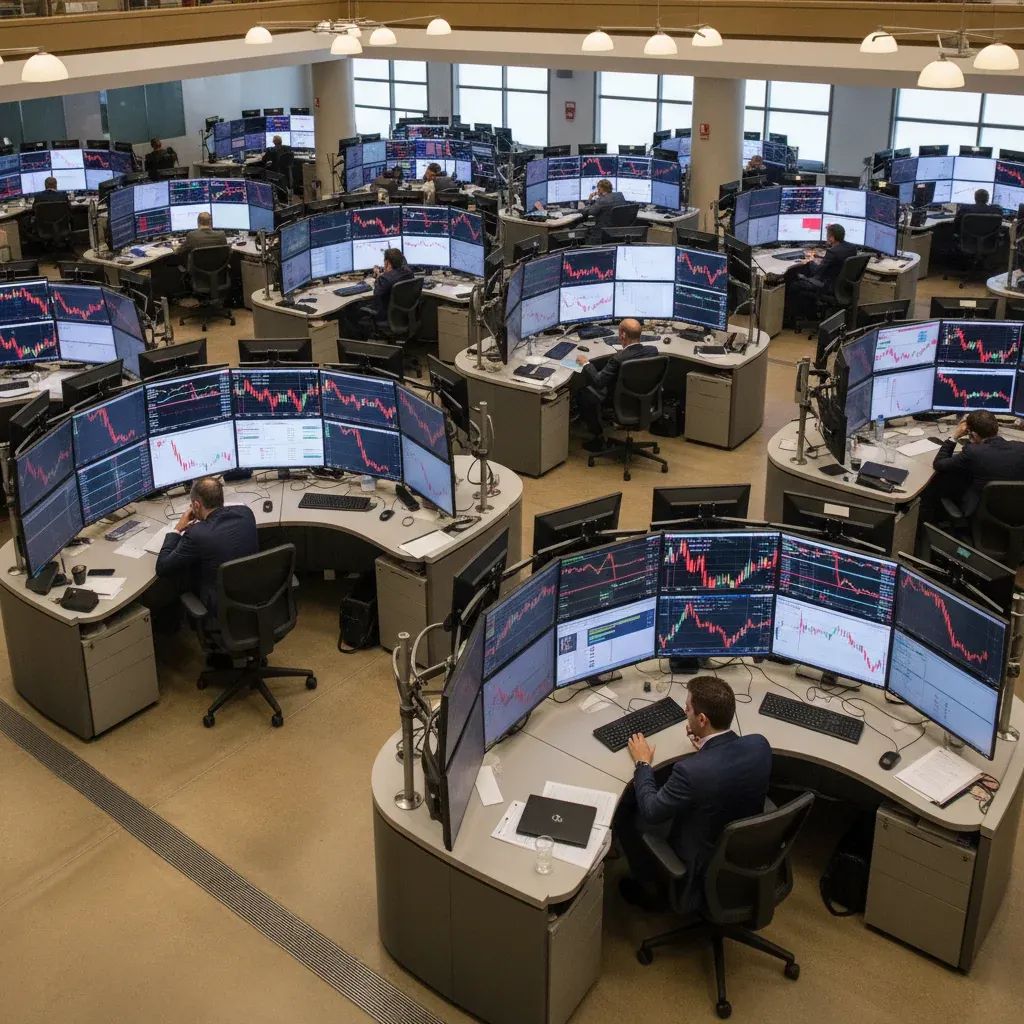
The Italy natural gas market opened higher this morning, with benchmark TTF futures climbing above €44 per megawatt-hour—a signal that the nation's energy outlook remains hostage to global supply shocks and Middle East instability, even as the calendar turns toward the typically softer summer pricing season. Though based in Amsterdam, TTF prices directly influence Italian household bills because Italian utilities purchase gas at TTF-linked rates and Italy imports roughly 95% of its gas consumption.
As of late April 2026, these wholesale moves carry immediate consequences for residents across the country.
Why This Matters:
• Household bills rising: Vulnerable consumers already saw a 19.2% hike in March, adding roughly €232 annually to the average home's gas costs.
• Industrial squeeze: Italian firms face an estimated €2.6 billion increase in gas expenses this year—a 13.5% jump that threatens competitiveness.
• Volatile trajectory: Current quotes sit 40% above year-ago levels, despite being well off the €340/MWh crisis peaks of 2022.
The Morning Numbers
Amsterdam's Title Transfer Facility (TTF) contract—the European gas pricing benchmark most closely watched by Italian utilities and traders—gained 1.26% to reach €44.10/MWh at the open. This places quotes near the top of April's trading range, which oscillated between roughly €43.80 and €44.70 over the past week.
For context, Italy's own Punto di Scambio Virtuale (PSV) settled around €0.478 per standard cubic meter at the end of the month, reflecting a tighter premium to TTF as domestic demand patterns diverged slightly from the broader European hub.
Why Prices Remain Elevated
The rally extends a pattern established in March 2026, when military escalation in Iran temporarily knocked out production at Ras Laffan—one of Qatar's mega-export terminals—and rendered the Strait of Hormuz a high-risk corridor for LNG carriers. International insurers classified the waterway as a military operations zone, curtailing tanker traffic and tightening the Atlantic basin supply picture.
Goldman Sachs responded by lifting its April TTF forecast to €55/MWh, up from an earlier €36 estimate. The bank's analysts warned that a sustained closure of Qatari and Emirati flows—equivalent to roughly 10% of Europe's total storage capacity per month—could push the continent back toward the stress conditions last seen in the immediate aftermath of Russia's Ukraine invasion.
While the immediate threat has eased, the risk premium embedded in forward curves remains substantial. HSBC projects European gas will average around €48.70/MWh for the full year 2026—some 40% above pre-crisis forecasts—and stay elevated through 2027 before normalizing near €29/MWh in 2028.
The Italy Premium: What Residents Are Paying
Italy's heavy reliance on imported energy amplifies the impact of wholesale swings. Roughly 2.3 million "vulnerable" households—pensioners, low-income families, and those in remote areas still served by the regulated tariff—saw their gas commodity charge jump to €1.31 per cubic meter in March. For a typical home consuming 1,100 m³ annually, that translates to an extra €232 on the year's bills, assuming prices hold steady.
Who qualifies as "vulnerable"? Under Italian regulations, this designation includes households with annual incomes below €20,000 (adjusted for family size), pensioners aged 75+, families with disabled members, and residents in non-urbanized zones without access to the deregulated market.
Consumers on the mercato libero (deregulated market) with variable-rate contracts face even sharper exposure. If you're on Italy's free market, you can typically switch suppliers with 30 days' notice, though switching costs vary. Brokers and consumer advocates recommend comparing fixed-price deals from multiple providers—contracts are now commonly available through platforms like Facile.it and Segugio.it. Given the heightened geopolitical volatility and looming uncertainty around storage refill dynamics heading into next winter, locking in rates may justify the small premium over spot pricing.
Government support programs established during the 2022 crisis have largely wound down, though targeted social tariffs remain available for qualifying vulnerable households through regional authorities. Check with your local comune (municipality) to determine eligibility and application procedures.
Inflation data underscore the broader economic drag: Italy's consumer price index rose 1.7% year-on-year in March, with energy costs contributing materially to the uptick. That erodes household purchasing power and complicates the European Central Bank's policy calculus as it weighs the trade-off between supporting growth and anchoring price expectations.
Impact on Business and Industry
The CGIA research institute in Mestre estimates that Italian enterprises will shoulder close to €10 billion in additional energy costs this year, of which €2.6 billion stems directly from gas. That represents a 13.5% increase over 2025 and poses a serious threat to margins, particularly for energy-intensive manufacturers in the Lombardy, Veneto, and Piedmont industrial corridors.
Producer price indices tell a similar story: electricity and gas generation costs for the domestic market climbed 6.6% year-on-year in March, feeding through to finished goods and services. Sectors such as chemicals, glass, ceramics, and food processing—all heavy gas consumers—are especially vulnerable.
Even the services sector is feeling the pinch. Confcommercio, the national retailers' association, has modeled worst-case scenarios showing gas bills up 43% for bars, hotels, restaurants, and supermarkets. Compared to pre-pandemic 2019 baselines, tertiary businesses are already paying 70.4% more for gas, squeezing profitability in a segment that employs millions.
What This Means for Residents
For anyone living in Italy—whether renting an apartment in Milan, running a small business in Puglia, or managing a household budget in Sicily—the trajectory of TTF quotes over the coming months will directly shape disposable income and economic stability.
Immediate steps to consider:
• Review your contract: If you're on a variable tariff in the free market, compare fixed-rate offers. The spread between spot and forward prices may justify locking in now. Check whether your current provider allows contract review or switching without penalties.
• Monitor storage levels: The European Union aims for 96% fill by November 1, but geopolitical shocks could force earlier or more aggressive buying, lifting summer prices.
• Budget for volatility: Even if quotes soften seasonally, the risk of another supply disruption—whether in the Gulf, North Africa, or Eastern Europe—means prudent households should build in a buffer for the coming heating season.
Businesses, meanwhile, face a harder calculus. Hedging strategies that seemed expensive in February now look prescient, and forward purchasing for the 2026–2027 heating season is likely to be front-loaded as procurement teams seek to cap downside risk.
The Bigger Picture: Supply, Demand, and Outlook
Looking beyond the immediate spike, the medium-term fundamentals present a mixed picture. On the supply side, new LNG export capacity from the United States, Canada, and Qatar is scheduled to come online through late 2026 and into 2027. If geopolitical conditions stabilize, that additional volume should ease the supply crunch and pull European prices back toward the €30/MWh range that many analysts had penciled in for this year.
Demand dynamics are equally uncertain. A colder-than-average winter drained European storage faster than the five-year average, leaving inventories 15 percentage points below normal entering spring. Industrial gas consumption in Italy is poised to rebound if prices retreat, but a broader economic slowdown—whether driven by trade tensions, monetary tightening, or fiscal consolidation—could dampen appetite and cap upside.
Weather remains the wildcard. Extended cold snaps accelerate drawdowns and tighten the supply-demand balance, while mild conditions allow utilities to refill storage more cheaply. The 2027 outlook hinges largely on whether the LNG supply wave materializes as planned and whether Middle East tensions recede or escalate further.
Lessons from the 2022 Crisis
It's worth recalling that TTF hit an all-time peak of €345/MWh in March 2022 and traded above €340 again that August—levels roughly eight times higher than today's quotes. The Italian government responded with a mix of price caps, social tariffs, and business subsidies, measures that cushioned the blow but also strained public finances.
This time around, Rome has less fiscal room to maneuver, having already deployed substantial support packages in 2022 and 2023. That places even greater weight on hedging, diversification of supply sources, and demand-side efficiency as tools for managing risk.
Bottom Line
The 1.26% gain that opened trading this morning is more than a statistical blip—it reflects structural vulnerabilities in Italy's energy system and the persistent geopolitical premium baked into European gas markets. With forecasts spanning a wide range from €30 to €56/MWh depending on how Middle East risks evolve, residents and businesses alike should brace for continued volatility and plan accordingly.
For now, the message is clear: cheap energy is not on the horizon, and the cost of maintaining electricity and heating services will remain a central economic and political issue well into next year.


