
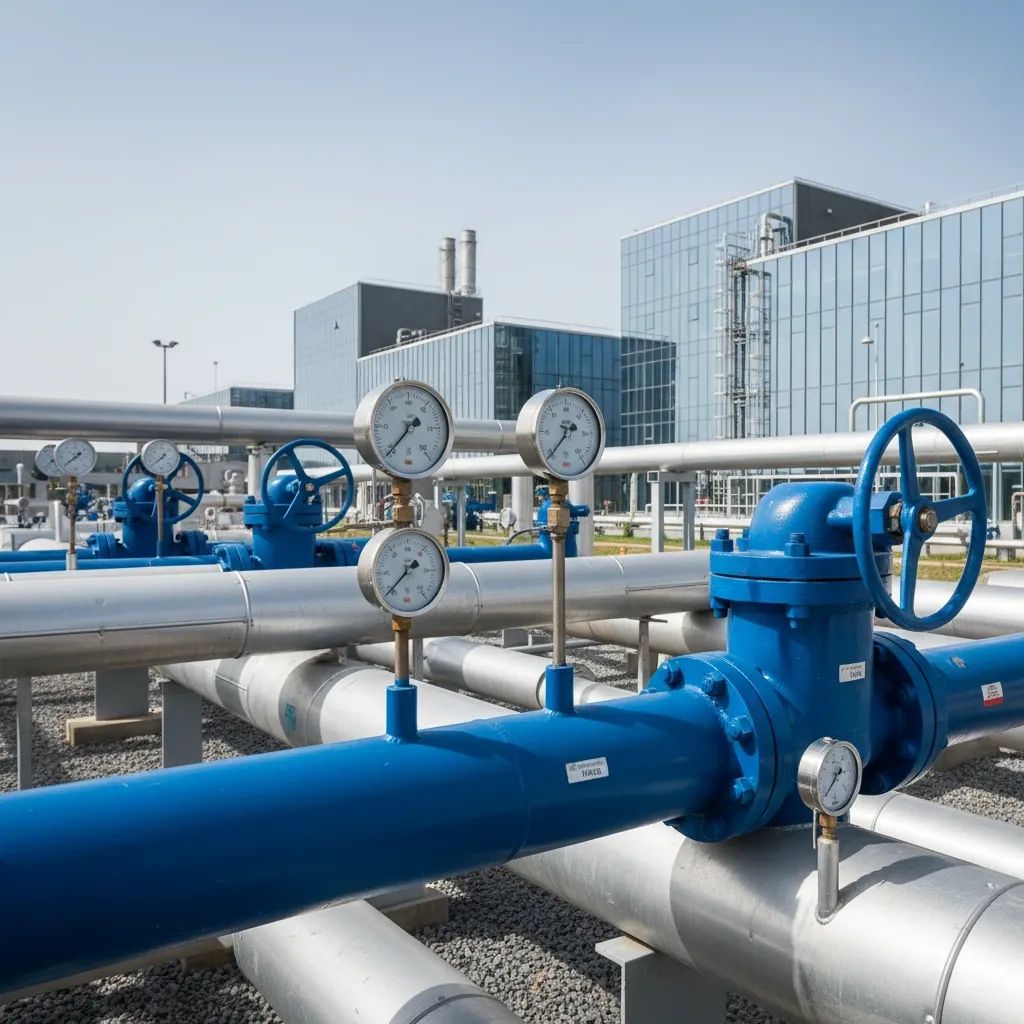
Italy's natural gas futures closed sharply higher on Tuesday, April 8, 2026, breaching the €52/MWh threshold amid escalating geopolitical tensions in the Middle East—a development that will directly impact household and business energy bills across the country in the coming weeks.
Why This Matters
• Price spike: Gas futures for May delivery on the Amsterdam TTF exchange surged 4.8% to €52.48/MWh, marking the highest close in weeks.
• Geopolitical trigger: The rally coincided with a U.S. ultimatum deadline to Iran, injecting fresh uncertainty into global energy markets.
• Consumer impact: Italy's 2.3M vulnerable households still on regulated tariffs could face further increases following March's 19.2% monthly jump.
Intraday Volatility Reflects Market Nerves
The TTF benchmark—Europe's primary reference for natural gas pricing—displayed extraordinary intraday swings on Tuesday. Contracts opened with a modest 0.9% gain to €50.60/MWh, then briefly reversed course to trade 0.9% lower at €49.60/MWh before rallying sharply in afternoon trading to close at €52.48/MWh.
This whipsaw pattern underscores the extreme fluidity market participants are navigating. Implied volatility in European gas futures has reached levels not seen since summer 2023, signaling that traders are bracing for continued price turbulence.
Geopolitical Flashpoint: Iran and the Hormuz Chokepoint
The immediate catalyst for Tuesday's rally was the expiration of a diplomatic deadline set by the Trump administration regarding Iran's nuclear program. While details of any immediate policy response remain unclear, the mere specter of escalation has rattled energy markets—and for good reason.
Iran controls the Strait of Hormuz, a narrow waterway through which approximately 20% of the world's liquefied natural gas (LNG) transits. Any disruption to this corridor—whether through military action, blockade, or heightened insurance costs for tanker traffic—has the potential to trigger immediate supply shocks. Earlier in March 2026, attacks on QatarEnergy facilities, which account for roughly one-fifth of global LNG supply, sent European gas prices soaring nearly 60% in just two days, briefly approaching €60/MWh.
China has publicly urged Iran to guarantee safe passage through the strait, reflecting broader international anxiety about energy security. For Italy, which imports approximately 5-8% of its gas from Middle Eastern sources via LNG, any prolonged disruption would necessitate scrambling for alternative Atlantic Basin cargoes—at higher prices.
What This Means for Italian Households and Businesses
Italy's 2.3M customers still enrolled in the regulated "vulnerability" tariff scheme are particularly exposed. In March 2026, these households saw gas prices jump 19.2% to €130.97 per cubic meter—directly attributable to Middle East tensions. Tuesday's price action suggests that April bills could see further upward pressure.
Consumer advocacy groups including Codacons and Unione Nazionale Consumatori have called for emergency government intervention, specifically urging a reduction in the value-added tax (VAT) on gas to 10% to cushion the blow. The government's "Decreto Bollette" has not yet been amended to include new relief measures, despite mounting public pressure.
The Italy Revenue Department did implement one modest relief measure: on March 10, 2026, regulator ARERA cut the CRVI transport tariff component by 15% for the October 2026–September 2027 period. However, this measure addresses only one slice of the total bill and does little to offset the surge in wholesale commodity costs.
For industrial users—particularly energy-intensive manufacturers in northern Italy—the spike in gas prices translates directly into higher input costs. Electricity wholesale prices track gas closely, meaning factories and commercial operations will face a double squeeze.
What You Can Do Now: Practical Steps for Italian Residents
For vulnerable households and businesses facing elevated gas costs, consider these immediate actions:
• Review Your Contract: Check whether your current contract allows switching to a fixed-rate option. While some fixed rates may be higher than current volatility suggests, they offer stability and protection against further spikes. Contact your gas supplier for available options.
• Energy Efficiency Investments: Weatherization improvements—sealing air leaks, upgrading insulation, and installing programmable thermostats—can reduce consumption by 10-15% and provide lasting savings regardless of price movements.
• Monitor Government Support: Keep track of announcements from ARERA and the Ministry of Environment regarding new relief measures. Eligible vulnerable households may qualify for additional subsidies.
• Demand-Side Flexibility: If you use gas for heating, consider gradual reductions in indoor temperatures (even 1-2°C saves 5-10% on bills) during mild weather periods.
Europe's LNG Scramble and Italy's Position
Europe is on track to import a record 185 billion cubic meters of LNG in 2026, with the bulk coming from the United States, according to ongoing market analysis. This surge reflects the continent's effort to eliminate Russian gas: the European Union has committed to zero Russian pipeline gas by November 2027 and zero Russian LNG purchases by year-end 2026.
Italy is a major beneficiary—and competitor—in this import race. The country's regasification terminals, including facilities at Panigaglia, Livorno, and offshore units at Rovigo and Piombino, are operating near capacity. Yet Italy is also competing with Germany, France, and Spain for the same Atlantic Basin cargoes, driving up spot prices.
According to Goldman Sachs research, European gas forecasts have been revised sharply upward, now projecting €55/MWh for April 2026 (up from earlier €36/MWh estimates) and a Q2 average of €45/MWh. The bank warns that if Middle East supply disruptions extend beyond April, prices could spike to €75–100/MWh—a scenario that would trigger emergency demand-reduction measures across the bloc.
Storage Levels and the Summer Refill Challenge
Europe exited the winter heating season with lower-than-expected storage levels, intensifying competition for summer refill volumes. Analysts estimate European storage will stand at approximately 32% full by end-April 2026 under a normal-temperature scenario. In a severe winter scenario, that figure could drop significantly lower, leaving the continent exposed heading into next winter.
Italy's storage operators are under pressure to secure volumes for the critical September–October refill window. Any sustained price elevation through the summer months will make that task more expensive, with costs ultimately passed through to consumers.
Broader Energy Policy Implications
Five European Union member states—Germany, Italy, Spain, Portugal, and Austria—have jointly proposed a windfall tax on energy company profits at the EU level. In correspondence dated April 4, 2026, finance ministers from these countries urged the European Commission to develop a "contributory instrument" to address market distortions and relieve pressure on households.
This marks a return to the crisis playbook of 2022, when governments across Europe imposed emergency levies and price caps to shield consumers from extreme energy inflation. Whether the Commission will act on this proposal—and how quickly—remains uncertain, but the political pressure is mounting as summer cooling season approaches.
Meanwhile, structural shifts are underway. Renewable capacity additions continue to accelerate, and coal-fired power plants—mothballed during the era of cheap gas—are being reactivated as a potentially cheaper alternative at current gas prices.
Analyst Outlook: More Volatility Ahead
Market sentiment remains predominantly bullish in the near term, though medium-term forecasts vary. According to Morgan Stanley analysis, U.S. Henry Hub prices (which influence global LNG arbitrage economics) are expected to exceed $5/MMBtu in 2026, well above consensus estimates of $3.50–4.00/MMBtu. This would keep European prices elevated as U.S. exporters prioritize domestic and Asian buyers.
Trading Economics forecasts the TTF benchmark will average €45–50/MWh through Q2 2026, with potential spikes to €60/MWh or higher if geopolitical risks materialize. The U.S. Energy Information Administration projects modest downward pressure on U.S. prices as domestic production reaches record highs, but acknowledges that export demand—particularly from Europe—will prevent a collapse.
For Italian residents and businesses, the takeaway is straightforward: energy costs will remain elevated and volatile through at least mid-2026. Locking in fixed-price contracts where available, investing in energy efficiency, and monitoring government relief measures will be essential strategies for managing exposure in the months ahead.
The Tuesday rally serves as a reminder that Europe's energy security remains fragile, tethered to geopolitical developments thousands of kilometers away—and that Italian consumers will continue to feel the effects in every monthly bill.


