
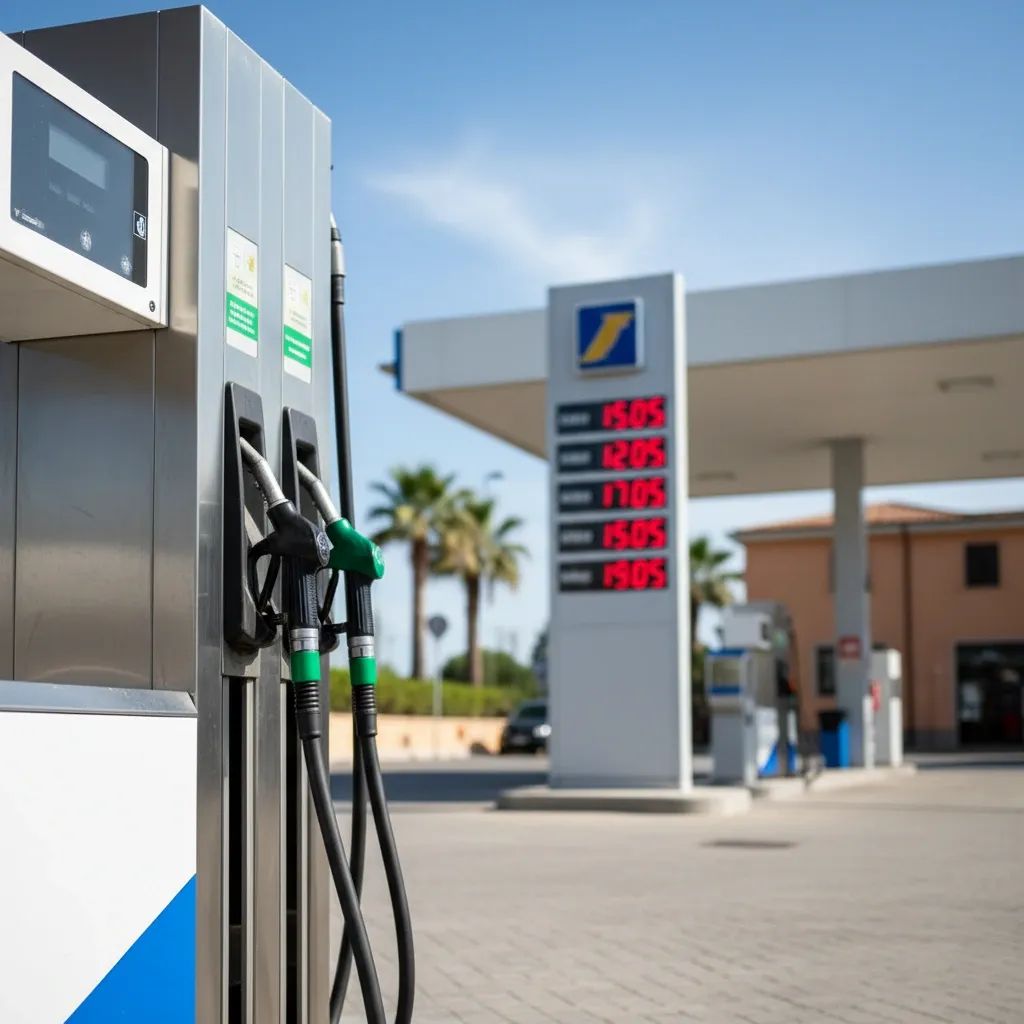
The Italy Ministry of Enterprises and Made in Italy has confirmed a fourteenth consecutive day of declining fuel prices at the pump, marking a rare streak of relief for motorists—but economists warn the reprieve may vanish as quickly as it arrived.
Why This Matters
• Gasoline now averages €1.737/liter at self-service pumps on national highways
• Diesel has dropped to €2.067/liter, continuing a sharper decline than its gasoline counterpart
• The streak represents the longest uninterrupted price drop in months
• Geopolitical volatility and crude oil swings could reverse the trend within weeks
The Numbers Behind the Slide
According to data released Thursday by the Price Observatory of the Ministry of Enterprises and Made in Italy, self-service gasoline on Italy's national road network hit €1.737 per liter, while diesel settled at €2.067. On the autostrada network, prices remain marginally higher: €1.781 for gasoline and €2.118 for diesel.
The decline represents the longest uninterrupted price drop in months, with diesel experiencing a more pronounced correction—roughly 5 cents per liter over the past fortnight—compared to gasoline's more modest 1.9-cent retreat. The ministry emphasized the reduction has been "progressive and consistent," a phrasing that underscores both the trajectory and the fragility of the movement.
Between April 9 and April 16, fuel costs began retreating after more than a month of continuous increases that had pushed pump prices to levels not seen since the acute energy crisis of 2024. The weekly average price for gasoline during the April 12–18 window stood at €1.76282 per liter, while diesel reached €2.11471—figures that still reflect elevated costs compared to late February benchmarks.
Why Prices Are Dropping Now
Three overlapping factors have driven the recent decline, though none offer a guarantee of durability.
Crude oil stabilization has played the lead role. After Brent crude surged past $112 per barrel in mid-March amid escalating tensions in the Middle East and disruptions to Iranian energy infrastructure, international markets saw a sharp correction. By early April, West Texas Intermediate (WTI) hovered near $107, then slid to roughly $87.50 by April 20, before climbing back to $92.55 on April 22—a volatile pattern that nonetheless provided temporary downward pressure on refined product costs.
Diesel-specific dynamics have also accelerated the drop for that fuel. A combination of reduced wholesale list prices and a more competitive urban distribution network has enabled diesel to fall faster than gasoline, even as it remains structurally more expensive. The differential reflects broader market adjustments in energy pricing across Europe.
What This Means for Residents
For households and businesses alike, the two-week price slide offers tangible—if temporary—financial breathing room. A driver filling a 50-liter tank of gasoline today pays roughly €86.85, compared to about €87 just days ago. Diesel drivers save slightly more in absolute terms, though their baseline costs remain higher.
Yet the savings pale in comparison to the cumulative burden imposed since late February. Diesel prices are still up 26% compared to pre-escalation levels, while gasoline has risen 7% over the same period. For a typical Italian household relying on a diesel vehicle, the annual fuel bill has swollen considerably, even accounting for the recent dip.
Transport-dependent sectors—logistics, agriculture, and long-haul freight—have absorbed disproportionate cost increases. Industry analysts from CGIA di Mestre project that Italian enterprises will face elevated fuel and energy expenses in 2026. Confesercenti warns that sustained high energy costs could impact Italy's economic growth, with household consumption particularly vulnerable to further price increases.
The Fragile Nature of the Relief
Industry observers and consumer advocacy groups caution that the current price trend is neither guaranteed nor structurally grounded. The Strait of Hormuz, through which a significant share of global oil exports flow, remains a flashpoint. Any escalation in regional hostilities could send crude prices spiking back above $100 per barrel within days, reversing weeks of pump price declines in a matter of hours—a phenomenon economists call the "rocket and feather effect," where prices rise swiftly but fall slowly.
Currency dynamics add another layer of vulnerability. Crude oil is priced in US dollars, meaning a weaker euro amplifies import costs for Italian refiners. Recent euro-dollar exchange rate fluctuations have contributed to pricing volatility, and further depreciation could offset any relief from lower barrel prices.
Broader Economic Implications
The fuel price trajectory carries implications far beyond the pump. Elevated energy costs feed into broader inflation, driving up the price of transported goods—from groceries to construction materials. For families already grappling with rising expenses for utilities and food, fuel price volatility erodes disposable income and constrains discretionary spending.
For businesses, particularly small and medium enterprises that form the backbone of the Italian economy, energy cost volatility complicates planning and squeezes margins. Industry leaders have warned that sustained energy price pressure could undermine competitiveness.
Looking Ahead
The next two weeks will prove decisive. If crude oil markets stabilize and geopolitical tensions ease, the downward trend at Italian pumps could continue. Conversely, renewed conflict in the Persian Gulf or unexpected supply disruptions could send prices surging again, compounding the economic strain on households and enterprises.
Goldman Sachs currently forecasts Brent crude averaging around $85 per barrel for 2026, with upside risk to $110 if supply disruptions persist. Other analysts project a weaker second half of the year, citing potential oversupply, but acknowledge that geopolitical wildcards render such forecasts highly uncertain.
For now, Italian drivers are witnessing a welcome—if precarious—decline in fuel costs. Whether this marks the beginning of sustained relief or merely a pause in a longer upward trajectory depends on forces largely beyond national borders: oil fields in the Middle East, currency desks in Frankfurt, and global supply dynamics that remain fluid and unpredictable.


