
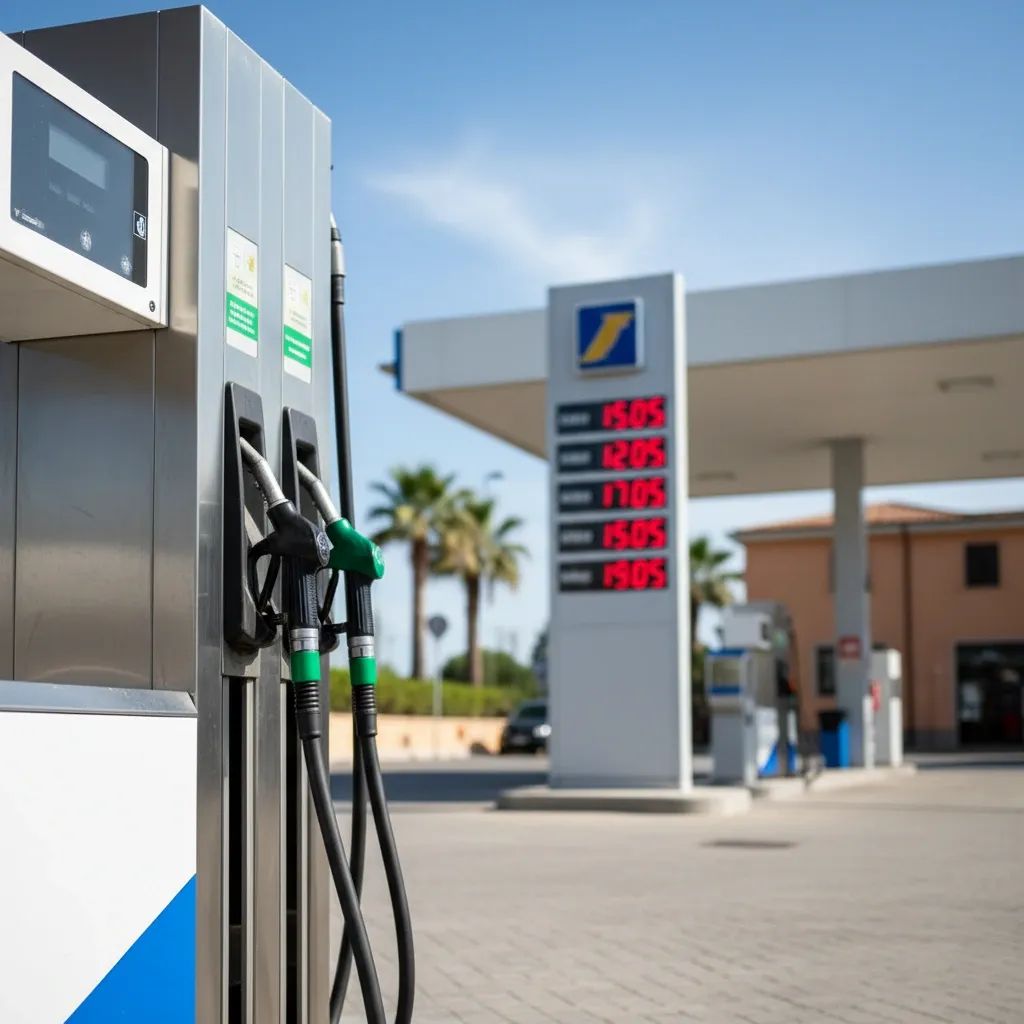
The Italy Ministry of Enterprises and Made in Italy has recorded a modest decline in fuel prices as of Sunday, August 9, 2026, with self-service diesel settling at €2.077 per liter on national roads—a small relief for motorists navigating one of Europe's most expensive markets for petrol and diesel. The ministry's fuel price observatory, which tracks daily averages across the country, shows gasoline at €1.986 per liter in self-service mode as of this date.
Why This Matters
• Weekend savings: Diesel dropped 7 cents from Thursday to Sunday, while gasoline fell 4 cents during the same period on national roads.
• Highway premium: Drivers on Italy's autostrade are still paying €2.152 per liter for diesel and €2.057 for gasoline—roughly 7-8 cents more than roadside stations.
• Tax burden: Over 55% of pump prices consist of taxes and VAT, keeping Italy among the top 5 most expensive fuel markets in Europe.
The Weekly Trajectory
Between Thursday, August 6 and Sunday, August 9, national road self-service prices traced a steady downward path. On Thursday, gasoline stood at €1.994 per liter—a figure that dropped incrementally to €1.990 by Friday and stabilized at €1.986 by Sunday. Diesel followed a similar pattern, declining from €2.092 on Thursday to €2.084 on Friday and reaching €2.077 by Sunday. The decline, while modest in absolute terms, represents a rare reversal in a summer marked by relentless upward pressure on fuel costs.
Highway prices have also softened, though they remain significantly elevated. Gasoline on the autostrada network fell from €2.072 on Thursday to €2.057 on Sunday, while diesel dropped from €2.166 to €2.152. The premium charged at highway service areas reflects higher operational overheads, but the gap has drawn criticism from consumer advocacy groups who argue that motorists are being penalized for convenience during peak travel season.
What's Driving the Decline
The immediate catalyst for the price drop is a sharp retreat in international crude oil markets. Brent crude fell roughly 8.8% during the first week of August, responding to a mix of demand concerns and shifting geopolitical risk assessments. Yet the translation of that crude decline into pump savings has been sluggish. The Codacons consumer protection group has criticized the gap between wholesale and retail movements, pointing out that diesel prices at Italian pumps fell just 0.04% early in the week while gasoline declined 0.45%—figures that pale against the crude correction.
A second factor cushioning diesel prices is the government's extension of the excise tax cut on diesel fuel, maintained through August 25, 2026. The reduction, worth 17 cents per liter including VAT, was originally introduced to shield transport operators and logistics firms from runaway costs. However, analysts note that the benefit has been partially absorbed by price increases elsewhere in the supply chain, limiting the net relief for consumers. Notably, gasoline was excluded from the excise relief, reflecting a policy focus on commercial and freight needs.
Impact on Residents and Travelers
For Italian households, the cumulative burden is staggering. The CGIA research office estimates that fuel costs in 2026 will impose an additional €13.6 billion on consumers compared to 2025—a 20.4% increase translating to roughly €1.1 billion per month. For a typical summer road trip covering 2,000 kilometers, gasoline now costs around €250, up 10% year-on-year, while diesel drivers face €220, a 20% surge compared to last summer. The price escalation has been particularly pronounced for diesel, which historically traded below gasoline but now consistently commands a premium following changes to the excise structure earlier this year.
The divergence between national road and autostrada pricing adds another layer of expense for travelers. The 7-8 cent surcharge on highways may seem marginal, but for commercial drivers and long-haul commuters, it compounds into significant monthly overheads. Transport associations have pressed for regulatory review of highway fuel pricing, arguing that the premium is disproportionate given the volume of traffic and the monopolistic nature of autostrada concessions.
Italy's European Ranking
Italy's fuel prices remain firmly in the upper tier of the European league table. As of early August, Italian gasoline at €2.005 per liter ranked as the 4th most expensive among monitored EU markets, while diesel at €2.101 held the 5th spot, according to the Fuelo.eu price index. By comparison, Spanish drivers enjoy gasoline at €1.714 and diesel at €1.833—savings of nearly 30 cents per liter. German motorists face gasoline at €2.109 and diesel at €2.185, while the Netherlands holds the unenviable title of Europe's priciest market, with both fuels at €2.376 per liter.
France presents a mixed picture: gasoline at €2.024 is slightly above Italy's average, but diesel at €2.216 is significantly pricier, reflecting different fiscal priorities. Austria and Switzerland also sit near the top, with Swiss diesel exceeding €2.321. The common thread linking high-price jurisdictions is taxation: Italy's fuel levy structure—comprising excise duties, regional surcharges, and 22% VAT—accounts for over half the pump price, a proportion that critics argue leaves little room for market competition to lower costs.
What This Means for Residents
For anyone living in Italy, the practical takeaway is straightforward: fill up on national roads, not highways, and monitor daily price shifts through the ministry's observatory or third-party apps. The ongoing debate over excise cuts and market transparency suggests that fuel policy will remain contentious through the end of summer, particularly as the August 25 diesel relief deadline approaches.
Consumer groups have called for the government to extend or deepen the excise reduction, and to consider broadening it to gasoline. The Codacons has also demanded that windfall profits reported by oil and energy companies be redirected to subsidize pump prices, a proposal that has gained traction among opposition lawmakers but faces resistance from the Treasury, which views fuel excise revenue as critical to budget stability.
The broader inflationary pressure from fuel costs ripples through the economy, affecting everything from grocery delivery fees to public transport fares. For expats and new residents, understanding Italy's fuel pricing dynamics—and the extent to which taxes dominate the final bill—offers a useful lens into the country's fiscal structure and the trade-offs inherent in maintaining extensive social programs alongside high consumption taxes.
Looking Ahead
Forecasters caution that the current dip may be short-lived. Geopolitical tensions around the Strait of Hormuz continue to inject volatility into oil markets, and any disruption to supply routes could reverse recent gains. Meanwhile, the expiration of the diesel excise cut on August 25 looms as a potential inflection point. Without an extension, diesel prices could jump sharply, intensifying pressure on logistics firms and rural residents who depend on diesel vehicles.
The ministry's daily data releases will remain the most reliable barometer for short-term movements. For now, the modest weekend decline offers a brief respite in what has been an expensive summer at the pump—but residents would be wise to manage expectations and budget conservatively for the weeks ahead.


