
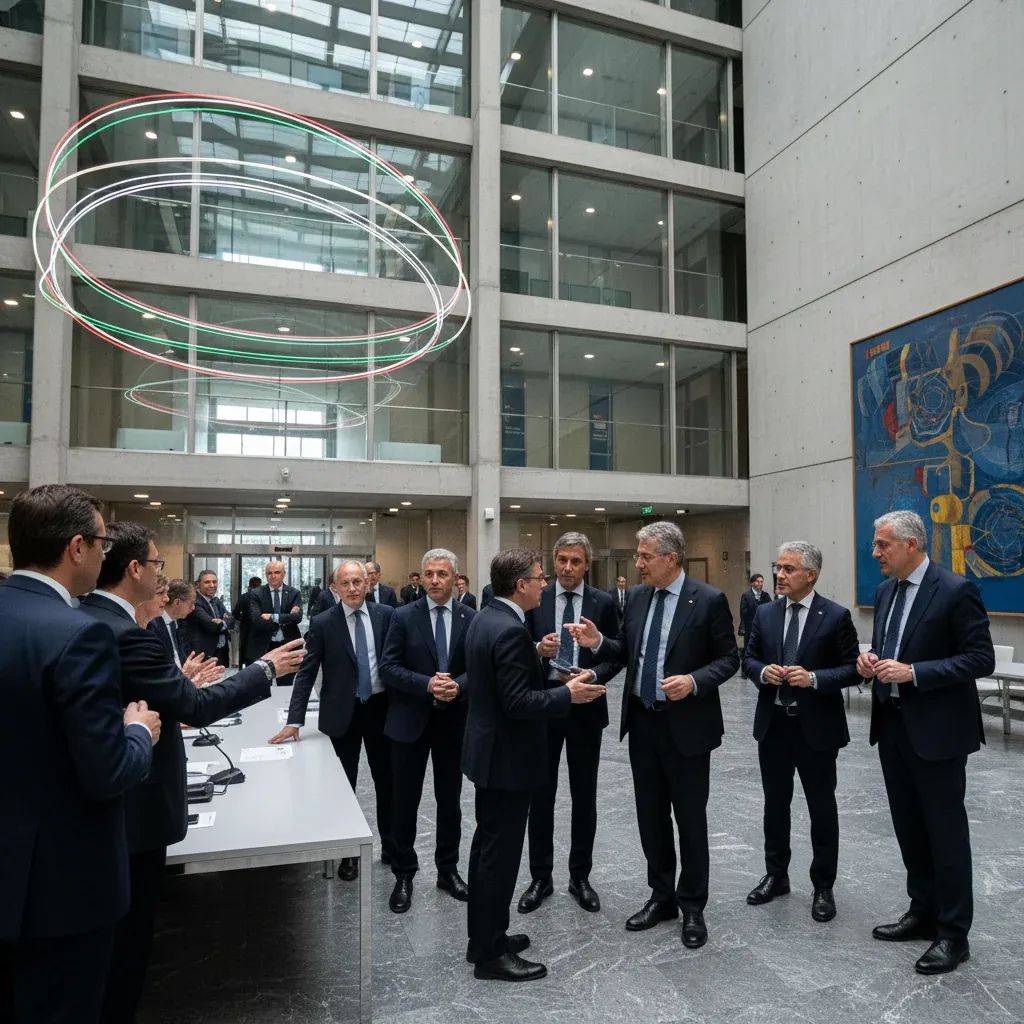
Italy's Serie A clubs will convene Monday to decide which candidate—if any—they will back in the race to lead the Italian Football Federation (FIGC), setting the stage for a pivotal election on June 22, 2026 that could reshape the nation's football governance at a critical juncture for the sport. With the national team's latest failures still stinging and professional clubs facing substantial financial pressures, the vote carries implications far beyond the federation's Rome headquarters—it will determine whether Italian football can secure the fiscal relief, bureaucratic streamlining, and political leverage it desperately needs to compete on the European stage.
Why This Matters:
• Your club's finances: The next FIGC president will negotiate with Italy's government on tax breaks, stadium red tape, and broadcast revenue—issues that directly affect ticket prices and squad investment.
• National team rebuilding: After June 22, the new president will appoint a permanent national team coach, ending Silvio Baldini's interim stint and potentially reshaping Italy's tactical approach.
• Election math: Serie A holds only 18% of the vote; the Lega Nazionale Dilettanti (amateur leagues) controls 34%, making coalition-building essential.
De Laurentiis: No Ex-Players, Send a Dealmaker
Napoli president Aurelio De Laurentiis broke the silence surrounding the federation race this week, issuing a blunt directive that captures the frustration of Italy's top-flight executives: the FIGC does not need another former footballer at the helm—it needs a political operator capable of extracting concessions from Rome.
"We don't need an ex-player," De Laurentiis told ANSA. "We need someone who can speak politically with the government to get things we've never had. We need help solving fiscal problems, bureaucratic problems. We need people with credibility who can talk to ministers and get results."
His comment appeared aimed at squelching speculation around legendary names like Paolo Maldini, Demetrio Albertini, or Alessandro Del Piero, all of whom have been floated as possible candidates. De Laurentiis has long championed radical structural reforms—he has spent years advocating for a 16-team Serie A (down from the current 20) to reduce fixture congestion and free up two months annually for dedicated national team training.
He also reiterated a persistent grievance: the absence of insurance coverage when club players sustain injuries on international duty. "Why isn't there insurance if a player gets hurt playing for the national team?" he asked. "Why don't UEFA and FIFA provide it?"
Malagò Leads the Pack, But the Math Is Tight
Giovanni Malagò, the former president of the Italian Olympic Committee (CONI) and current head of the Milano-Cortina 2026 Winter Olympics Foundation, has emerged as the frontrunner. According to multiple reports, Malagò enjoys the backing of at least 16 of Serie A's 20 clubs, a commanding majority within the league. Inter CEO Giuseppe Marotta has been actively building consensus, while De Laurentiis himself is understood to support the bid.
Monday's assembly will clarify whether Serie A can unite behind a single name or whether internal fractures—led by Lazio president Claudio Lotito, who heads a small but vocal opposition bloc—will dilute the league's influence. Even with near-unanimity, Serie A's 18% vote share pales beside the amateur leagues' 34%, meaning Malagò must court Giancarlo Abete, the Lega Nazionale Dilettanti president and himself a former FIGC chief (2007–2014), who has insisted that candidates align on policy programs before endorsements are issued.
Other credible contenders include Matteo Marani, current president of Lega Pro (Italy's third tier). The official candidate deadline is May 13, and the June 22 election will be decided by an assembly of 274 delegates wielding a weighted total of 516 votes.
What This Means for Residents
For those living in Italy—whether lifelong fans, expatriates, or investors eyeing the country's football economy—the FIGC election matters because it will determine the federation's ability to negotiate with Rome's ministries on three critical fronts:
Stadium construction and ownership: Outdated public infrastructure and suffocating bureaucracy have left Italy outside Europe's top ten nations for new or renovated stadiums since 2007. The next president must unlock pathways for private investment and fast-track permits to modernize Italian venues.
Tax incentives and fiscal sustainability: Italian clubs face substantial annual financial losses. Proposed reforms include restoring the "Decreto Crescita" tax break for foreign players (abolished in late 2023), introducing tax credits for youth academy investment, and funneling a share of sports betting revenue (currently worth hundreds of millions) back into football infrastructure and anti-addiction programs. Parliament's Culture Commission approved a reform blueprint in March 2025, but it has yet to produce concrete legislation.
Youth development and roster rules: Serie A fields one of Europe's oldest squads on average and gives minimal minutes to Italian players under 23. The federation has floated incentives—financial and regulatory—to encourage clubs to promote homegrown talent, but implementation requires government cooperation on payroll tax relief and immigration quotas for non-EU players.
These are not abstract policy debates. They translate directly into the quality of stadiums you visit, the ticket prices you pay, the competitiveness of Italian clubs in Champions League and Europa League, and the strength of the Azzurri at World Cups and Euros.
National Team Coach: Building the Next Era
While the federation race dominates headlines, the identity of Italy's next permanent coach remains to be determined. Silvio Baldini will lead the squad through June friendlies as interim manager, but after the June 22 election, the new FIGC president must appoint a long-term successor to lead the national team forward.
Antonio Conte is widely considered a top candidate. The former Juventus, Chelsea, and Inter manager—who coached Italy to the Euro 2016 quarterfinals—has signaled openness to a return. De Laurentiis confirmed publicly that he would release Conte from any club commitment if the federation made a serious offer.
Roberto Mancini, who led Italy to Euro 2020 glory before departing for Saudi Arabia in August 2023, remains a sentimental favorite among fans and a proven winner. His name resurfaced immediately after the federation's leadership transition.
Daniele De Rossi, the former Roma midfielder and current Genoa manager, is also being considered. His contract at Genoa expires June 30, creating a convenient window for a switch to the national setup. Other names circulating include Claudio Ranieri and Gian Piero Gasperini, both veterans of Italian club football with strong European track records.
The Fiscal and Bureaucratic Challenge
De Laurentiis's call for a "political" leader reflects a broader recognition that Italian football faces significant institutional challenges alongside sporting pressures. The structural obstacles are substantial:
• Agent commissions topped €300M in 2025, draining club budgets.
• Broadcast rights revenue lags far behind the English Premier League and even Spain's La Liga.
• Serie A fielded non-Italian players for 67.9% of total minutes last season, the highest proportion among Europe's top five leagues.
• Bureaucratic delays in player transfers—driven by "compensation rights" and mandatory bank guarantees unique to Italy—make deals slower and costlier than in rival markets.
The FIGC under Gravina proposed a suite of remedies: lifting the 2018 "Decreto Dignità" ban on gambling sponsorships (which clubs argue is ineffective and costs them tens of millions annually), earmarking betting tax revenue for stadium upgrades and youth programs, and creating fast-track permitting for privately funded venues. But without sustained government buy-in, these proposals languish.
Monday's Serie A assembly and the June 22 election will reveal whether Italian football's stakeholders can finally align behind a single candidate with the clout to turn these ideas into law—or whether the fragmentation and infighting that have plagued the sport will persist, leaving clubs and fans to navigate another cycle of challenges.


