
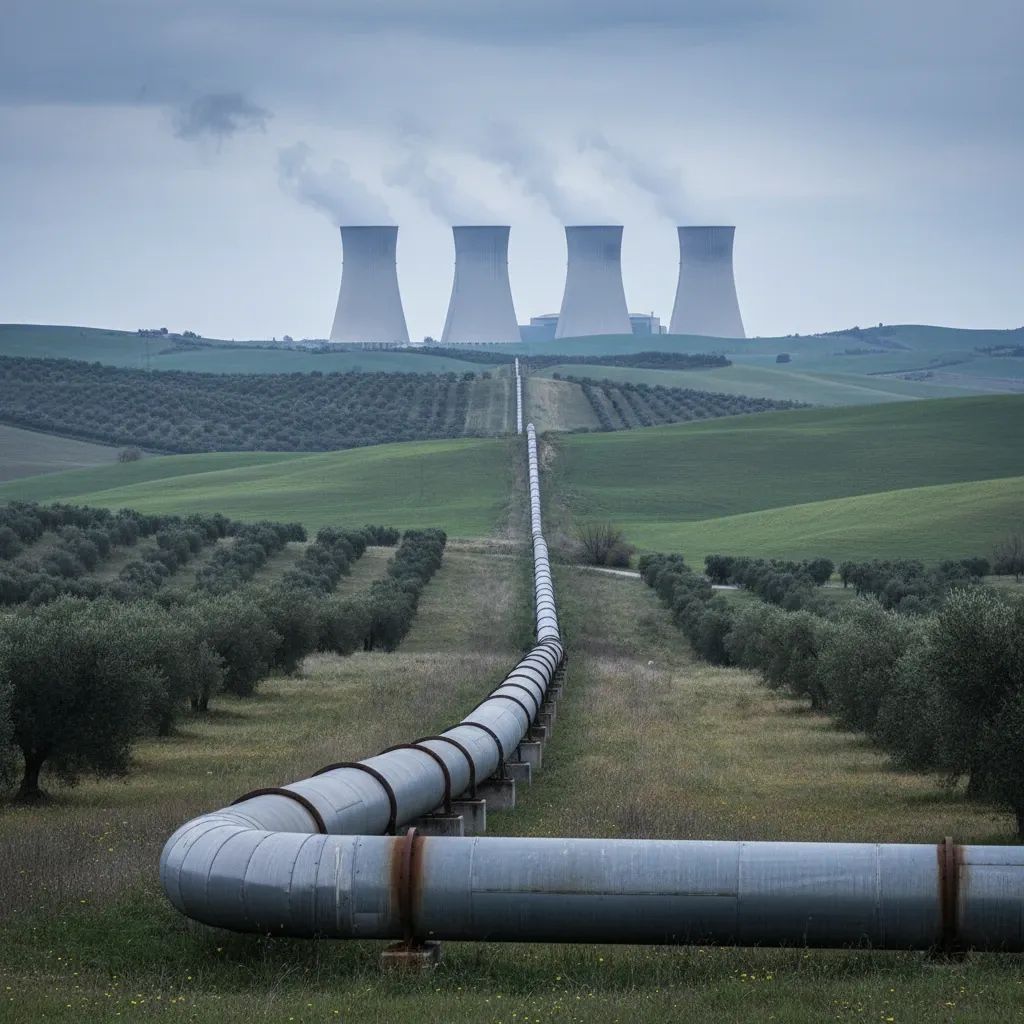
Italy's Energy Security Strengthens Despite Rising Gas Prices
Italy's energy position remains relatively stable as natural gas prices climb due to geopolitical tensions, with the country's storage reserves now at 78.22% of capacity — well ahead of many European neighbors.
Current Energy Landscape
Natural gas prices on Amsterdam's TTF exchange (Europe's benchmark) are trading near €60.74/MWh, up approximately 9% this week. The price increases are driven by U.S. sanctions on Iran and concerns over potential disruptions to the Strait of Hormuz, through which roughly 20% of global LNG exports pass.
Negotiations between Iran and Oman regarding safe maritime passage are ongoing, though diplomatic sources indicate limited tangible progress at present.
How Italy Compares to Europe
Italy's Storage Advantage:
• Italy: 78.22% capacity (159.1 TWh) — strong position for winter
• Germany: 49% capacity (120.78 TWh) — significantly lower reserves
• EU Average: 59.92% capacity — indicating broader European vulnerability
Italy's diversified gas infrastructure, including multiple LNG regasification terminals along its coasts, allows the country to receive supplies from North Africa (Algeria), Qatar, the United States, and other global sources. This reduces dependence on any single supplier and provides greater resilience than pipeline-dependent neighbors.
What Rising Prices Mean for Italian Residents
Higher wholesale gas prices will gradually feed into household utility bills over the coming months. The Italian Regulatory Authority for Energy (ARERA) adjusts protected-market rates quarterly based on TTF prices, meaning recent price increases will likely affect bills in the October-December period.
Italy's robust storage position provides a buffer against supply shocks and price spikes during winter months, protecting residents and businesses from the kind of energy crisis experienced by other European nations during previous disruptions. This infrastructure advantage positions Italy better than many European peers to manage energy costs through the winter heating season.
Broader European Context
The contrast between Italy's preparedness and Germany's lower storage levels reflects Europe's fragmented energy infrastructure. While countries with coastal access and LNG terminals fare better, the geopolitical tensions in the Middle East create uncertainty for all European energy markets. The disruptions to global LNG flows could keep prices elevated and volatile through winter.


