
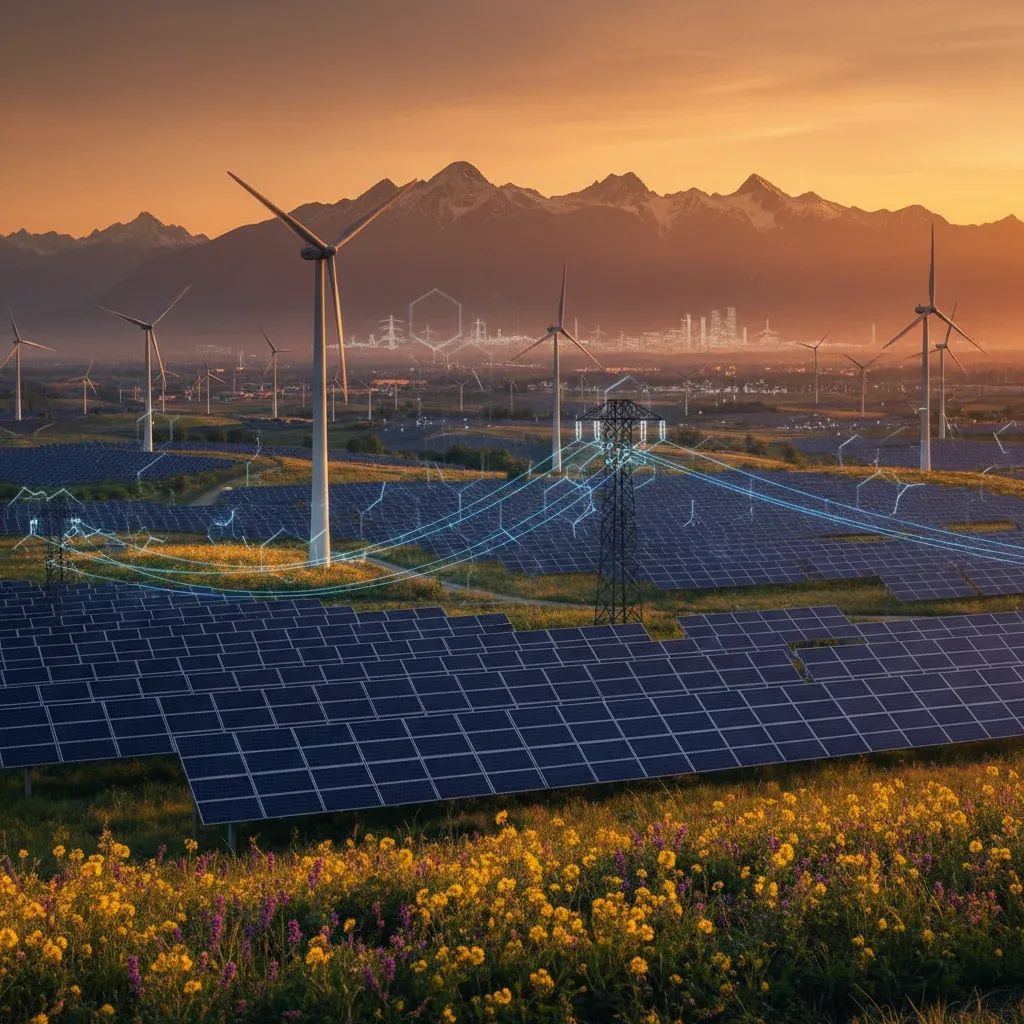
Italy's electricity grid absorbed a historic surge in demand this July, with consumption reaching 32.5 TWh—an 8.3% jump from the same month last year and the highest monthly figure ever recorded in the country. The spike, driven by extreme heat and a recovering industrial sector, pushed the system to the brink in some regions, triggering localized blackouts and exposing vulnerabilities in aging infrastructure.
Why This Matters:
• Peak demand hit 58 GW on July 15, a 4.5% increase over last year's summer high, straining grid capacity in several areas.
• Localized blackouts struck Sardinia, Naples, Turin, and parts of the Milan metro area, highlighting weak spots in distribution networks.
• Solar output surged 20.6% to 6.7 TWh, setting a single-day record of 167 GWh on July 10, yet overall renewable share dipped due to declining wind and hydro generation.
• Industrial consumption climbed 2.1% in July and 4% year-to-date, signaling a sustained economic rebound.
What Drove the Record Consumption
Italy's grid operator Terna attributed the unprecedented demand to two converging forces: punishing temperatures and a rebound in heavy industry. July 2026 averaged 1.2°C hotter than the same month in 2025 and nearly 2°C above the past decade's norm, compelling households and businesses to crank up air conditioning around the clock. The 15th saw the annual peak load of 58 GW, underscoring how climate pressure now routinely tests the limits of national infrastructure.
Beyond weather, the IMCEI index—which tracks roughly 1,000 energy-intensive manufacturers—rose 2.1% in July and 4% across the first seven months of 2026 compared to the prior year. Even after adjusting for temperature and calendar effects, overall demand jumped 5.1%, and the monthly trend improved 1.6% on a rolling basis, marking three consecutive months of growth. Analysts view the upturn as a sign that Italian industry has finally climbed back to pre-2022 energy-crisis levels.
Solar Boom, Renewable Slip
Italy's solar sector delivered a standout performance, with July production hitting 6.7 TWh—a 20.6% gain over July 2025—and capping off a seven-month tally of 26.3 TWh, up 19.2% year-on-year. By the end of July, total installed renewable capacity stood at 87.7 GW, of which 47.3 GW came from photovoltaic arrays. The sector added 3.7 GW of new solar capacity in the first seven months of 2026, an increase of 3,791 MW compared to the same window in 2025.
July 10 witnessed a single-day record of 167 GWh from solar panels, the highest 24-hour output ever recorded in Italy. Yet despite these milestones, renewables' overall share of the national electricity mix slipped to 41.5% from 44.5% a year earlier. The culprit: sharp declines in wind output (down 20.3%), hydroelectric generation (down 14.9%), geothermal (down 3.6%), and biomass (down 2%). Scarce rainfall and inconsistent wind patterns hobbled those sources precisely when total demand was soaring, forcing greater reliance on thermal plants and imports.
Grid Stress and Localized Failures
ENTSO-E, the pan-European network of transmission system operators, issued its Summer Outlook 2026 describing the continental grid as generally resilient. For Italy, however, the report flagged potential trouble scenarios combining intense heat waves, reduced import capacity, and unplanned outages at fossil-fuel plants. Those warnings proved prescient.
Sardinia bore the brunt, experiencing widespread blackouts that left numerous towns without power for hours at a stretch. On the mainland, outages hit Naples, Turin, Sesto San Giovanni, Pavia, Pescara, and the Adriatic resort of Jesolo. Grid engineers point to outdated local distribution networks, particularly across the South, as a recurring weak link. The challenge is not simply generating enough megawatts but maintaining minute-by-minute balance among production, consumption, storage, and imports—a task made trickier by the intermittent nature of solar and wind.
Domestic production covered 84.4% of July's demand, with the remaining 15.6% arriving through net imports from neighboring countries. Natural gas remained the backbone of thermal flexibility, accounting for 86% of thermoelectric output in June and roughly 36% of overall national supply. Terna concentrated scheduled maintenance on gas turbines in June and September–October, deliberately lightening the maintenance load in July and August to keep every available megawatt online during peak-heat windows.
What This Means for Residents
For anyone living in Italy, July's record is a preview of summers to come. Electricity bills will reflect higher consumption, especially for households leaning heavily on air conditioning. Some utilities have already signaled that capacity charges and balancing costs could rise if peak-demand patterns persist, though the government has yet to announce formal rate adjustments for the remainder of 2026.
Reliability concerns loom larger in the South and on the islands, where aging cables and substations struggle to handle sudden surges. Residents in blackout-prone areas may want to invest in backup power solutions—battery packs or small generators—particularly if they rely on medical equipment or remote-work setups. Terna has pledged to upgrade monitoring systems and deploy additional battery-storage units, but infrastructure overhauls take years.
On the positive side, Italy's accelerating solar build-out suggests cleaner, cheaper midday power in the medium term. Homeowners who installed rooftop panels are already benefiting from reduced grid dependence and, in some cases, feed-in tariff revenues. The government continues to offer tax incentives for residential solar and storage, making now an opportune moment to explore self-generation options.
Looking Ahead
August brought its own stress test: a partial solar eclipse on the 12th temporarily curtailed photovoltaic output across the peninsula. Grid operators had modeled the event in advance and did not expect it to destabilize the system, but the episode underscored how rapid growth in solar capacity introduces new variables—both boons and risks—into daily operations.
Italy's trajectory is clear: hotter summers, higher peak loads, and a power mix in flux. The 41.5% renewable share in July is impressive by historical standards but still lags the ambitions outlined in national climate plans. Wind and hydro need policy support—whether through streamlined permitting for turbines or reservoir-management reforms—to complement solar's ascent. Meanwhile, gas will remain indispensable for balancing, even as environmental advocates push for faster coal phase-outs.
For now, the message from Terna's data is straightforward: Italy's grid handled a record month without catastrophic failure, but localized outages and reliance on imports reveal fragility. Residents should prepare for continued volatility, both in supply reliability and in the energy transition itself.


