
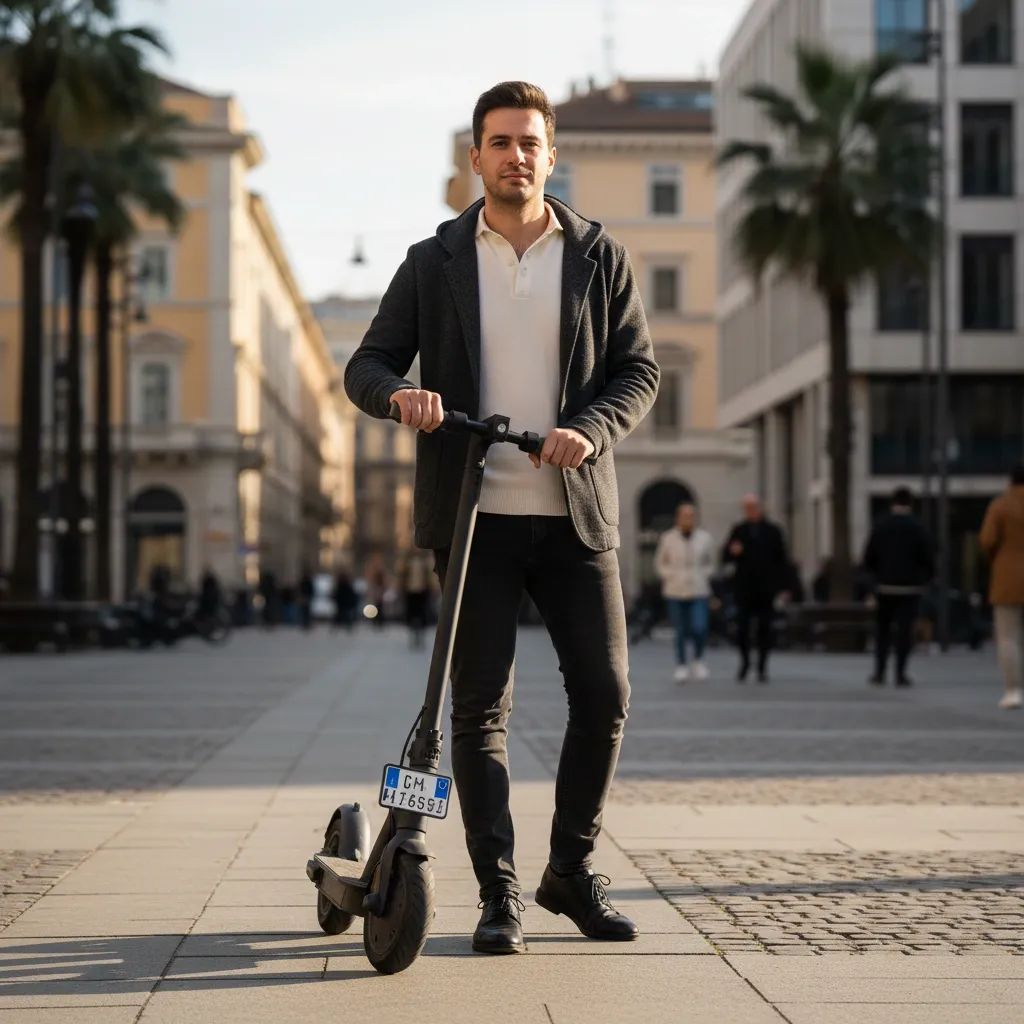
Italy's state printing authority has begun mass-producing the mandatory identification stickers for electric scooters, marking the start of a sweeping regulatory overhaul that will reshape how micromobility is tracked and enforced across the country's increasingly congested cities. The system arrives with real teeth: riders without the sticker or insurance face fines of €100 to €400 and vehicle confiscation.
Why This Matters
• Hard deadline is May 16, 2026 — register your scooter now via the Portale dell'Automobilista to avoid penalties and equipment seizure
• Total cost is around €33 including the sticker, stamp duty, and motorization rights; mandatory civil liability insurance also takes effect May 16, 2026 with additional annual premiums
• The sticker is non-transferable — tied to your tax code, not the scooter itself, so selling requires cancellation and the buyer needs a new one
• Digital-only process — no walk-in registration; you must submit requests through the government portal and pick up your sticker at a motorization office
A Security Sticker Masquerading as Simple Paperwork
What most scooter owners will describe as a "sticker" is actually a sophisticated piece of state security infrastructure. The Istituto Poligrafico e Zecca dello Stato (IPZS), the same institution that prints Italy's currency and identity documents, produces these adhesive tags using anti-counterfeiting protocols typically reserved for high-security documents. Watching Transport Minister Matteo Salvini affix the first sticker at the IPZS facility in Puglia last month underscored the government's determination to treat e-scooter regulation with the rigor normally applied to motor vehicles.
The sticker measures 50 by 60 millimeters, printed on white background with black lettering. Its design incorporates a six-character code (three letters, three numbers, excluding vowels and ones to prevent confusion), the emblem of the Italian Republic, anti-tear engravings, and multiple counterfeiting protections. Most critically, the adhesive is engineered to self-destruct if someone tries to peel it off—a safeguard against theft or unauthorized transfer between owners.
Michele Sciscioli, the IPZS chief executive, positioned the agency's contribution as proof of institutional commitment to public safety infrastructure. The comment, though bureaucratic, points to something genuine: the Italian state is betting that security and accountability in micromobility can reduce accidents and theft while improving traffic enforcement in chaotic urban environments.
The Online Bureaucracy: How Residents Actually Get a Sticker
Scooter owners must navigate a entirely digital process, which for those unfamiliar with Italy's government portals can feel like friction itself. The Portale dell'Automobilista, operated by the Ministry of Infrastructure and Transport, went live on March 18 and is the only channel for requests. Access requires either SPID authentication (Level 2 or higher) or a digital identity card (CIE).
The workflow is straightforward but sequential. Owners complete an online form, pay approximately €8.66 in base fees plus stamp tax via PagoPA, then receive an email confirmation. They subsequently book an appointment through the portal's Gestione Pratiche Online section and visit a Motorizzazione Civile office or an authorized automotive consulting studio to collect the physical sticker. For those with multiple scooters—families, small rental operators—the platform allows cumulative applications, though each scooter requires its own registration.
The sticker must be affixed vertically and visibly on either the rear fender or the front steering column. It remains bound to the owner's codice fiscale (tax identification number), not to the scooter. If an owner sells their e-scooter, they must request cancellation of the old sticker; the buyer then registers anew. This design prevents the kind of informal secondhand transfers that have plagued scooter markets in cities like Milan and Rome.
Where the Real Pressure Point Lies: Insurance Compliance
The sticker is only half the regulatory story. The state has tied it to mandatory civil liability insurance, which takes effect the same day as the sticker requirement. Both the identification sticker and liability insurance coverage become compulsory on May 16, 2026 — residents must secure both by this date to comply with the law.
The Ministry's telematic system, operated from the Data Processing Center of the General Directorate for Motor Vehicles, will be integrated with ANIA, the national association of insurance companies. This connection allows police to instantly verify during a roadside check whether a scooter carries both valid registration and active insurance coverage—a digital cross-check that doesn't require fancy automated plate readers.
The system also connects to ANPR, the national resident population registry, to verify applicants' identities, and InfoCamere for checking business registrations. This interoperability means the infrastructure for enforcement exists before most riders even know enforcement can happen.
Practical Reality: What Compliance Actually Looks Like
For typical resident using an e-scooter casually, the process is manageable. Log in via SPID or digital ID, fill the form, pay online, book an appointment, collect the sticker, apply it. Most people can complete this in under 30 minutes if they're comfortable with government web portals. For those uncomfortable with digital administration, automotive consulting studios can handle the task—though they'll charge service fees on top of the standard €33.
For users of shared scooter services—Lime, Dott, Bird, and others operating in Italian cities—the burden falls entirely on the operator. Fleet companies have already begun integrating stickers into their equipment inventory and managing central insurance coverage. This simplification is intentional: casual users simply need to verify the rental scooter displays a valid sticker before starting their ride.
The real friction will emerge in enforcement. While helmet requirements have been sporadically enforced since December 2024 (mandatory for all riders, regardless of age), the sticker system creates a new vector for traffic authority engagement. A rider stopped by police without a visible sticker or without valid insurance now triggers a documented violation with clear fine minimums and maximums. This institutional clarity is new in Italy's regulation of micromobility.
Why This Moment Signals Broader Shifts in Urban Governance
Italy's approach to e-scooter regulation ranks among Europe's strictest. Many neighboring countries treat registration as optional or apply it only to commercial fleets. Italy is moving in the opposite direction—toward full individual accountability and mandatory third-party insurance. This reflects a policy intuition that structured, traceable mobility prevents accidents and theft better than hands-off approaches.
That said, critics raise legitimate concerns. The added €33 registration cost plus mandatory insurance premiums may price out lower-income and younger residents who use scooters as genuinely affordable transit. The administrative steps might suppress adoption of what are otherwise zero-emission alternatives to cars and buses. Supporters counter that accountability protects pedestrians and cyclists who share urban space with scooters—and that the economic cost of injuries and litigation dwarfs the cost of registration.
The Puglia facility visit, where Salvini participated in the production of historic license plate number 4,000 and showcased 30 restored classic vehicles, also highlighted IPZS's dual mandate: regulating contemporary mobility while preserving automotive heritage. It's an odd combination, but it signals institutional continuity and competence across a shifting regulatory landscape.
The Enforcement Reality Starting May 16
Riders caught without the sticker or insurance will face fines starting at €100 and reaching €400, with the possibility of immediate vehicle impoundment. Unlike automated systems that catch traffic violations, enforcement here depends on human police interaction—a stop, an inspection, a citation. This means compliance will vary by municipality and police intensity.
In major cities like Rome and Milan, where traffic police maintain visible street presence, enforcement will likely be consistent. In smaller cities or suburban areas, riders might experience inconsistent policing. The practical effect is that May 16 creates a compliance cliff but not necessarily a universal enforcement cliff—at least not immediately.
For residents planning to keep riding e-scooters without disruption, the path is clear: register now, secure insurance by May 16, and keep the sticker visible. Those who delay will face administrative friction and financial penalties. The Italian state is signaling through infrastructure and security protocols that micromobility in 2026 is no longer a regulatory gray zone—it's a documented, traceable, insurable mode of transport, subject to the same legal accountability as motorcycles and cars.


