
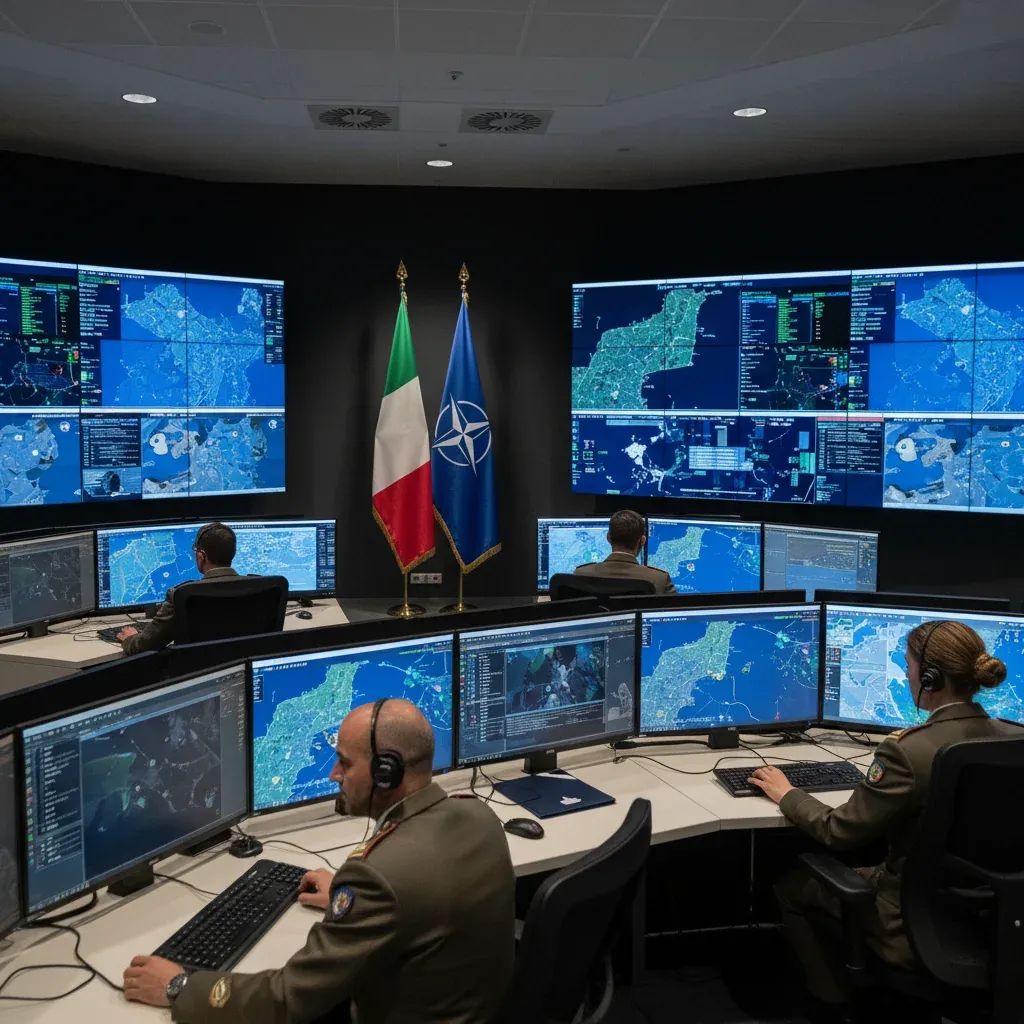
The Italy Ministry of Defense finds itself at the center of controversy after Minister Guido Crosetto became stranded in Dubai during one of the most volatile security crises in the Middle East in years. With Iranian airspace closed following joint US-Israeli strikes on February 28 and subsequent Iranian retaliation, Crosetto's inability to physically return to Rome has prompted calls for his resignation from the opposition Movimento 5 Stelle (M5S) and raised questions about Italy's response capabilities during international emergencies.
Why This Matters:
• Italy's Defense Minister has been physically separated from national territory since late February, managing crisis operations via videoconference
• Approximately 300 Italian military personnel stationed in Kuwait and Iraq remain in the conflict zone amid escalating hostilities
• Thousands of Italian civilians are also stranded in the United Arab Emirates with flight cancellations extending through at least March 7
• The M5S has criticized Italy's crisis coordination preparedness and raised questions about advance warning from allied nations
The Timeline: From Vacation to Crisis
Crosetto traveled to Dubai on February 27 for personal reasons, joining his family on vacation in the emirate. His return to Italy, scheduled for February 28 or March 1, became impossible when the region's airspace locked down following the death of Ayatollah Ali Khamenei in coordinated strikes targeting Iranian military infrastructure, command centers, and facilities linked to missile and nuclear programs.
Both Dubai International Airport (DXB) and Al Maktoum International Airport (DWC) suspended all operations as the crisis unfolded. The Italy Foreign Ministry, led by Antonio Tajani, immediately activated its Crisis Unit and began monitoring the safety of Italian nationals across the region. Tajani confirmed that no Italian military or civilian personnel were directly involved in the attacks, but emphasized that the roughly 300 troops deployed in Kuwait and Iraq were being protected and closely monitored.
The Minister has continued participating in government meetings remotely, but his physical absence during what M5S describes as "one of the most delicate phases for international security in recent years" has become a political issue.
Opposition Questions Government Preparedness
Stefano Patuanelli, Vice President of the M5S, issued a statement characterizing the situation as an "institutional issue, not a personal one." His party argues that Crosetto's predicament raises broader questions about government strategic foresight and international coordination.
"It is legitimate to ask what level of preventive information the Government had regarding the military developments underway, what coordination exists with allies, and how full operability of the command chain is being guaranteed in such a critical phase," Patuanelli stated. The M5S has questioned whether Italy was adequately informed by its allies about the impending strikes on Iran.
Giuseppe Conte, leader of the M5S, characterized the episode as evidence of Italy's vulnerability under the current administration. The opposition argues the incident reflects a lack of preparedness for modern geopolitical complexities.
"When international stability, our military personnel abroad, and the protection of the country's strategic interests are at stake, improvisation is not acceptable," Patuanelli added, calling on Crosetto to resign "out of respect for institutions and for the good of the country."
Government Response: Operational Continuity
The Meloni government and its coalition partners, particularly Fratelli d'Italia, have characterized the M5S criticism as "politically motivated polemics" intended to score points during a crisis. Officials emphasize that the priority is ensuring the Minister's safe return and coordinating the repatriation of Italian citizens affected by the airspace closures.
Prime Minister Giorgia Meloni has repeatedly emphasized governmental stability as a key achievement of her administration. While the M5S has generated political pressure, the majority coalition maintains that operational continuity has not been compromised.
Italy's defense command operates under a well-defined legal and procedural framework during international crises, governed primarily by Law No. 145 of 2016, which regulates the deployment of Italian personnel and resources abroad. Constitutional safeguards ensure parliamentary oversight of military missions, with the Ministry of Defense maintaining constant communication with allied nations and the Chief of Defense Staff.
Practical Impact on Italian Residents and Citizens Abroad
The broader Middle East escalation has immediate consequences for Italians. The country maintains significant military commitments across the region, including deployments in Lebanon (UNIFIL, MIBIL) and maritime operations in the Red Sea (Operation Aspides) to protect shipping lanes.
For Italian civilians stranded in the UAE:The Italy Foreign Ministry is actively coordinating with Emirates authorities and international partners to facilitate repatriation once airspace reopens. Italian consulates in Dubai and Abu Dhabi have established support hotlines and are assisting with accommodation and essential services for stranded nationals. Residents should contact their nearest Italian consulate for current updates and assistance. The timeline for airspace reopening remains uncertain as hostilities continue, with airlines suspending service through at least March 7.
For travel insurance and claims:Italians affected by flight cancellations should contact their insurance providers, as many policies cover extraordinary circumstances such as airspace closures due to military conflict. The Foreign Ministry website provides updates on the situation and official guidance.
Command Authority During Crisis
Beyond the immediate political controversy, the incident raises questions about operational protocols when senior defense officials are physically separated from national territory during emergencies. While videoconferencing enables remote participation in strategic meetings, military command traditionally emphasizes physical presence and direct communication channels during active conflicts.
Italy's Supreme Defense Council can be convened when necessary, and the parliamentary role in authorizing and financing missions ensures democratic oversight. The legal framework generally assumes ministers will be accessible during crises, though this situation highlights an unforeseen vulnerability in current protocols.
Looking Ahead
Whether Crosetto ultimately resigns or remains in office, the episode will likely prompt a review of protocols governing ministerial travel during periods of heightened international tension. Italy's defense operations appear to be functioning within normal parameters, with career military professionals managing day-to-day command responsibilities.
For residents of Italy, the incident underscores the country's exposure to Middle Eastern volatility—not just through military deployments but through civilian air travel and the thousands of Italians who live, work, or vacation in the Gulf states. The closure of Dubai's airports has stranded a subset of the Italian diaspora, with no clear timeline for their immediate return.
As the Middle East crisis continues to evolve, Italy's ability to protect its interests and personnel will depend on both operational competence and political alignment among government institutions.


