
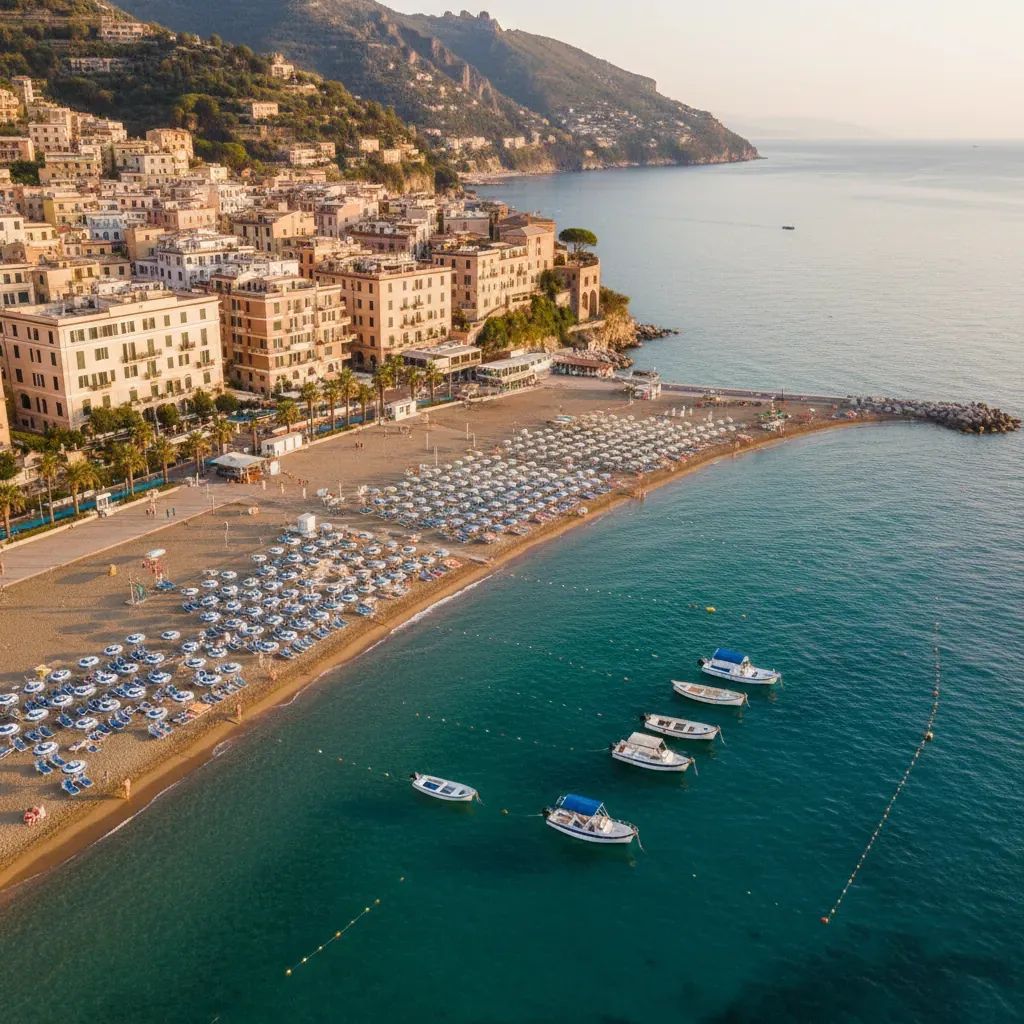
The Italian Senate Environment Committee has approved a controversial amendment extending beach concession licenses until September 30, 2030—potentially until March 31, 2031 if procedural complications arise—for coastal areas damaged by erosion and extreme weather events. This three-year extension beyond the current 2027 deadline directly challenges European Union competition law and reignites a decade-long legal battle over who controls Italy's lucrative coastline.
Why This Matters
• Concession holders in Calabria, Sardegna, and Sicilia gain three extra years to operate without competitive bidding, provided they commit to coastal restoration investments.
• Prospective operators face continued market barriers, as the extension postpones mandatory public tenders required under EU law.
• Legal uncertainty deepens for municipal governments, caught between national prorogation measures and European Court rulings declaring such extensions illegal.
• Coastal regions declared emergency zones after January 2026 storms qualify automatically for the extended timeline.
The Emergency Justification
The amendment, sponsored by the Lega party and introduced within the Commissioners Decree, ties the extension explicitly to coastal erosion and exceptional meteorological events that struck Calabria, Sardegna, and Sicilia in January 2026. The Italian Council of Ministers declared a state of emergency for these regions on January 26, 2026, creating the legal foundation for the measure.
To qualify for the extension, concession-managing entities and current license holders must sign supplementary agreements identifying "essential and urgent investments" for restoring damaged public maritime areas, recovering damaged assets, and ensuring user safety. The legislation mandates that the amortization period for these investments exceed the original September 30, 2027 expiration date—or March 31, 2028 for concessions facing litigation or procedural delays.
The provision remains open-ended: it applies not only to the three southern regions but also to any coastal concessions affected by future emergency declarations issued before the 2027 or 2028 deadlines. This clause effectively creates a mechanism for nationwide application if additional climate events occur.
What This Means for Coastal Businesses and Residents
For current concession holders: The amendment delivers breathing room but not resolution. Those in emergency-declared zones must negotiate supplementary agreements with municipal authorities, detailing restoration work and safety upgrades. Practically, this means:
• Prepare detailed investment plans for coastal restoration by the deadline set by your municipality
• Negotiate supplementary agreements specifying investment obligations and timelines
• Budget for capital commitments that amortization periods will extend beyond 2027—a medium-term financial commitment that assumes no further legislative changes
For prospective beach operators: Market entry remains blocked for at least three more summers under the extension timeline. However, prospective operators should consider:
• Monitoring tender announcements from northern municipalities already proceeding with competitive processes despite national extensions
• Exploring partnerships with current concession holders as alternative market entry routes
• Positioning capital and business plans for the eventual competitive tender cycle, which will likely occur after 2030
For municipal governments: Navigate treacherous legal terrain by understanding two critical points:
• Applying the national extension exposes municipalities to legal challenges based on EU law supremacy, potentially triggering personal liability for administrators
• Several northern Italian municipalities have already begun tender processes despite national extensions, creating a patchwork regulatory landscape—communities can choose to follow EU principles rather than the extension
For beachgoers and residents: The extension likely preserves existing service levels and pricing through 2030. However, understand that competitive bidding could eventually modernize facilities and improve environmental sustainability. Beach access remains protected as a public resource, regardless of concession arrangements.
Collision Course with Brussels: EU Legal Pressures
The extension arrives as Italy's beach concession regime remains under intense scrutiny from European regulators. The EU Bolkestein Directive (2006/123/EC) requires transparent, competitive procedures for allocating scarce natural resources and prohibits automatic renewals. The European Court of Justice and the Italian Council of State have repeatedly struck down Italian prorogation laws as incompatible with freedom of establishment and non-discrimination principles.
Recent judicial history underscores the fragility of legislative extensions. The Constitutional Court invalidated a similar regional extension in Sicilia, and multiple regional administrative tribunals (TAR) have voided concessions awarded without proper tender procedures. The Court of Cassation reinforced this position, declaring concessions lacking public competitive bidding fundamentally illegitimate. Italy already faces ongoing EU infringement proceedings over beach concession practices, and this extension provides fresh grounds for European legal action.
Italy's previous nationwide extension under Law 166/2024 set a September 30, 2027 deadline for existing concessions, requiring municipalities to launch tenders by June 2027. The new amendment pushes that timeline another three years for qualifying zones—a move opposition lawmakers interpret as a backdoor strategy to shield the entire sector from competitive pressure. The amendment's fate remains uncertain and will almost certainly face Constitutional Court challenges and European Commission scrutiny.
Economic Stakes and Market Structure
Italy's beach concession system represents a €15B annual industry dominated by small and medium family-run enterprises. Current concession holders pay an average annual fee of just €3,000–€5,000 for prime coastal real estate—a fraction of market value, according to the Italian Competition Authority (AGCM).
The SIB (Sindacato Italiano Balneari), representing thousands of beach operators, has lobbied aggressively for extensions, warning that competitive tenders will trigger "social slaughter" as large international capital groups outbid multigenerational family businesses. Operators argue they need long-term certainty to justify investments in facilities, equipment, and seasonal staff.
However, the AGCM has repeatedly criticized criteria proposed for future tenders—including preferences for prior experience, existing investments, and consideration of the beach business as primary household income—as anti-competitive mechanisms designed to favor incumbents. The Authority similarly challenged project financing schemes with "right of first refusal" clauses for promoters as distortions of fair competition.
Law 166/2024 established an indemnity system compensating outgoing concession holders for non-amortized investments, but its implementation remains legally murky. The Council of State has questioned whether automatic, generalized indemnities are compatible with EU principles, leaving small operators uncertain whether they'll recover capital outlays when concessions eventually go to tender.
International Context: How Other European Nations Approach Beach Concessions
Italy's approach differs significantly from neighboring coastal nations. France limits beach concessions to 12-year maximum terms with mandatory public tenders and strict environmental protections. Spain grants concessions up to 75 years without mandatory tenders, triggering an EU infringement procedure. Greece has conducted competitive tender processes since 2001. These varied approaches highlight why EU regulators scrutinize Italy's system—the European Commission seeks harmonized, transparent standards across member states.
Regarding climate adaptation, coastal European nations increasingly employ nature-based solutions like dune rehabilitation and seagrass protection. Italy's approach—tying concession extensions to private investment in coastal protection—represents a hybrid public-private model with limited precedent elsewhere.
Broader Maritime Reforms
The Senate amendment coincides with separate maritime legislation advancing through Parliament. The Italian Chamber of Deputies approved comprehensive maritime development law on April 29 with 149 votes in favor, 32 against, and 63 abstentions.
The law strengthens the Interministerial Committee for Sea Policy by adding the Ministry of University, authorizes establishment of a contiguous zone beyond territorial waters per the Montego Bay Convention, and imposes new safety protocols for recreational diving activities. Boats and divers must maintain a minimum 100-meter distance from underwater activity markers, and diving equipment must meet conformity standards.
Significantly for the rental market, the law mandates recreational rental vessels display "noleggio occasionale" (occasional rental) signage measuring at least 100 cm × 20 cm on each hull side. Commercial charter operators must register vessels in the Central Telematic Archive and, for foreign-flagged boats, submit notarized declarations detailing vessel specifications and safety compliance.
The Political Calculation and Legal Uncertainty Ahead
The Lega party's amendment reflects the governing coalition's delicate balancing act between European regulatory compliance and domestic business constituency protection. By limiting the formal extension to emergency-declared regions, proponents create political cover against accusations of blanket non-compliance with EU law.
Yet the open-ended clause extending the measure to any future emergency declarations through 2027–2028 effectively nationalizes the mechanism. Given Italy's 7,500 km coastline faces widespread erosion—with Mediterranean shores retreating an average of 0.5–1 meter annually according to environmental monitoring data—additional emergency declarations appear likely.
For businesses operating in Italy's coastal economy, the message remains mixed: short-term stability purchased through legislative extension, but medium-term vulnerability to judicial reversal and European enforcement. The next competitive tender cycle—whenever it ultimately arrives—will fundamentally reshape Italy's beach economy, determining whether the Adriatic and Tyrrhenian coastlines remain the province of local family enterprises or become integrated into pan-European hospitality conglomerates.
Municipal administrators, meanwhile, must decide whether to follow national law or European jurisprudence—a choice with professional, legal, and political consequences regardless of which path they select.


