
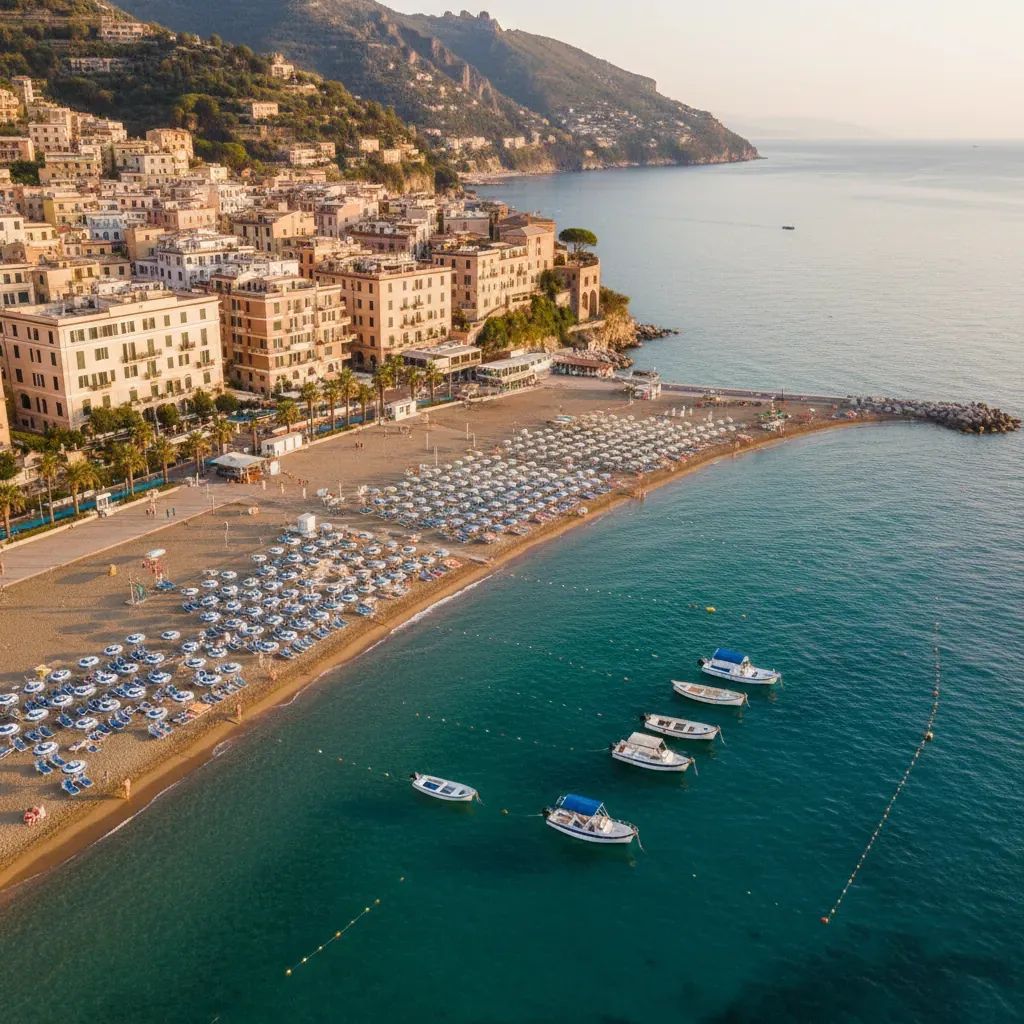
As of April 2026, the Italy National Association of Municipalities (ANCI) has escalated its demand for a direct role in drafting national rules for beach concessions, warning that coastal towns cannot be reduced to passive observers in a regulatory overhaul that will reshape the country's seaside economy. The intervention comes as local governments scramble to prepare for auction deadlines that remain legally uncertain, financially undefined, and politically contested.
What This Means for Residents and Tourists
For Italians who live near the coast or rely on beach tourism for income, the stakes are immediate and personal:
• Price increases are expected. If new operators win concessions through competitive bidding and pay higher fees to municipalities, those costs will likely be passed on to beachgoers in the form of pricier sun loungers and umbrellas.
• Family-run businesses face displacement. Industry groups warn that deep-pocketed investors—potentially from abroad—could outbid small, generational operators who lack liquidity but have managed beaches for decades.
• Service quality could improve—or fragment. The tender process is designed to reward innovation and investment. But without clear local oversight and planning, the character of Italian beaches could shift dramatically.
• Municipal revenues should rise sharply. Currently, Italy collects minimal revenues from beach concessions—far below what competitive auctions should generate. New rules could multiply that figure, funding coastal infrastructure, environmental protection, and public services.
Why This Matters
• ANCI and the Ministry of Infrastructure are finalizing a "standard tender model" to govern how Italy assigns beach concessions—but the document remains unpublished despite an April 10 deadline (2026).
• EU pressure is mounting: Brussels has opened infringement proceedings against Italy for violating the 2006 Bolkestein Directive, which bans automatic renewals and requires competitive, transparent bidding.
• Municipal coordination is fragmented: Fewer than 30 Italian municipalities have launched competitive tenders so far, exposing a regulatory vacuum that threatens the 2026 summer season and beyond.
Municipalities Demand a Seat at the Table
Daniele Silvetti, vice president of ANCI and mayor of Ancona, told a national meeting of the Italian Federation of Beach Operators (Federbalneari) in Rome that coastal municipalities must be recognized as administrative anchors, not bystanders. "Municipalities perform the sensitive administrative work that governs activities on our coasts and deliver services to the communities that live and work there," Silvetti said, representing ANCI president Gaetano Manfredi and the mayors of Italy's coastal towns.
His remarks reflect mounting frustration over a top-down regulatory process that local officials say ignores the realities of tourism management, urban planning, and environmental protection along Italy's 7,500 kilometers of coastline. Silvetti argued that any national framework must be co-designed with territorial governments, not imposed by Rome or Brussels.
"Development and reform cannot be dictated from above—they must be shared with the territories and the mayors who manage the daily impact on the ground," he said.
The "Standard Tender" Model: What's Inside and What's Missing
ANCI has set up a dedicated Commission on Maritime Policies, Ports, and State Maritime Property to coordinate positions across regions and municipalities. Parallel to this political body, a technical working group of municipal experts has been locked in negotiations with the Ministry of Infrastructure and Transport's Legislative Office to finalize the standard tender document (bando tipo).
This document is supposed to provide a uniform template for assigning concessions nationwide, addressing:
• Concession duration: between 5 and 20 years, depending on investment amortization and service quality.
• Compensation for outgoing operators: In practical terms, this means if a beach operator invested €100,000 in facilities three years ago on a five-year depreciation schedule, they would be compensated only for the remaining two years' value—not the full business goodwill or future earnings potential. This formula falls short of the full business valuation demanded by industry associations.
• Flexibility for local characteristics: while establishing baseline standards, the tender must allow municipalities to adapt criteria to their specific coastal and tourism profiles.
But the tender model has yet to be adopted. The Decree-Law 32/2026, published March 11, mandated that the Ministry submit the draft to the Unified Conference (which includes regions, provinces, and municipalities) within 30 days—by April 10. That deadline passed with no final text and no formal opinion from the Conference. A technical meeting was held on April 17, but the regulatory limbo persists.
Adding to the uncertainty, a separate interministerial decree on compensation methodology—originally due March 31, 2025—also remains unsigned.
EU Law vs. Italian Delay: The Legal Pressure Cooker
Italy's standoff with the European Union over beach concessions has been building for nearly two decades. The 2006 Bolkestein Directive requires member states to assign limited public resources—such as scarce beach space—through transparent, competitive procedures. Automatic renewals are prohibited.
Despite formally transposing the directive into Italian law in 2010, successive Italian governments have enacted legislative extensions that have pushed back tender deadlines repeatedly. Most recently, national law allowed concessions to be extended until September 30, 2027, or even March 31, 2028 in cases of coastal erosion or logistical difficulties.
But courts are rejecting these extensions. The European Court of Justice has ruled multiple times that even concessions granted before 2009 must be reassigned through open tenders if they were renewed. Italian administrative courts, including the Regional Administrative Tribunal (TAR) of Liguria and Abruzzo, have voided local extensions and ordered municipalities to launch auctions. A major hearing before the United Sections of the Court of Cassation is scheduled for May 12, 2026, and could further tighten the legal noose.
An amendment proposed by the Lega party sought to extend concessions in disaster-affected areas (Calabria, Sardinia, Sicily) until 2030 or 2031. However, it was struck down by the Budget Committee for lack of financial coverage and constitutional incompatibility—highlighting the difficulty of creating special exceptions in Italy's rigid fiscal framework and adding to the regulatory uncertainty facing all municipalities.
Municipalities That Have Moved First
Only a handful of Italy's coastal municipalities have started or completed concession tenders:
• Emilia-Romagna: Ravenna, Cervia, Misano Adriatico, Rimini, Riccione, Bellaria.
• Liguria: Imperia, Chiavari, Lavagna.
• Tuscany: Forte dei Marmi, Viareggio, Pietrasanta, Camaiore, Carrara, Grosseto.
• Lazio: Rome's Ostia district, where 70% of 31 completed tenders were won by incumbent operators; Fiumicino, Formia, Gaeta.
• Abruzzo: Pescara, Fossacesia, Vasto.
• Campania: Camerota, Minori, Sapri, Pontecagnano Faiano.
• Puglia: Ginosa—though tenders there were annulled by the TAR Lecce for failing to account for outgoing operators' investments and lacking a coastal development plan.
The fragmented rollout reflects the absence of national coordination and the legal risk municipalities face if they proceed without clear guidance.
ANCI's Vision: Balance Between Economy and Environment
Silvetti outlined three priorities for ANCI's advocacy:
Legal certainty for operators: A stable regulatory framework that doesn't shift every election cycle.
Integration with urban planning: Tender procedures must respect existing coastal zoning and environmental protections, not override them.
Territorial identity and economic value: "The coastal strip represents the identity of territories and a generative resource for the entire country," Silvetti said. "We will continue to promote constructive dialogue with business associations and other institutions to reach solutions that enhance the work of enterprises and the quality of our coastlines."
The message is clear: municipalities want to be partners in reform, not executors of directives designed elsewhere.
What Happens Next
The timeline for Italy's beach concession overhaul remains opaque. If the standard tender model is finalized in the coming weeks, municipalities could begin launching tenders in late 2026, with new operators potentially taking over for the 2027 season. But if political resistance and regulatory delays continue, the current patchwork of local decisions—and legal challenges—will deepen.
For now, the Italian coastline exists in a state of regulatory suspension: old concessions legally expired, new ones not yet assigned, and a summer economy worth billions hanging in the balance.


