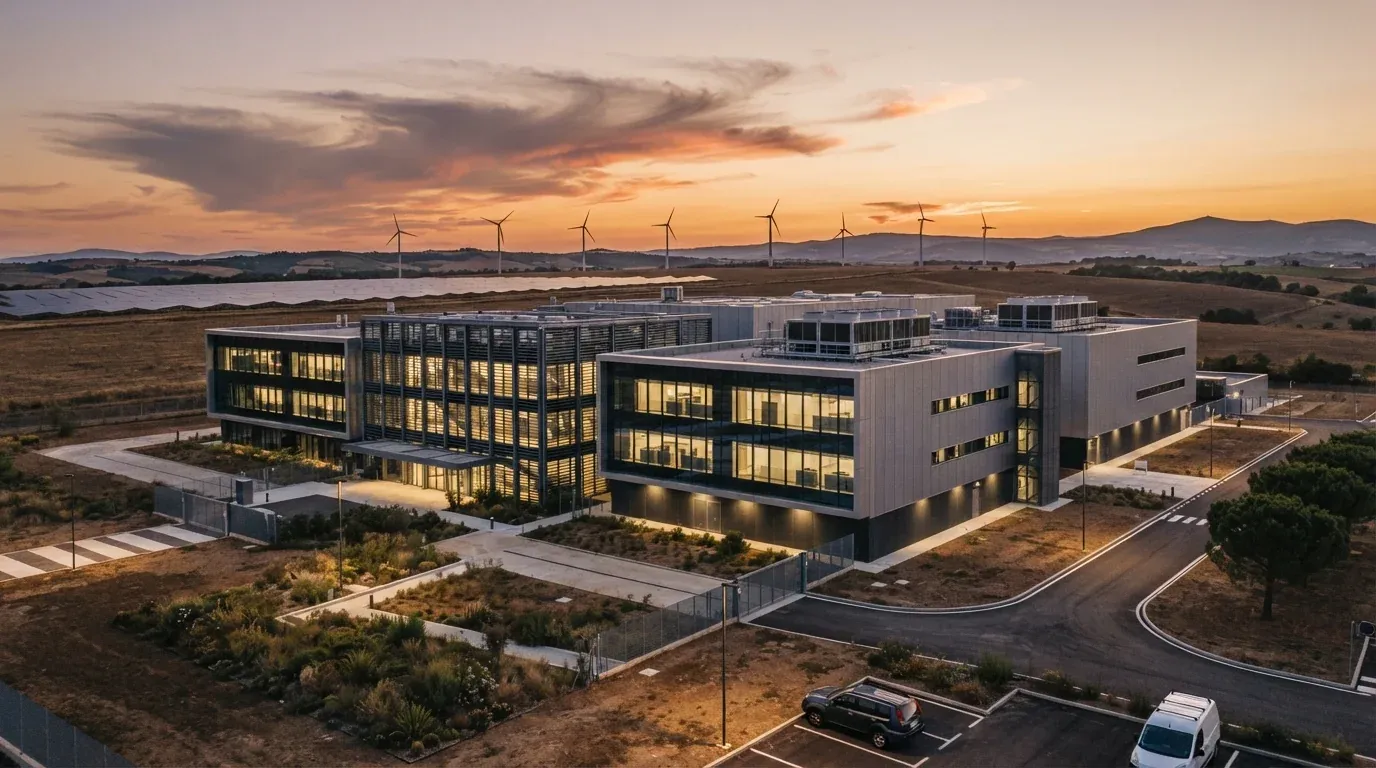
Italy's data center pipeline touches €37 billion through 2036
Italy could see €37 billion in infrastructure investment flow into data centers between now and 2036, according to research from the Italy Datacenter Association presented at the Data Center Symposium in Roma. The figure, which captures potential rather than committed spending, hinges on whether the country can deliver enough power, grid connections and skilled workers to turn plans into working facilities.
The association's 2026 report outlines a sector already on its feet. Installed IT capacity reached 760 megawatts at the end of 2025, with 460 megawatts of that offering processing power to third parties. Commercial capacity alone could expand to 2 gigawatts by 2031 if the 1,800 megawatts now in the pipeline come online.
What the numbers mean for the economy
Direct annual value added could reach €3.87 billion by 2036, assuming an 85 per cent utilisation rate across operational facilities. The broader supply chain would support roughly 26,000 full-time jobs — 11,900 direct roles, 11,000 indirect and 3,000 in related services — with another 20,000 temporary contracts each year during construction phases.
Beyond the infrastructure spend, the association estimates €67 billion in IT equipment could be housed in these facilities, plus €600 million for installation and configuration services.
A concrete project takes shape
Separately, a joint venture between Core Stack — the digital infrastructure arm of the Lazzari group — and Green Arrow Capital, an Italy-based independent asset manager, has committed more than €1 billion over four years to build a network of 13 mid-sized data centres across the country.
The first two sites, located near the provinces of Cremona and Verona, are moving through the permitting process. Construction permits are expected by the end of 2027, with facilities scheduled to go live in the first quarter of 2028. The partnership intends to prioritise former industrial sites in sparsely populated areas, stretching from the North and North-East before expanding to central and southern regions.
Each facility will run on renewable energy generated onsite. The project is also studying the installation of Battery Energy Storage Systems, or BESS, in collaboration with the Politecnico di Milano. These systems store electricity in rechargeable batteries, releasing it when needed to smooth out the variability of solar and wind generation and reduce reliance on diesel backup.
The constraints holding growth back
The research makes clear that the €37 billion figure represents capacity the market has identified, not orders already placed. Realising it depends on factors outside the sector's control.
Energy availability ranks first. About 75 per cent of Italy's energy came from imports in 2025, and grid bottlenecks persist in several regions. Sardegna covered just 19 per cent of its consumption with renewable sources in 2024; Puglia, despite leading in solar and wind production, managed only 11 per cent. Both regions face congestion in the transmission network that limits how much green power can reach centres of demand.
Authorisation times and grid connection delays compound the problem. The Italy government has designated data centres as strategic infrastructure and introduced measures to streamline permits, with ministers Adolfo Urso and Gilberto Pichetto Fratin both addressing the symposium in Roma.
Staffing presents a third obstacle. 53 of 80 respondents to the association's survey reported difficulty finding specialised profiles — the very people needed to turn pipeline capacity into operational facilities.
Where the facilities will cluster
Milano remains the principal hub, with Roma emerging as the second pole. Other areas flagged for development include Torino, Campania, Puglia, the Motor Valley, the Northern Adriatic coast, Sicilia and Sardegna.
The association notes that roughly 80 per cent of land under consideration sits on already urbanised or abandoned sites, limiting the consumption of undeveloped land. Nearly all electricity used by operators surveyed comes from renewable or low-emission sources.
The National Recovery and Resilience Plan plays a supporting role, including funding for digital infrastructure and the creation of a National Strategic Pole to migrate public administration data and applications to reliable cloud platforms.