
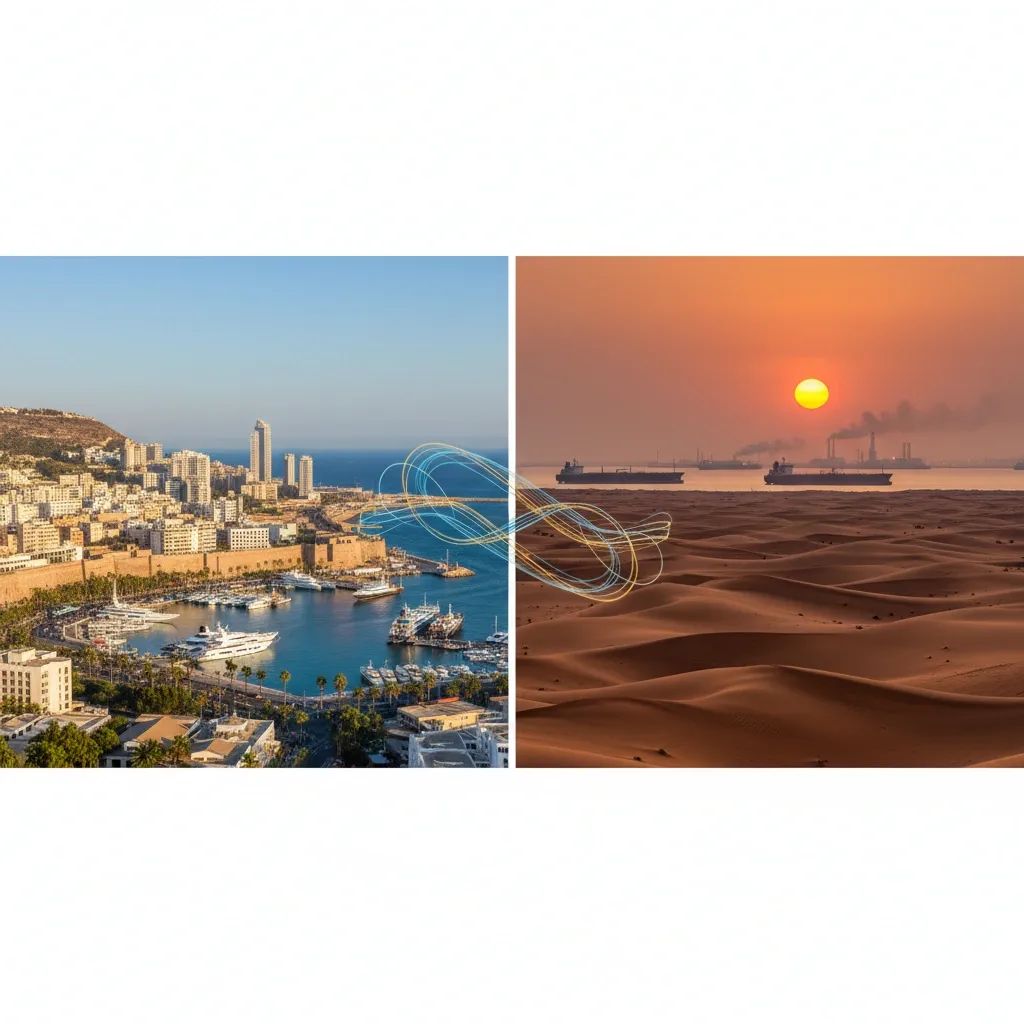
Iran's Supreme Leader Ali Khamenei was killed on March 1 in joint US-Israeli airstrikes—and Italy's government learned about it after the fact, raising urgent questions about Rome's standing with Washington and leaving Italian officials scrambling to protect nationals in the Gulf as regional tensions spiral.
Why This Matters
• Diplomatic isolation risk: Italy's government was allegedly not briefed ahead of the US-Israel strikes, raising questions about Rome's position within both NATO and Washington's inner circle.
• Regional escalation and Italian nationals at risk: Iran has launched retaliatory missile and drone strikes targeting US bases in Bahrain, Qatar, and the UAE, plus Israeli territory. An estimated 15,000 to 20,000 Italians live and work across the UAE, Qatar, and Bahrain, many concentrated in Dubai and Abu Dhabi in construction, energy, and engineering sectors now facing security lockdowns and airspace restrictions.
• Energy market jolt: Disruptions to the Strait of Hormuz, through which roughly 20% of global oil passes, will drive fuel costs upward across Europe. Italy imports approximately 25-30% of its crude oil from Gulf producers, making it particularly vulnerable to Hormuz disruptions compared to other EU states with more diversified supply chains.
Putin Frames Strike as Lawless Act
Russian Federation President Vladimir Putin condemned Khamenei's killing as a "cynical murder" that violates international law and basic human morality, injecting a sharp geopolitical wedge into Europe's security calculations. In a message of condolence to Iranian President Massoud Pezeshkian, the Kremlin chief described Khamenei as "an eminent statesman" who elevated Russo-Iranian ties to a strategic partnership. The statement pointedly called the operation a breach of international norms—language Moscow has used to rally non-Western capitals against US military unilateralism.
The Russian characterization stands in sharp contrast to Washington's narrative. US President Donald Trump framed Khamenei's death as an opportunity for Iranians to "take back" their country, while Republican lawmakers applauded the joint US-Israeli action. By casting the strike as extrajudicial, Putin positions Russia as defender of state sovereignty—a message calibrated for capitals nervous about Western intervention, from Beijing to New Delhi. For Italy, the Russian stance complicates transatlantic unity at a moment when Rome already appears sidelined in White House planning.
Rome's Exclusion from Strike Planning
Riccardo Magi, secretary of the Italian party Più Europa, publicly criticized Prime Minister Giorgia Meloni for being "the only leader of a major European nation not informed" of the imminent Iran operation. According to Magi, Italian Defense Minister Guido Crosetto traveled to Dubai unaware of the pending strikes and became stranded there when Iranian retaliation closed airspace and triggered security lockdowns across the Gulf.
Magi's remarks underscore a broader anxiety: that Italy's pivot toward Trump—symbolized by Meloni's early White House visit—has not translated into insider status. "The bridge Meloni wanted to build is actually a raft adrift between two Atlantic shores," he said, suggesting Rome now occupies an awkward middle ground between a skeptical European Union and a Washington that shares intelligence selectively.
The accusation carries practical implications. Italian energy firms such as Eni maintain operations in the Gulf, Italian military personnel serve in regional training missions, and thousands of Italian expatriates live in Dubai and Abu Dhabi. An intelligence blackout ahead of major combat operations leaves Rome unable to evacuate personnel, brief its companies, or position diplomatic channels for crisis management.
EU Calls It a "Decisive Moment"—but for What?
Kaja Kallas, the European Union's High Representative for Foreign Affairs, described Khamenei's death as "a decisive moment in Iran's history" and said it opens "a path toward a different Iran, one its people might shape with greater freedom." Yet Kallas acknowledged deep uncertainty and said she is coordinating with regional partners "bearing the brunt of Iranian military actions" to identify concrete de-escalation measures.
The diplomatic language reflects Europe's split. Some officials hope a successor government in Tehran might adopt a less confrontational posture, particularly on the nuclear file and proxy support for Hezbollah and Hamas. Others fear the Islamic Revolutionary Guard Corps (IRGC) will dominate the succession process, entrenching a militarized leadership even more hostile to Western interests.
Italian Foreign Minister Antonio Tajani echoed Kallas's caution, noting that Iran is entering a "transition phase" and warning of possible attacks on Gulf states. Rome convened an interagency meeting to coordinate with allies and regional leaders, though the extent of Italy's influence remains unclear given its apparent exclusion from pre-strike consultations.
What This Means for Italian Residents
For expatriates in the Middle East: Italians living in or traveling to the region should monitor Farnesina (Italy's Ministry of Foreign Affairs) travel advisories at www.viaggiesicuri.it or contact the Italian embassy in your country immediately. Current threat levels: UAE (amber alert for heightened security), Qatar (elevated caution), Bahrain (orange alert—avoid non-essential travel). The Farnesina has not yet issued formal evacuation orders, but airspace restrictions and ongoing retaliation risk create significant volatility. Those employed by Italian contractors in construction, energy, and defense sectors should expect project delays, site security lockdowns, and possible temporary closures. Standard travel insurance often excludes conflict-zone evacuation—verify your policy now.
On fuel prices at home: European benchmark Brent crude spiked following news of Hormuz Strait disruptions, and Italian motorists should expect per-liter costs to climb significantly within 2-4 weeks as supply chain impacts materialize. Given Italy's heavy dependence on Gulf oil imports, domestic petrol and diesel prices may rise faster than in other European nations. The government has so far not announced emergency relief measures, though the Prime Minister's office indicated it is monitoring the situation for possible fuel-tax reductions similar to past supply shock responses.
For Italy's standing internationally: The episode raises uncomfortable questions about alliance management. If Rome was genuinely excluded from operational planning, it suggests either skepticism about Italian security protocols or a deliberate Washington choice to limit advance knowledge. Either scenario weakens Italy's claim to be a pivotal Mediterranean partner and raises questions about future intelligence-sharing with NATO allies.
Succession Battle Looms in Tehran
Iran's Assembly of Experts, an 88-member clerical body, is constitutionally empowered to select a new Supreme Leader. A provisional council—comprising President Pezeshkian, judiciary chief Gholam-Hossein Mohseni Eje'i, and Guardian Council jurist Alireza Arafi—currently holds interim authority.
Potential successors include Mojtaba Khamenei, the late leader's son and a figure with deep ties to the IRGC; Ali Larijani, a pragmatic conservative recently named secretary of the Supreme National Security Council; and Hassan Rouhani, the former president viewed as a moderate. Each candidate represents a different faction, and the choice will shape Iran's approach to sanctions relief, regional proxies, and engagement with Europe.
In the near term, however, escalation appears more likely than diplomacy. Tehran has already launched waves of missiles and drones, and the IRGC—eager to project strength during a leadership vacuum—may push for further retaliation. That dynamic increases risks for Italian assets and personnel throughout the region.
Global Powers Draw Lines
China's Foreign Minister Wang Yi condemned the strikes as "unacceptable" violations of sovereignty and called for an immediate halt to military operations. Beijing's stance aligns it publicly with Moscow, reinforcing a Sino-Russian axis that challenges Western narratives on international law.
The fracture complicates multilateral diplomacy. UN Secretary-General António Guterres convened an emergency Security Council session, but any resolution demanding restraint or investigation is virtually certain to face vetoes from either the US or the Russia-China bloc.
For Italy, the divide means economic hedging becomes riskier. Rome has cultivated trade ties with Beijing through Belt and Road participation and maintains energy partnerships with Moscow despite EU sanctions. Straddling these relationships becomes harder when Washington, Moscow, and Beijing stake out incompatible positions on a major security crisis.
A Raft Adrift
The most stinging takeaway for Italy may be Magi's maritime metaphor: a raft adrift. Rome invested political capital in courting Trump and positioning itself as a transatlantic bridge, yet the Iran operation suggests that capital bought neither advance warning nor a seat at the table.
Whether that exclusion reflects bureaucratic oversight, White House skepticism of Italian leak risks, or deliberate marginalization remains unclear. What is certain is that Italian policymakers now face a Middle East crisis with limited real-time intelligence, vulnerable nationals in theater, rising fuel costs at home, and the prospect of project delays affecting Italian business interests—all while navigating a widening transatlantic-Eurasian rift in which Italy's role is uncomfortably ambiguous.


